
What is Digital Transformation?
Digital transformation refers to the integration of digital technologies into all areas of a business or organization. It involves replacing manual processes with digital systems to improve operations, communication, customer service, and decision-making.
Digital transformation can include:
- Cloud computing
- Business automation
- Mobile applications
- Artificial intelligence
- Data analytics
- ERP systems
- Customer relationship management (CRM)
- E-commerce platforms
- Digital payment systems
- Cybersecurity solutions
- Online collaboration tools
It is not just about technology. It is also about changing how businesses operate and deliver value to customers.
Why Digital Transformation is Growing in Kenya
Kenya has become a major technology hub in Africa. Several factors are accelerating digital transformation across the country:
1. Increased Internet Access
Millions of Kenyans now have access to affordable internet through fiber connections and mobile data networks.
2. Mobile Money Adoption
The success of Safaricom and M-Pesa transformed how businesses handle payments and transactions.
3. Growing Smartphone Usage
Smartphones have enabled businesses to reach customers digitally through websites, mobile apps, and social media.
4. Government Digital Initiatives
The Kenyan government continues to encourage digital services through eCitizen, digital tax systems, and online registration platforms.
5. Remote Work and Cloud Adoption
Businesses increasingly rely on cloud platforms and online collaboration tools to support remote operations.
Top Benefits of Digital Transformation in Kenya
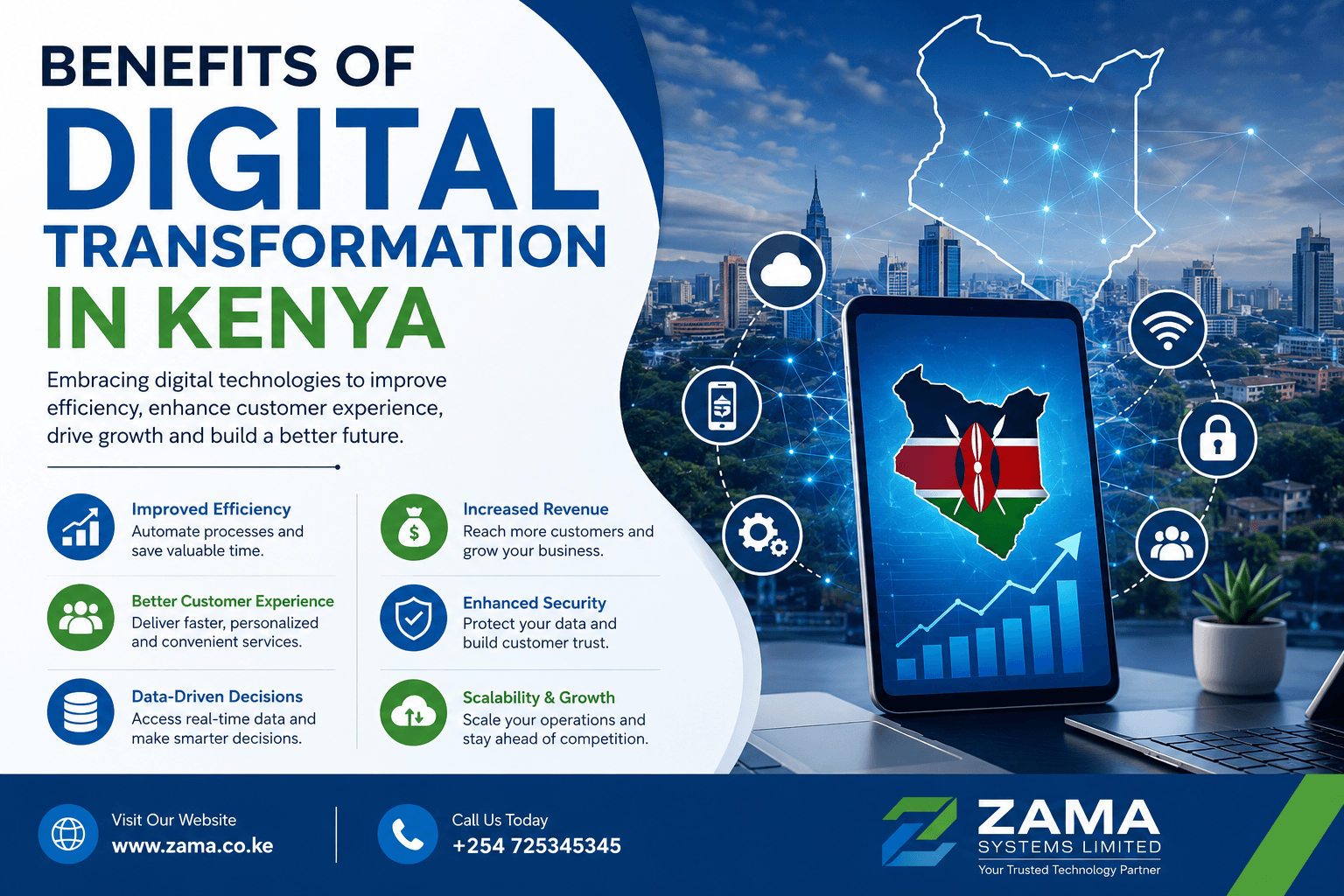
1. Improved Business Efficiency
One of the biggest advantages of digital transformation is increased operational efficiency.
Manual processes consume time, increase errors, and reduce productivity. Digital systems automate repetitive tasks and streamline workflows.
Examples include:
- Automated payroll systems
- Inventory management software
- Digital accounting platforms
- Online appointment systems
- School management systems
- Hospital management systems
Automation allows employees to focus on higher-value tasks instead of repetitive paperwork.
Example
A hospital using a digital patient management system can:
- Reduce paperwork
- Access patient records instantly
- Improve appointment scheduling
- Speed up billing processes
- Reduce human errors
This leads to faster service delivery and better patient care.
2. Better Customer Experience
Modern customers expect fast, convenient, and personalized services.
Digital transformation helps businesses improve customer experiences through:
- Online support systems
- Mobile applications
- Chatbots
- Faster response times
- Personalized communication
- Digital payment options
- Online booking systems
Businesses that provide smooth digital experiences build stronger customer loyalty.
Example
A retail shop in Kenya with an e-commerce website can allow customers to:
- Browse products online
- Pay via M-Pesa
- Track deliveries
- Receive instant support
This convenience improves customer satisfaction and increases sales.
3. Increased Revenue and Profitability
Digital technologies help businesses generate more income through:
- Expanded online reach
- Better marketing
- Improved sales processes
- Automated customer engagement
- Data-driven decision-making
Businesses can sell products and services 24/7 using digital platforms.
Online Opportunities Include:
- E-commerce stores
- Online consultations
- Subscription services
- Digital marketing campaigns
- Online booking systems
Companies that adopt digital transformation often experience faster business growth.
4. Enhanced Data Management
Data is one of the most valuable assets in modern business.
Traditional paper-based systems make it difficult to store, retrieve, and analyze information.
Digital systems provide:
- Centralized databases
- Real-time reporting
- Secure backups
- Faster data retrieval
- Better analytics
Businesses can make smarter decisions using accurate data insights.
Example
A school management system can help institutions manage:
- Student records
- Fee payments
- Academic performance
- Attendance tracking
- Staff information
This improves administration and reporting accuracy.
5. Improved Communication and Collaboration
Digital transformation enhances communication within organizations.
Modern communication tools include:
- Video conferencing
- Team collaboration software
- Cloud document sharing
- Instant messaging platforms
- Email automation
These tools improve teamwork and productivity, especially for businesses with multiple branches or remote employees.
6. Reduced Operational Costs
Digital systems help organizations reduce expenses associated with:
- Paperwork
- Printing
- Storage
- Manual labor
- Physical meetings
- Travel costs
Cloud-based solutions also eliminate the need for expensive on-premise infrastructure.
Cost Savings Examples
Businesses can save money through:
- Automated accounting
- Digital invoicing
- Online marketing
- Remote work tools
- Inventory automation
Long-term savings often outweigh the initial investment in digital transformation.
7. Better Decision-Making Through Analytics
Modern software systems collect valuable business data.
Analytics tools help organizations understand:
- Customer behavior
- Sales trends
- Employee performance
- Inventory levels
- Financial performance
This enables managers to make informed strategic decisions.
Example
A supermarket can analyze:
- Best-selling products
- Peak shopping hours
- Customer purchasing patterns
This information improves inventory planning and marketing strategies.
8. Increased Business Competitiveness
Businesses that fail to adopt digital technologies risk falling behind competitors.
Digital transformation helps companies:
- Innovate faster
- Respond quickly to market changes
- Improve service delivery
- Reach wider audiences
In Kenya’s competitive business environment, technology adoption is becoming essential for survival.
9. Improved Security and Data Protection
Cybersecurity is increasingly important as businesses move online.
Modern digital systems provide:
- Data encryption
- User authentication
- Secure cloud backups
- Access controls
- Automated security updates
Proper cybersecurity measures help protect sensitive business and customer information.
10. Support for Remote Work
Remote and hybrid work models continue to grow in Kenya.
Digital transformation enables remote operations through:
- Cloud computing
- Virtual meetings
- Online project management
- Remote access systems
Employees can work efficiently from different locations without disrupting business operations.
11. Faster Service Delivery
Customers expect quick services.
Digital systems reduce delays and improve response times.
Examples include:
- Instant payment confirmations
- Online customer support
- Automated booking systems
- Fast document processing
This improves customer trust and satisfaction.
12. Better Financial Management
Digital accounting and financial systems help businesses:
- Track income and expenses
- Generate financial reports
- Manage taxes
- Automate invoicing
- Monitor cash flow
This improves transparency and financial planning.
13. Improved Marketing Capabilities
Digital transformation enables businesses to market more effectively using:
- Search engine optimization (SEO)
- Social media marketing
- Email campaigns
- Google Ads
- Content marketing
Digital marketing helps businesses reach more customers at lower costs compared to traditional advertising.
14. Business Scalability
Digital systems make it easier for businesses to grow.
Cloud-based technologies allow organizations to:
- Add new users easily
- Expand operations
- Support multiple branches
- Handle increased workloads
Scalable systems support long-term business expansion.
15. Environmental Benefits
Digital transformation reduces paper usage and supports environmentally friendly operations.
Businesses can minimize:
- Printing
- Physical document storage
- Transportation needs
This contributes to sustainability goals.
Industries Benefiting from Digital Transformation in Kenya
Healthcare
Hospitals and clinics use digital systems for:
- Electronic medical records
- Patient management
- Billing automation
- Telemedicine
Education
Schools and universities benefit from:
- E-learning platforms
- Online exams
- Student management systems
Retail
Retail businesses use:
- POS systems
- E-commerce platforms
- Inventory management software
Real Estate
Property companies use digital platforms for:
- Property listings
- Online bookings
- Customer management
Logistics and Transport
Transport companies use:
- GPS tracking
- Fleet management systems
- Online booking platforms
Challenges of Digital Transformation in Kenya
Despite the benefits, businesses may face some challenges:
1. Initial Investment Costs
Some technologies require upfront investment.
2. Cybersecurity Risks
Businesses must implement proper security measures.
3. Employee Resistance
Some staff may resist adopting new technologies.
4. Limited Technical Skills
Organizations may require training and technical support.
5. Internet Connectivity Issues
Some areas still experience unreliable internet access.
However, these challenges can be overcome with proper planning and professional support.
How Businesses Can Start Digital Transformation
Step 1: Assess Current Processes
Identify areas where technology can improve operations.
Step 2: Define Goals
Set clear objectives such as:
- Improving efficiency
- Increasing sales
- Reducing costs
Step 3: Choose the Right Technology
Select solutions that match your business needs.
Step 4: Train Employees
Ensure staff understand how to use new systems.
Step 5: Work with Professionals
Partner with experienced IT companies for implementation and support.
Why Choose Zama Systems Limited for Digital Transformation in Kenya?
At Zama Systems Limited, we provide innovative technology solutions tailored for businesses, schools, hospitals, SACCOs, NGOs, and enterprises across Kenya.
Our services include:
- Custom software development
- ERP systems
- Hospital management systems
- School management systems
- Web development
- Mobile app development
- Cloud solutions
- Business automation
- IT consultancy
- Cybersecurity solutions
- SEO and digital marketing
We help organizations modernize operations and achieve sustainable growth through reliable digital solutions.
The Future of Digital Transformation in Kenya
The future of business in Kenya is digital.
Emerging technologies such as:
- Artificial intelligence
- Machine learning
- Internet of Things (IoT)
- Blockchain
- Cloud computing
- Big data analytics
will continue transforming industries across the country.
Businesses that invest in digital transformation today will be better positioned for future success.