
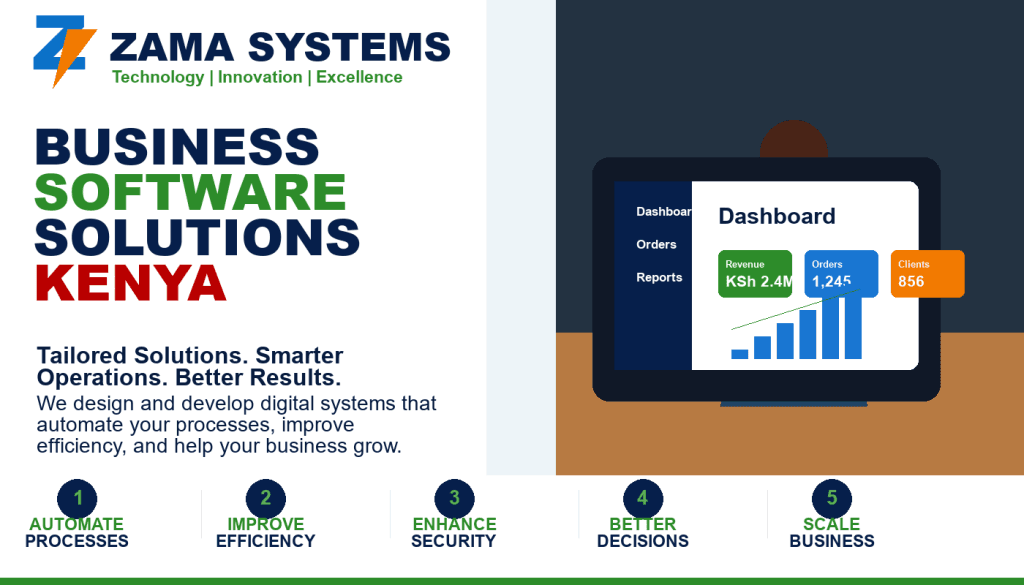
Business software solutions Kenya: 10 Tools Companies Need to Work Smarter

Business software solutions Kenya is important for SMEs, service companies, schools, clinics, distributors, agencies, NGOs, SACCOs, and growing organizations in Kenya that want reliable digital systems instead of manual work, scattered spreadsheets, and disconnected tools.
Many organizations in Kenya reach a point where ordinary spreadsheets, WhatsApp approvals, paper records, and separate tools no longer support growth. When data is scattered, reports become slow, staff repeat the same work, and management decisions become less accurate.
Zama builds practical websites, web applications, dashboards, workflow systems, integrations, and business software for Kenyan organizations. The goal is to create systems that are clear, usable, secure, and aligned with the way the business actually works.
Table of Contents
- What this service means
- Problems it solves
- Important features
- Why choose Zama
- Frequently asked questions
What Is Business software solutions Kenya?
Business software solutions Kenya means professional technology support for planning, building, improving, and maintaining digital systems. Depending on the business need, it may involve a website, a customer portal, an internal dashboard, a management system, a custom workflow tool, or an integrated web application.
A good business software solution should begin with the business problem. The team should understand who will use the system, what data must be captured, what reports are needed, which tasks should be automated, and how the solution will support growth.
Why Kenyan Businesses Need Business software solutions Kenya
The main problem is manual workflows, scattered data, slow approvals, weak reporting, duplicate entry, disconnected teams, and limited management visibility. These issues may look small at first, but they slow teams down, reduce visibility, create errors, and make it harder for managers to make timely decisions.
Business software solutions Kenya helps by turning scattered processes into organized digital workflows. Instead of chasing information across notebooks, spreadsheets, messages, and emails, the organization can manage key operations from one clearer platform.
Businesses can also review broader digital transformation and online growth context from trusted external resources such as Kenya Ministry of ICT and Digital Economy, Business Daily Africa, and Google Search Central.
Zama also supports related technology needs through Zama business systems, software development company in Kenya, custom software development Kenya, web development company in Kenya, and business management system in Kenya.
Key Features of Business software solutions Kenya
- workflow automation
- customer records
- inventory tools
- finance modules
- dashboards
- role-based access
- integrations
- support and maintenance
1. Requirements discovery: Business software solutions Kenya
A strong project starts by understanding the business process, users, pain points, reports, and expected outcomes. Business software solutions Kenya gives Kenyan organizations a structured way to improve workflow automation, customer records, inventory, finance, dashboards, integrations, and management reports.
This matters because digital systems should solve real business problems, not just look modern. The best result is a platform staff can use daily and management can trust for decisions.
2. Custom system design: Business software solutions Kenya
The system should fit the workflow instead of forcing the business to adjust to unsuitable off-the-shelf software. Business software solutions Kenya gives Kenyan organizations a structured way to improve workflow automation, customer records, inventory, finance, dashboards, integrations, and management reports.
This matters because digital systems should solve real business problems, not just look modern. The best result is a platform staff can use daily and management can trust for decisions.
3. Database and records: Business software solutions Kenya
Clean data structures help businesses manage customers, staff, inventory, transactions, documents, approvals, and reports. Business software solutions Kenya gives Kenyan organizations a structured way to improve workflow automation, customer records, inventory, finance, dashboards, integrations, and management reports.
This matters because digital systems should solve real business problems, not just look modern. The best result is a platform staff can use daily and management can trust for decisions.
4. Workflow automation: Business software solutions Kenya
Automation reduces repeated manual work, speeds up approvals, improves accountability, and keeps teams aligned. Business software solutions Kenya gives Kenyan organizations a structured way to improve workflow automation, customer records, inventory, finance, dashboards, integrations, and management reports.
This matters because digital systems should solve real business problems, not just look modern. The best result is a platform staff can use daily and management can trust for decisions.
5. Dashboards and reports: Business software solutions Kenya
Management reports help owners see performance, bottlenecks, customer activity, stock movement, finances, or team output. Business software solutions Kenya gives Kenyan organizations a structured way to improve workflow automation, customer records, inventory, finance, dashboards, integrations, and management reports.
This matters because digital systems should solve real business problems, not just look modern. The best result is a platform staff can use daily and management can trust for decisions.
6. Integrations: Business software solutions Kenya
APIs and integrations can connect websites, payment tools, accounting systems, SMS, email, WhatsApp workflows, or third-party platforms. Business software solutions Kenya gives Kenyan organizations a structured way to improve workflow automation, customer records, inventory, finance, dashboards, integrations, and management reports.
This matters because digital systems should solve real business problems, not just look modern. The best result is a platform staff can use daily and management can trust for decisions.
7. Security and access control: Business software solutions Kenya
Role-based access protects sensitive data and ensures each user sees only the tools needed for their work. this software service gives Kenyan organizations a structured way to improve workflow automation, customer records, inventory, finance, dashboards, integrations, and management reports.
This matters because digital systems should solve real business problems, not just look modern. The best result is a platform staff can use daily and management can trust for decisions.
8. Support and improvement: this software service
Good software needs maintenance, backups, updates, training, and improvement as the business grows. this software service gives Kenyan organizations a structured way to improve workflow automation, customer records, inventory, finance, dashboards, integrations, and management reports.
This matters because digital systems should solve real business problems, not just look modern. The best result is a platform staff can use daily and management can trust for decisions.
Why Choose Zama for this software service?
Zama focuses on practical systems that support real business work. A solution should be understandable to staff, useful to management, secure enough for sensitive data, and flexible enough to improve as the organization grows.
this software service should not be reduced to code only. It requires planning, communication, design, testing, training, deployment, and support. Businesses need a partner that can translate operational problems into software features that actually help.
Zama can support websites, management systems, dashboards, portals, automation tools, API integrations, database systems, reporting modules, and long-term maintenance. The result is a more organized digital foundation for the business.
How to Start a Software Project Correctly
Start by listing the current workflow and the exact problem to solve. Identify the users, data fields, approvals, reports, integrations, and security needs. This prevents the project from becoming vague or too broad.
Next, separate must-have features from future improvements. A strong first version should solve the core problem well. Extra features can be added after the system is tested and users understand the workflow.
Finally, plan for launch support. Staff training, data migration, hosting, backups, bug fixes, and user feedback should be part of the project, not an afterthought.
Common Mistakes to Avoid
One mistake is starting development before requirements are clear. Another is choosing the cheapest option without checking whether the team understands business processes, security, support, and maintenance.
A third mistake is building a system that only one person understands. Business software should have documentation, clear roles, and a support process so the organization is not trapped when changes are needed.
Another mistake is ignoring reporting. A system should not only store data; it should help management see what is happening and make better decisions.
Frequently Asked Questions
What is this software service?
this software service is technology support for businesses that need websites, custom systems, dashboards, workflow automation, integrations, databases, reports, and ongoing maintenance.
Can Zama build custom business software?
Yes. Zama can help with requirements planning, web applications, portals, dashboards, integrations, databases, reports, and maintenance.
Can Zama build business websites?
Yes. Zama can build responsive websites, landing pages, CMS websites, service pages, SEO-friendly structures, and maintenance workflows.
Is custom software useful for small businesses?
Yes. Small businesses benefit when software reduces manual work, improves reporting, organizes customer records, and helps teams work with less confusion.
How can I get started?
Visit Zama and share your business challenge, required features, users, reports, and timeline.
Before starting a software project, document the current workflow in plain language. List the people involved, the approvals required, the data collected, the reports needed, and the pain points that waste time. This makes development easier because the project team can build around real operations rather than assumptions.
Clean requirements reduce cost and confusion. A business should define user roles, core modules, must-have reports, integrations, security needs, and future growth plans early. When requirements are unclear, the project can drift, deadlines can stretch, and the final system may not solve the original problem.
Good software should also be easy to maintain. The business needs reliable hosting, backup planning, user permissions, documentation, update support, and clear communication with the development team. These details protect the investment after launch.
Training matters as much as development. Staff should understand how to log in, enter data correctly, run reports, follow approval steps, and request support. A well-built system delivers better results when people use it consistently.
Before starting a software project, document the current workflow in plain language. List the people involved, the approvals required, the data collected, the reports needed, and the pain points that waste time. This makes development easier because the project team can build around real operations rather than assumptions.
Clean requirements reduce cost and confusion. A business should define user roles, core modules, must-have reports, integrations, security needs, and future growth plans early. When requirements are unclear, the project can drift, deadlines can stretch, and the final system may not solve the original problem.
Good software should also be easy to maintain. The business needs reliable hosting, backup planning, user permissions, documentation, update support, and clear communication with the development team. These details protect the investment after launch.
Training matters as much as development. Staff should understand how to log in, enter data correctly, run reports, follow approval steps, and request support. A well-built system delivers better results when people use it consistently.
Before starting a software project, document the current workflow in plain language. List the people involved, the approvals required, the data collected, the reports needed, and the pain points that waste time. This makes development easier because the project team can build around real operations rather than assumptions.
Clean requirements reduce cost and confusion. A business should define user roles, core modules, must-have reports, integrations, security needs, and future growth plans early. When requirements are unclear, the project can drift, deadlines can stretch, and the final system may not solve the original problem.
Good software should also be easy to maintain. The business needs reliable hosting, backup planning, user permissions, documentation, update support, and clear communication with the development team. These details protect the investment after launch.
Training matters as much as development. Staff should understand how to log in, enter data correctly, run reports, follow approval steps, and request support. A well-built system delivers better results when people use it consistently.
Before starting a software project, document the current workflow in plain language. List the people involved, the approvals required, the data collected, the reports needed, and the pain points that waste time. This makes development easier because the project team can build around real operations rather than assumptions.
Clean requirements reduce cost and confusion. A business should define user roles, core modules, must-have reports, integrations, security needs, and future growth plans early. When requirements are unclear, the project can drift, deadlines can stretch, and the final system may not solve the original problem.
Good software should also be easy to maintain. The business needs reliable hosting, backup planning, user permissions, documentation, update support, and clear communication with the development team. These details protect the investment after launch.
Training matters as much as development. Staff should understand how to log in, enter data correctly, run reports, follow approval steps, and request support. A well-built system delivers better results when people use it consistently.
Before starting a software project, document the current workflow in plain language. List the people involved, the approvals required, the data collected, the reports needed, and the pain points that waste time. This makes development easier because the project team can build around real operations rather than assumptions.
Clean requirements reduce cost and confusion. A business should define user roles, core modules, must-have reports, integrations, security needs, and future growth plans early. When requirements are unclear, the project can drift, deadlines can stretch, and the final system may not solve the original problem.
Good software should also be easy to maintain. The business needs reliable hosting, backup planning, user permissions, documentation, update support, and clear communication with the development team. These details protect the investment after launch.
Training matters as much as development. Staff should understand how to log in, enter data correctly, run reports, follow approval steps, and request support. A well-built system delivers better results when people use it consistently.
Before starting a software project, document the current workflow in plain language. List the people involved, the approvals required, the data collected, the reports needed, and the pain points that waste time. This makes development easier because the project team can build around real operations rather than assumptions.
Clean requirements reduce cost and confusion. A business should define user roles, core modules, must-have reports, integrations, security needs, and future growth plans early. When requirements are unclear, the project can drift, deadlines can stretch, and the final system may not solve the original problem.
Good software should also be easy to maintain. The business needs reliable hosting, backup planning, user permissions, documentation, update support, and clear communication with the development team. These details protect the investment after launch.
Training matters as much as development. Staff should understand how to log in, enter data correctly, run reports, follow approval steps, and request support. A well-built system delivers better results when people use it consistently.
Before starting a software project, document the current workflow in plain language. List the people involved, the approvals required, the data collected, the reports needed, and the pain points that waste time. This makes development easier because the project team can build around real operations rather than assumptions.
Clean requirements reduce cost and confusion. A business should define user roles, core modules, must-have reports, integrations, security needs, and future growth plans early. When requirements are unclear, the project can drift, deadlines can stretch, and the final system may not solve the original problem.
Good software should also be easy to maintain. The business needs reliable hosting, backup planning, user permissions, documentation, update support, and clear communication with the development team. These details protect the investment after launch.
Training matters as much as development. Staff should understand how to log in, enter data correctly, run reports, follow approval steps, and request support. A well-built system delivers better results when people use it consistently.
Before starting a software project, document the current workflow in plain language. List the people involved, the approvals required, the data collected, the reports needed, and the pain points that waste time. This makes development easier because the project team can build around real operations rather than assumptions.
Clean requirements reduce cost and confusion. A business should define user roles, core modules, must-have reports, integrations, security needs, and future growth plans early. When requirements are unclear, the project can drift, deadlines can stretch, and the final system may not solve the original problem.
Good software should also be easy to maintain. The business needs reliable hosting, backup planning, user permissions, documentation, update support, and clear communication with the development team. These details protect the investment after launch.
Training matters as much as development. Staff should understand how to log in, enter data correctly, run reports, follow approval steps, and request support. A well-built system delivers better results when people use it consistently.
Before starting a software project, document the current workflow in plain language. List the people involved, the approvals required, the data collected, the reports needed, and the pain points that waste time. This makes development easier because the project team can build around real operations rather than assumptions.
Clean requirements reduce cost and confusion. A business should define user roles, core modules, must-have reports, integrations, security needs, and future growth plans early. When requirements are unclear, the project can drift, deadlines can stretch, and the final system may not solve the original problem.
Good software should also be easy to maintain. The business needs reliable hosting, backup planning, user permissions, documentation, update support, and clear communication with the development team. These details protect the investment after launch.
Training matters as much as development. Staff should understand how to log in, enter data correctly, run reports, follow approval steps, and request support. A well-built system delivers better results when people use it consistently.
Before starting a software project, document the current workflow in plain language. List the people involved, the approvals required, the data collected, the reports needed, and the pain points that waste time. This makes development easier because the project team can build around real operations rather than assumptions.
Clean requirements reduce cost and confusion. A business should define user roles, core modules, must-have reports, integrations, security needs, and future growth plans early. When requirements are unclear, the project can drift, deadlines can stretch, and the final system may not solve the original problem.
Good software should also be easy to maintain. The business needs reliable hosting, backup planning, user permissions, documentation, update support, and clear communication with the development team. These details protect the investment after launch.
Training matters as much as development. Staff should understand how to log in, enter data correctly, run reports, follow approval steps, and request support. A well-built system delivers better results when people use it consistently.
Before starting a software project, document the current workflow in plain language. List the people involved, the approvals required, the data collected, the reports needed, and the pain points that waste time. This makes development easier because the project team can build around real operations rather than assumptions.
Clean requirements reduce cost and confusion. A business should define user roles, core modules, must-have reports, integrations, security needs, and future growth plans early. When requirements are unclear, the project can drift, deadlines can stretch, and the final system may not solve the original problem.
Good software should also be easy to maintain. The business needs reliable hosting, backup planning, user permissions, documentation, update support, and clear communication with the development team. These details protect the investment after launch.
Training matters as much as development. Staff should understand how to log in, enter data correctly, run reports, follow approval steps, and request support. A well-built system delivers better results when people use it consistently.
Before starting a software project, document the current workflow in plain language. List the people involved, the approvals required, the data collected, the reports needed, and the pain points that waste time. This makes development easier because the project team can build around real operations rather than assumptions.
Clean requirements reduce cost and confusion. A business should define user roles, core modules, must-have reports, integrations, security needs, and future growth plans early. When requirements are unclear, the project can drift, deadlines can stretch, and the final system may not solve the original problem.
Good software should also be easy to maintain. The business needs reliable hosting, backup planning, user permissions, documentation, update support, and clear communication with the development team. These details protect the investment after launch.
Training matters as much as development. Staff should understand how to log in, enter data correctly, run reports, follow approval steps, and request support. A well-built system delivers better results when people use it consistently.
Before starting a software project, document the current workflow in plain language. List the people involved, the approvals required, the data collected, the reports needed, and the pain points that waste time. This makes development easier because the project team can build around real operations rather than assumptions.
Clean requirements reduce cost and confusion. A business should define user roles, core modules, must-have reports, integrations, security needs, and future growth plans early. When requirements are unclear, the project can drift, deadlines can stretch, and the final system may not solve the original problem.
Good software should also be easy to maintain. The business needs reliable hosting, backup planning, user permissions, documentation, update support, and clear communication with the development team. These details protect the investment after launch.
Training matters as much as development. Staff should understand how to log in, enter data correctly, run reports, follow approval steps, and request support. A well-built system delivers better results when people use it consistently.
Before starting a software project, document the current workflow in plain language. List the people involved, the approvals required, the data collected, the reports needed, and the pain points that waste time. This makes development easier because the project team can build around real operations rather than assumptions.
Clean requirements reduce cost and confusion. A business should define user roles, core modules, must-have reports, integrations, security needs, and future growth plans early. When requirements are unclear, the project can drift, deadlines can stretch, and the final system may not solve the original problem.
Good software should also be easy to maintain. The business needs reliable hosting, backup planning, user permissions, documentation, update support, and clear communication with the development team. These details protect the investment after launch.
Training matters as much as development. Staff should understand how to log in, enter data correctly, run reports, follow approval steps, and request support. A well-built system delivers better results when people use it consistently.
Before starting a software project, document the current workflow in plain language. List the people involved, the approvals required, the data collected, the reports needed, and the pain points that waste time. This makes development easier because the project team can build around real operations rather than assumptions.
Clean requirements reduce cost and confusion. A business should define user roles, core modules, must-have reports, integrations, security needs, and future growth plans early. When requirements are unclear, the project can drift, deadlines can stretch, and the final system may not solve the original problem.
Good software should also be easy to maintain. The business needs reliable hosting, backup planning, user permissions, documentation, update support, and clear communication with the development team. These details protect the investment after launch.
Training matters as much as development. Staff should understand how to log in, enter data correctly, run reports, follow approval steps, and request support. A well-built system delivers better results when people use it consistently.
Before starting a software project, document the current workflow in plain language. List the people involved, the approvals required, the data collected, the reports needed, and the pain points that waste time. This makes development easier because the project team can build around real operations rather than assumptions.
Clean requirements reduce cost and confusion. A business should define user roles, core modules, must-have reports, integrations, security needs, and future growth plans early. When requirements are unclear, the project can drift, deadlines can stretch, and the final system may not solve the original problem.
Good software should also be easy to maintain. The business needs reliable hosting, backup planning, user permissions, documentation, update support, and clear communication with the development team. These details protect the investment after launch.
Training matters as much as development. Staff should understand how to log in, enter data correctly, run reports, follow approval steps, and request support. A well-built system delivers better results when people use it consistently.
Before starting a software project, document the current workflow in plain language. List the people involved, the approvals required, the data collected, the reports needed, and the pain points that waste time. This makes development easier because the project team can build around real operations rather than assumptions.
Clean requirements reduce cost and confusion. A business should define user roles, core modules, must-have reports, integrations, security needs, and future growth plans early. When requirements are unclear, the project can drift, deadlines can stretch, and the final system may not solve the original problem.
Good software should also be easy to maintain. The business needs reliable hosting, backup planning, user permissions, documentation, update support, and clear communication with the development team. These details protect the investment after launch.
Training matters as much as development. Staff should understand how to log in, enter data correctly, run reports, follow approval steps, and request support. A well-built system delivers better results when people use it consistently.