
Client Portal Development Kenya: Why Every Business Needs a Digital Client Portal
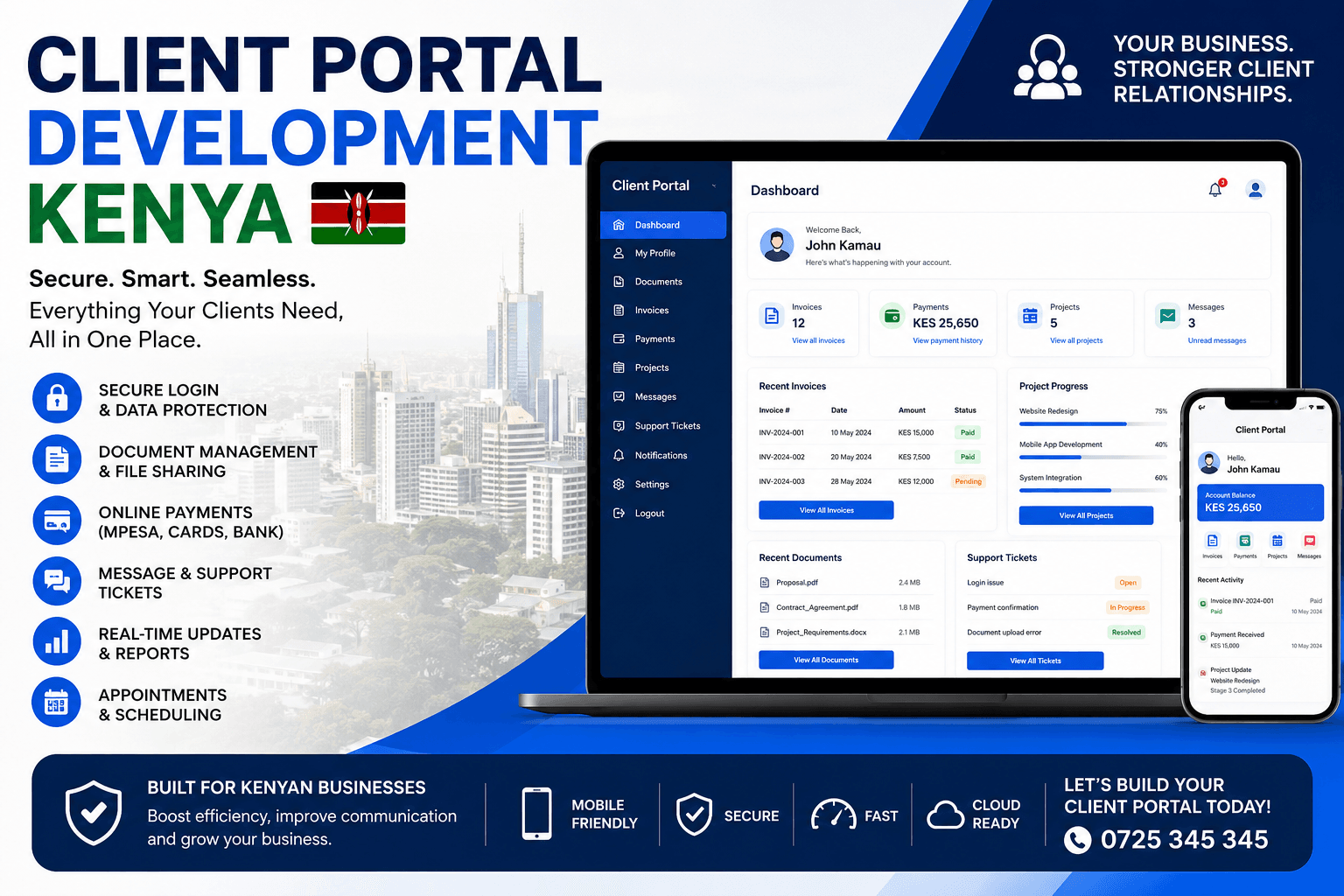
The digital transformation of businesses across Kenya has accelerated significantly over the past few years. Customers now expect instant communication, self-service options, secure document sharing, online payments, and real-time updates. Traditional methods such as email chains, phone calls, and physical paperwork are no longer sufficient for businesses that want to remain competitive.
This is where Client Portal Development Kenya becomes essential.
A client portal provides a secure online environment where customers can interact with your business 24/7. Instead of calling your office to request invoices, track projects, download documents, or make payments, customers simply log in to their personalized dashboard.
Whether you run a law firm, accounting company, property management business, SACCO, hospital, school, insurance agency, logistics company, or consultancy, investing in Client Portal Development Kenya improves operational efficiency while significantly enhancing customer experience.
What Is Client Portal Development?
Client Portal Development Kenya refers to designing and developing a secure online platform where businesses and customers interact digitally.
A typical client portal enables customers to:
- Access personal information
- Download invoices
- Upload documents
- Track projects
- Receive notifications
- Make payments
- Send support requests
- View service history
- Communicate securely
Instead of relying on numerous communication channels, everything is centralized within one secure platform.
Why Kenyan Businesses Need Client Portals
Businesses in Kenya are increasingly embracing digital transformation.
Customers today expect convenience.
They want to:
- Self-service
- Instant communication
- Mobile access
- Online payments
- Secure document sharing
- Fast responses
Client Portal Development Kenya addresses all these expectations.
Benefits include:
- Reduced operational costs
- Better customer satisfaction
- Faster communication
- Increased transparency
- Improved professionalism
- Stronger customer loyalty
- Better data security
Industries Benefiting from Client Portal Development Kenya
Almost every industry can benefit from a client portal.
Property Management
Property managers can allow tenants to:
- Pay rent online
- Report maintenance
- Download receipts
- View lease agreements
- Track repair requests
Law Firms
Clients can:
- Upload legal documents
- Schedule appointments
- View case progress
- Download contracts
- Receive legal updates
Accounting Firms
Accounting firms can provide:
- Tax reports
- Financial statements
- Invoice management
- Secure file exchange
- Payroll reports
Hospitals
Patients can:
- Book appointments
- Download lab results
- Pay bills
- Access prescriptions
- Communicate with doctors
Insurance Companies
Customers can:
- Submit claims
- Upload documents
- Renew policies
- Track claim status
- Download certificates
Schools
Parents can:
- Pay school fees
- Download report cards
- Receive announcements
- Track attendance
- Communicate with teachers
SACCOs
Members can:
- View balances
- Apply for loans
- Download statements
- Track loan applications
- Receive notifications
Logistics Companies
Clients can:
- Track shipments
- Download invoices
- View delivery status
- Upload shipping documents
- Request quotations
Core Features of Client Portal Development Kenya
A modern client portal should include powerful features that improve user experience.
1. Secure Login
Security is critical.
Users should authenticate using:
- Phone number
- OTP verification
- Two-factor authentication
2. Personalized Dashboard
Every customer should have their own dashboard displaying:
- Active services
- Notifications
- Recent activities
- Account summary
- Pending payments
3. Document Management
Businesses can securely share:
- Contracts
- Reports
- Invoices
- Certificates
- Agreements
- Images
- PDFs
Customers can also upload documents directly.
4. Online Payments
Integrating payment gateways simplifies transactions.
Common payment methods include:
- M-Pesa
- Credit cards
- Debit cards
- Bank transfers
Customers receive automatic payment confirmations.
5. Messaging System
Secure communication eliminates scattered emails.
Clients can:
- Send inquiries
- Receive responses
- Share files
- View conversation history
6. Notifications
Automatic alerts can notify clients about:
- Payment reminders
- Appointment confirmations
- Document uploads
- Project milestones
- System announcements
7. Appointment Scheduling
Customers can book appointments without making phone calls.
Examples include:
- Hospitals
- Lawyers
- Consultants
- Financial advisors
8. Support Ticket System
Clients submit issues directly through the portal.
Each ticket can include:
- Status
- Priority
- Attachments
- Assigned staff
- Resolution updates
Benefits of Client Portal Development Kenya
Improved Customer Experience
Modern customers appreciate convenience.
Providing 24-hour access improves customer satisfaction.
Increased Efficiency
Employees spend less time answering repetitive questions.
Customers access information independently.
Better Communication
Instead of multiple WhatsApp conversations, emails, and calls, everything remains organized in one location.
Reduced Paperwork
Digital documents eliminate printing costs while improving environmental sustainability.
Enhanced Security
Sensitive information remains encrypted and protected.
Role-based permissions ensure users only access authorized information.
Faster Payments
Integrated payment systems encourage timely payments while reducing manual follow-up.
Professional Brand Image
A customized portal demonstrates that your business values innovation and customer convenience.
Essential Security Features
Security is one of the most important aspects of Client Portal Development Kenya.
A secure portal should include:
- SSL encryption
- Secure authentication
- Role-based permissions
- Automatic backups
- Audit logs
- Session timeout
- Password encryption
- Data recovery
- Firewall protection
- Malware detection
These measures protect both business and customer data.
Mobile-Friendly Client Portals
Over 80% of internet users in Kenya access services through smartphones.
Therefore, every Client Portal Development Kenya project should prioritize mobile responsiveness.
A mobile-friendly portal should offer:
- Fast loading speeds
- Responsive design
- Touch-friendly navigation
- Mobile payment integration
- Optimized forms
- Push notifications
Users should enjoy the same seamless experience on mobile devices as they do on desktops.
Integration with Business Systems
One of the greatest strengths of Client Portal Development Kenya is the ability to integrate with existing software.
Common integrations include:
- CRM systems
- Accounting software
- ERP solutions
- HR management systems
- Property management software
- Inventory systems
- Email platforms
- SMS gateways
- WhatsApp Business API
- Payment gateways
These integrations reduce duplicate data entry and streamline operations across your organization.
Client Portal Development Process in Kenya
Developing a successful client portal requires careful planning, user-focused design, secure development, and ongoing maintenance. Businesses that follow a structured approach are more likely to achieve higher user adoption and a better return on investment.
1. Requirements Gathering
The first step in Client Portal Development Kenya is understanding the organization’s goals.
Key questions include:
- Who will use the portal?
- What problems should it solve?
- Which services should be available online?
- What systems need integration?
- What level of security is required?
- Should there be different user roles?
This stage helps define the scope of the project and prevents unnecessary development costs.
2. UI/UX Design
A client portal should be intuitive and easy to navigate. Good user interface (UI) and user experience (UX) design improve customer satisfaction and reduce the learning curve.
Best practices include:
- Clean dashboard layout
- Responsive design
- Clear navigation menus
- Accessible color schemes
- Easy-to-use forms
- Fast-loading pages
- Mobile-first design
3. Database Design
The database stores important information such as:
- Customer profiles
- Orders
- Documents
- Payments
- Messages
- Notifications
- Activity logs
A well-structured database ensures speed, security, and scalability.
4. Backend Development
The backend powers the portal’s functionality, including:
- User authentication
- File management
- Payment processing
- Notifications
- API integrations
- Security controls
- Reporting
5. Frontend Development
The frontend is what customers interact with daily.
Developers build:
- Dashboards
- Forms
- Reports
- Charts
- Tables
- Payment pages
- Messaging interfaces
6. Integration
Many businesses already use software such as:
- CRM platforms
- Accounting software
- HR systems
- ERP solutions
- Property management systems
A good Client Portal Development Kenya project integrates these systems into a single experience, reducing duplicate work and improving efficiency.
7. Testing
Before launch, the portal should undergo comprehensive testing, including:
- Functional testing
- Security testing
- Performance testing
- Mobile compatibility testing
- Browser compatibility testing
- User acceptance testing (UAT)
8. Deployment
Once testing is complete, the portal is deployed to a secure production environment.
Deployment includes:
- Domain configuration
- SSL installation
- Database migration
- Server optimization
- Backup setup
- Monitoring tools
9. Training and Support
Employees and customers should receive guidance on using the portal effectively.
Support materials may include:
- User manuals
- Video tutorials
- Knowledge base articles
- FAQs
- Help desk support
Technologies Used for Client Portal Development Kenya
Selecting the right technology stack depends on your business requirements, budget, and future growth plans.
Frontend Technologies
- HTML5
- CSS3
- JavaScript
- React
- Vue.js
- Angular
Backend Technologies
- PHP
- Laravel
- Node.js
- Python
- Django
- ASP.NET
Databases
- MySQL
- PostgreSQL
- Microsoft SQL Server
- MongoDB
Cloud Hosting
- AWS
- Microsoft Azure
- Google Cloud
Payment Integrations
- M-Pesa
- Airtel Money
- Visa
- Mastercard
- Bank APIs
Communication Integrations
- WhatsApp Business API
- SMS gateways
- Email services
- Push notifications
AI-Powered Client Portal Development Kenya
Artificial Intelligence is transforming client portals by automating routine tasks and delivering personalized experiences.
AI features include:
AI Chatbots
Customers receive instant responses to common questions without waiting for human support.
Smart Search
AI helps users quickly find invoices, documents, reports, or service requests.
Personalized Dashboards
The portal displays relevant information based on user behavior and preferences.
Predictive Analytics
Businesses can anticipate customer needs, forecast demand, and identify potential issues before they occur.
Intelligent Notifications
AI determines the best time and channel to send reminders, payment alerts, and updates.
Automated Ticket Routing
Support requests are automatically assigned to the appropriate department, reducing response times.
Common Challenges in Client Portal Development Kenya
Despite the benefits, businesses may encounter several challenges.
Resistance to Change
Some employees and customers may hesitate to adopt a new digital platform. Proper training and communication help overcome this.
Data Migration
Moving existing records from legacy systems requires careful planning to maintain data accuracy.
Security Concerns
Sensitive customer information must be protected through encryption, secure authentication, and regular security audits.
Integration Complexity
Connecting multiple systems can be technically challenging, especially when older software lacks modern APIs.
Scalability
A portal should be designed to accommodate future growth, including more users, features, and data.
Common Mistakes to Avoid
When investing in Client Portal Development Kenya, avoid these common pitfalls:
- Ignoring customer feedback during design.
- Choosing features that add complexity without value.
- Neglecting mobile optimization.
- Failing to implement strong security measures.
- Skipping user training.
- Overlooking regular software updates.
- Using weak password policies.
- Not backing up data regularly.
- Launching without adequate testing.
- Failing to monitor system performance after deployment.
Avoiding these mistakes helps ensure a smooth implementation and a positive user experience.
Case Study: Transforming Customer Service with a Client Portal
A Nairobi-based professional services firm relied heavily on phone calls, emails, and physical paperwork to manage client interactions. Customers frequently requested copies of invoices, contracts, and project updates, leading to long response times and increased administrative workload.
The company invested in Client Portal Development Kenya to centralize customer interactions.
The portal included:
- Secure client login
- Digital document sharing
- Online invoice payments via M-Pesa
- Project progress tracking
- Support ticket management
- Automated email and SMS notifications
Results After Six Months
- Customer response times reduced significantly.
- Administrative workload dropped due to self-service features.
- More invoices were paid on time thanks to automated reminders.
- Customer satisfaction improved because information was available 24/7.
- Staff spent more time on strategic work instead of repetitive administrative tasks.
This example demonstrates how a well-designed client portal can improve efficiency, strengthen customer relationships, and support business growth.