
Cloud Application Development: Empowering Businesses with Scalable Digital Solutions
The way businesses build and use software has changed dramatically over the past decade. Organizations are moving away from traditional on-premise systems in favor of cloud-based applications that offer greater flexibility, scalability, and accessibility. Whether it’s managing customer relationships, automating business processes, delivering online services, or supporting remote teams, cloud applications have become the backbone of modern digital transformation.
Investing in Cloud Application Development enables businesses to create software that can be accessed securely from anywhere with an internet connection. Instead of being tied to a specific office or server, employees, customers, and stakeholders can interact with applications through web browsers or mobile devices, improving productivity and enhancing collaboration.
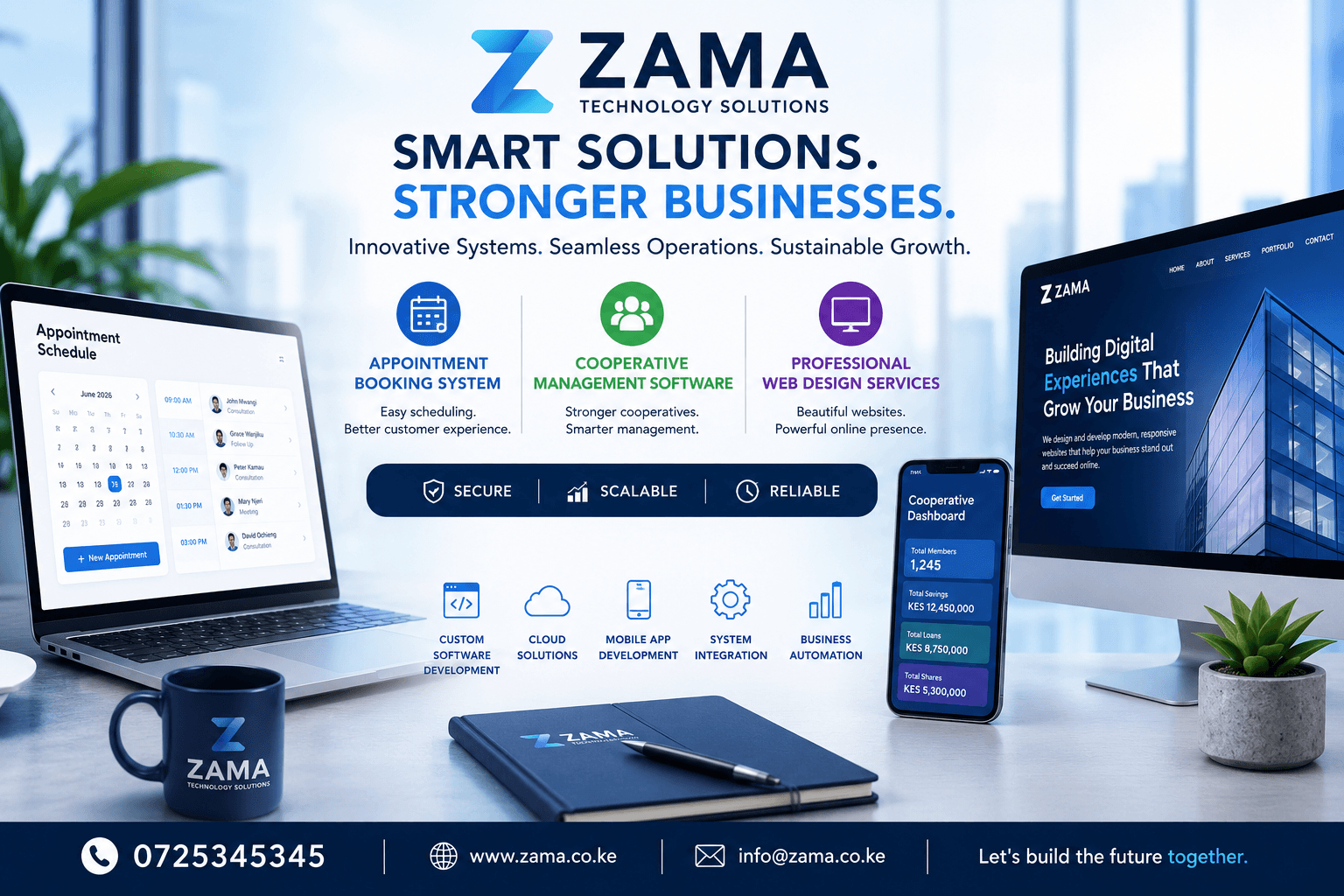
At Zama, we specialize in designing and developing secure, scalable, and customized cloud applications for businesses across Kenya. Our solutions are built to streamline operations, improve customer experiences, and support long-term business growth while remaining flexible enough to evolve with changing organizational needs.
What Is Cloud Application Development?
Cloud application development is the process of designing, building, deploying, and maintaining software applications that run on cloud infrastructure instead of traditional local servers. These applications leverage cloud technologies to deliver high availability, remote accessibility, and improved performance.
Unlike conventional software that must be installed on individual computers, cloud applications are centrally hosted and can be accessed through the internet. This allows organizations to manage data, users, and business processes more efficiently while reducing the costs associated with maintaining physical infrastructure.
Modern cloud applications support businesses of every size, from startups launching innovative digital products to large enterprises managing complex operations across multiple locations.
Why Businesses Are Moving to the Cloud
Today’s organizations require technology that supports growth without creating unnecessary complexity. Cloud-based applications provide that flexibility by allowing businesses to scale resources, introduce new features quickly, and support distributed teams with ease.
Businesses adopting Cloud Application Development gain the ability to respond faster to market demands while reducing operational costs associated with traditional IT infrastructure.
Some of the key advantages include:
- Remote access from anywhere
- Improved business continuity
- Reduced infrastructure costs
- Automatic software updates
- Enhanced collaboration
- Flexible scalability
- Faster deployment of new features
- Improved data security
- Easier maintenance
- Better system performance
These benefits allow organizations to focus more on innovation and customer service rather than managing servers and hardware.
Key Features of Modern Cloud Applications Development
Successful cloud applications combine reliability, performance, and user-friendly functionality. Every feature should contribute to creating a seamless experience while supporting business objectives.
Scalability
One of the greatest advantages of cloud technology is the ability to scale resources as business demands change.
Whether your application serves one hundred users or one million, cloud infrastructure can adapt to increased workloads without requiring major system redesigns. This flexibility ensures businesses only pay for the resources they need while maintaining excellent performance during periods of growth.
Anywhere, Anytime Access
Cloud applications allow authorized users to access business systems wherever they are.
Employees working remotely, field teams visiting clients, and customers interacting with your services can all connect securely using computers, tablets, or smartphones. This accessibility improves productivity while supporting modern hybrid work environments.
High Availability
Downtime can negatively impact productivity, customer satisfaction, and revenue. Professional cloud applications are designed with redundancy and resilience in mind, helping ensure that services remain available even during unexpected infrastructure issues.
High availability features may include:
- Automatic failover
- Redundant servers
- Load balancing
- Continuous monitoring
- Disaster recovery planning
These capabilities help businesses maintain uninterrupted operations.
Strong Security
Security is one of the most important considerations when developing cloud applications. Organizations handle sensitive customer data, financial information, and confidential business records that require robust protection.
Professional cloud applications include security measures such as:
- Data encryption
- Secure authentication
- Multi-factor authentication
- Role-based access control
- Audit logs
- Automatic backups
- Secure APIs
- Regular security updates
These measures reduce risk while helping organizations maintain customer trust.
Integration with Existing Systems
Modern businesses rarely rely on a single application. Cloud applications should integrate seamlessly with existing software to create efficient workflows and eliminate duplicate work.
Common integrations include:
- ERP systems
- CRM platforms
- Accounting software
- HR systems
- Payment gateways
- Mobile applications
- Email platforms
- Business intelligence tools
Integration improves data consistency while increasing operational efficiency.
Types of Cloud Applications We Develop
Every organization has unique requirements, and cloud solutions should be tailored accordingly. At Zama, we develop applications that solve real business challenges while remaining flexible for future growth.
Our cloud application development services include:
- Customer management systems
- Enterprise resource planning (ERP) solutions
- Appointment booking platforms
- Cooperative management systems
- Hospital management software
- School management systems
- Inventory management applications
- Human resource management systems
- Financial management platforms
- Document management systems
- E-commerce platforms
- Business intelligence dashboards
- Project management software
- Workflow automation platforms
- Custom enterprise applications
Each solution is designed around your business processes, ensuring the technology works for your organization rather than forcing you to adapt to generic software.
Benefits of Cloud Application Development
Organizations investing in Cloud Application Development experience improvements across multiple areas of their operations.
Some of the most significant benefits include:
- Lower operational costs
- Faster software deployment
- Improved employee productivity
- Better collaboration
- Enhanced customer experiences
- Easier software updates
- Reduced infrastructure maintenance
- Greater business flexibility
- Improved disaster recovery
- Simplified system administration
These advantages help businesses remain competitive in increasingly digital markets.
Accelerating Digital Transformation
Digital transformation is about using technology to improve how organizations operate, deliver services, and engage customers. Cloud applications play a central role in this transformation by replacing manual processes with intelligent digital workflows.
For example, a business that previously relied on paper forms and spreadsheets can move to a cloud-based platform where employees collaborate in real time, approvals are automated, and reports are generated instantly.
This not only improves efficiency but also provides management with accurate data for better decision-making. As organizations continue to embrace digital transformation, cloud applications become essential tools for driving innovation and long-term success.
Supporting Business Growth
Businesses need technology that grows with them. Traditional software often requires expensive hardware upgrades or complex installations as user numbers increase.
Cloud applications eliminate many of these limitations by providing flexible infrastructure that expands alongside your business. Whether you open new branches, hire additional employees, or introduce new services, your application can scale without disrupting operations.
This scalability allows businesses to respond quickly to changing customer demands while maintaining high levels of performance.
Improving Collaboration Across Teams
Modern workplaces are increasingly distributed, with employees working from offices, homes, and field locations. Cloud applications make collaboration easier by giving authorized users access to the same real-time information.
Teams can update records, share documents, monitor projects, and communicate more effectively without worrying about outdated files or disconnected systems.
Benefits of cloud-based collaboration include:
- Real-time data access
- Faster decision-making
- Improved communication
- Reduced duplication of work
- Better project visibility
- Centralized document management
- Enhanced productivity
Collaboration tools help organizations work more efficiently regardless of where employees are located.
Why Choose Zama for Cloud Application Development?
At Zama, we understand that every business has different operational requirements, growth objectives, and technical environments. That’s why we develop custom cloud applications designed around your specific workflows rather than offering one-size-fits-all solutions.
Our experienced development team combines technical expertise with a deep understanding of business processes to create reliable, scalable, and user-friendly applications.
When you partner with Zama, you benefit from:
- Custom cloud application development
- Secure architecture
- Responsive user interfaces
- API development and integration
- Performance optimization
- Scalable infrastructure
- Quality assurance testing
- Ongoing maintenance and support
- Future-ready technology solutions
Our goal is to deliver cloud applications that improve efficiency, strengthen customer engagement, and support sustainable business growth.
Best Practices for Successful Cloud Application Development
Developing a successful cloud application requires careful planning and continuous improvement.
Recommended best practices include:
- Define clear business objectives before development.
- Design with scalability in mind.
- Prioritize user experience throughout development.
- Implement strong security measures from the start.
- Integrate with existing business systems where appropriate.
- Perform regular testing before deployment.
- Monitor application performance continuously.
- Schedule routine updates and maintenance.
- Back up critical data regularly.
- Gather user feedback for ongoing enhancements.
These practices help ensure your cloud application delivers long-term value and remains adaptable as business requirements evolve.
The Future of Cloud Application Development
Cloud technology continues to evolve rapidly, introducing new opportunities for businesses to innovate.
Emerging trends include:
- Artificial intelligence integration
- Machine learning capabilities
- Serverless computing
- Internet of Things (IoT) connectivity
- Advanced analytics
- Low-code and no-code platforms
- Edge computing
- Enhanced cybersecurity solutions
Organizations that invest in cloud technologies today will be better positioned to embrace these innovations while maintaining a competitive advantage.
Conclusion
Investing in Cloud Application Development allows businesses to modernize operations, improve collaboration, strengthen security, and support sustainable growth. Cloud-based applications provide the flexibility, scalability, and accessibility needed to compete in today’s fast-moving digital economy.
At Zama, we design and develop secure, scalable, and customized cloud applications that align with your business objectives. Whether you need an enterprise management platform, customer portal, workflow automation solution, or a completely custom cloud application, our team is committed to delivering technology that creates measurable value.
By choosing the right cloud development partner, your organization gains more than software—you gain a reliable digital foundation that supports innovation, improves operational efficiency, and prepares your business for the future.
Frequently Asked Questions (FAQs)
What is cloud application development?
Cloud application development is the process of creating software applications that run on cloud infrastructure, allowing users to access them securely over the internet from various devices.
Is cloud application development suitable for small businesses?
Yes. Cloud applications are highly scalable, making them suitable for startups, SMEs, and large enterprises alike.
Can cloud applications integrate with existing systems?
Absolutely. Cloud applications can integrate with ERP systems, CRM platforms, accounting software, payment gateways, HR systems, and many other business applications.
Are cloud applications secure?
Yes. Professional cloud applications incorporate robust security measures such as encryption, secure authentication, access controls, regular updates, and automated backups.
Why choose Zama for cloud application development?
Zama develops secure, scalable, and customized cloud applications that help Kenyan businesses streamline operations, improve efficiency, and achieve long-term digital transformation.