
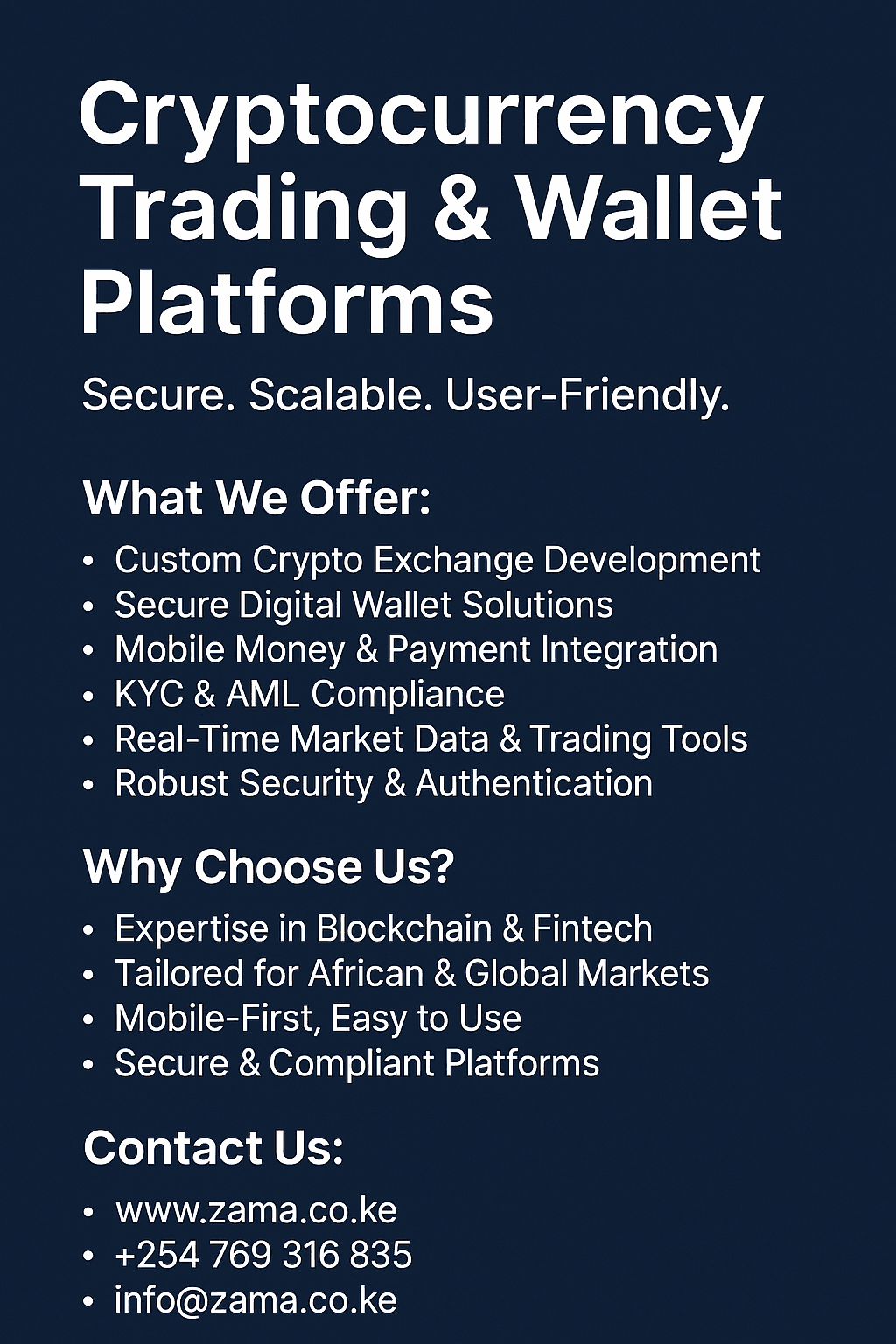
The rise of cryptocurrency trading and wallet platforms has revolutionized the way people interact with money, investment, and financial services worldwide. These platforms enable seamless buying, selling, storing, and managing of digital assets such as Bitcoin, Ethereum, and thousands of other cryptocurrencies. As blockchain technology gains widespread adoption, these platforms are becoming crucial gateways for both novice and professional traders.
In this comprehensive guide, we explore everything you need to know about cryptocurrency trading and wallet platforms—from their fundamental concepts and features to security best practices, regulatory landscapes, and future trends. Whether you’re a user, investor, or developer, this blog will give you a detailed understanding of the crypto ecosystem and how these platforms empower the digital economy.
1. What Are Cryptocurrency Trading and Wallet Platforms?Cryptocurrency Trading and Wallet Platforms
Cryptocurrency trading platforms, commonly known as exchanges, are digital marketplaces where users can buy, sell, and trade cryptocurrencies. They facilitate transactions between buyers and sellers by providing real-time price data, liquidity, and order management.
Cryptocurrency wallet platforms are digital wallets used to securely store cryptocurrencies. Wallets come in two forms:
Custodial wallets, where the platform manages the private keys on behalf of the user, and
Non-custodial wallets, where users have full control over their private keys and funds.
Together, these platforms form the foundation of the cryptocurrency ecosystem, enabling participation in digital finance with security and convenience.
2. The Growing Popularity of Cryptocurrency Worldwide
Cryptocurrency adoption has soared globally due to factors such as financial inclusion, remittance cost reduction, and the desire for decentralized financial systems. Notably, regions like Africa have witnessed rapid growth in crypto usage, driven by smartphone penetration and mobile money familiarity.
Key drivers of global cryptocurrency growth include:
Increasing institutional interest and investment
Emergence of decentralized finance (DeFi) platforms
Expansion of NFTs and digital collectibles
Growing awareness of blockchain’s transparency and security
3. Core Features of Cryptocurrency Trading Platforms : Cryptocurrency Trading and Wallet Platforms
When choosing or developing a cryptocurrency trading platform, the following features are essential:
a. User Registration and KYC Compliance
Platforms must verify users’ identities following Know Your Customer (KYC) and Anti-Money Laundering (AML) regulations to ensure legal compliance and security.
b. Trading Pairs and Order Types
Support for multiple trading pairs (crypto-to-crypto and crypto-to-fiat) and various order types such as market, limit, stop-loss, and take-profit.
c. Liquidity Management
Sufficient liquidity is vital to enable users to execute trades swiftly at competitive prices.
d. Real-Time Market Data and Analytics
Live price charts, order books, trade history, and market depth visuals assist traders in making informed decisions.
e. Payment Gateway Integration
Seamless fiat on-ramps and off-ramps via bank transfers, credit/debit cards, and mobile money services like M-Pesa or MTN Mobile Money, particularly critical in emerging markets.
f. Security Features
Two-factor authentication (2FA), IP whitelisting, withdrawal limits, and encryption to protect user accounts and funds.
g. Mobile and Web Access
Responsive platforms with intuitive interfaces accessible via web browsers and mobile apps.
4. Essential Features of Cryptocurrency Wallets : Cryptocurrency Trading and Wallet Platforms
A cryptocurrency wallet must provide a secure and user-friendly environment for asset storage:
a. Multi-Currency Support
Ability to store various cryptocurrencies in one wallet, accommodating popular coins and tokens.
b. Private Key Management
For non-custodial wallets, secure generation, storage, and recovery of private keys via seed phrases.
c. Transaction Management
Sending, receiving, and tracking cryptocurrency transactions with transparency.
d. Backup and Recovery Options
Seed phrase export, encrypted backups, and password recovery ensure asset safety.
e. Integration with Trading Platforms
Some wallets integrate trading or swapping capabilities directly within the app.
f. Security and Privacy
Biometric authentication, encryption, and optional anonymity features protect users’ data.
5. How Cryptocurrency Trading and Wallet Platforms Work Together
Trading platforms and wallets complement each other. After purchasing cryptocurrencies on an exchange, users often transfer their assets to wallets for long-term storage or vice versa for trading purposes.
Some platforms offer integrated wallets for seamless user experience, while others encourage use of third-party wallets to enhance security through decentralization.
6. Security Measures in Crypto Platforms : Cryptocurrency Trading and Wallet Platforms
Given the irreversible nature of blockchain transactions, security is paramount. Key measures include:
Cold Storage: Storing majority of funds offline to prevent hacks.
Two-Factor Authentication: Additional login security.
Encryption: Protecting sensitive user data and communications.
Regular Audits: Ensuring smart contracts and platform code are free of vulnerabilities.
Fraud Detection Systems: Monitoring suspicious activity in real time.
7. Regulatory Considerations Across Different Markets : Cryptocurrency Trading and Wallet Platforms
Regulatory environments vary globally. Platforms must navigate:
Licensing requirements
Tax reporting obligations
AML/KYC rules
Consumer protection laws
In African markets, regulators are gradually crafting crypto-specific regulations, balancing innovation and risk management.
8. Cryptocurrency Platforms in Africa: Opportunities and Challenges
Africa presents a unique landscape with high mobile money adoption, youthful populations, and increasing internet penetration. However, challenges include:
Limited banking infrastructure
Regulatory uncertainty
Security and fraud risks
Education and awareness gaps
Despite this, many platforms tailored for African users integrate mobile money payments, multilingual support, and education features.9. Choosing the Right Trading and Wallet Platform
When selecting platforms, consider:
Security reputation and past incidents
User interface and ease of use
Fee structures
Available trading pairs and liquidity
Customer support quality
Regulatory compliance
10. Developing Your Own Cryptocurrency Trading and Wallet Platform
Developing a platform requires:
Strong technical expertise in blockchain and fintech
Compliance with regional regulations
Robust security architecture
Integration with payment gateways and KYC providers
Scalable infrastructure
User-friendly design for mobile and web
At Zama Web Experts, we specialize in building secure, scalable, and compliant cryptocurrency platforms tailored for global and African markets.
11. Future Trends in Cryptocurrency Platforms
DeFi Integration: Expanding decentralized finance functionalities.
NFT Marketplaces: Supporting digital collectibles trading.
Cross-Chain Trading: Enabling seamless swaps between blockchains.
Improved UX/UI: Simplifying crypto adoption for mainstream users.
AI-Driven Security: Using machine learning to detect fraud and anomalies.
Cryptocurrency Trading and Wallet Platforms
Cryptocurrency trading and wallet platforms are pivotal in the transition to decentralized digital finance. They provide users worldwide, especially in emerging markets like Africa, with tools to access, trade, and safeguard digital assets securely.
By leveraging innovation, security, and user-centric design, platforms built by experienced developers like Zama Web Experts are set to lead the way in this dynamic ecosystem.
Contact Zama Web Experts
Ready to build or enhance your cryptocurrency platform? Contact Zama Web Experts for expert development and consultation services.
Website: www.zama.co.ke
Phone: +254 769316835
Email: info@zama.co.ke
