
Table of Contents
ToggleCustom Software Development in Kenya: Driving Digital Transformation in 2026

Custom software development in Kenya has become one of the most powerful drivers of digital transformation in 2026. As businesses continue to face increasing competition, shifting customer expectations, and rapid technological change, off-the-shelf software is no longer enough. Organizations are now turning to tailored digital solutions that are built specifically for their workflows, industries, and long-term growth strategies.
From startups in Nairobi to large enterprises operating across East Africa, custom software is reshaping how companies operate, serve customers, and scale efficiently.
Why Custom Software Development Matters in 2026
The business environment in Kenya has evolved significantly. Companies are no longer asking if they should digitize, but how fast they can do it effectively.
Custom software development provides:
- Tailored solutions built around specific business needs
- Greater operational efficiency and automation
- Improved customer experience through personalization
- Better integration with existing systems
- Stronger data security and control
Unlike generic SaaS tools, custom-built systems grow with the business, making them a long-term investment rather than a recurring expense.
The Rise of Digital Transformation in Kenya
Digital transformation is no longer limited to tech companies. In 2026, industries such as real estate, agriculture, finance, healthcare, and logistics are all adopting custom-built platforms.
In cities like Nairobi, businesses are increasingly investing in:
- Enterprise resource planning (ERP) systems
- Customer relationship management (CRM) platforms
- Property and facility management systems
- E-commerce and mobile commerce platforms
- Business intelligence dashboards
This shift is being fueled by increased internet penetration, mobile-first users, and the growing demand for automation across all sectors.
Key Benefits of Custom Software Development
1. Business Process Automation
Custom software eliminates repetitive manual tasks by automating workflows such as invoicing, reporting, inventory management, and customer communication.
2. Scalability for Growth
As businesses expand, custom systems can be upgraded and extended without disrupting operations.
3. Competitive Advantage
Companies with tailored systems operate faster and more efficiently than those relying on generic solutions.
4. Data-Driven Decision Making
Custom dashboards and analytics tools help business leaders make informed decisions based on real-time data.
5. Integration with Modern Technologies
Custom solutions can integrate with APIs, mobile apps, cloud systems, and AI tools to enhance functionality.
Industries Leading Adoption in Kenya
Real Estate and Property Management
Real estate firms are using custom platforms to manage tenants, payments, maintenance requests, and reporting systems.
Financial Services
Banks, SACCOs, and fintech startups are investing in secure platforms for mobile banking, loan management, and digital payments.
Retail and E-commerce
Retailers are building custom online stores and inventory systems to meet growing online demand.
Logistics and Transport
Companies are adopting tracking systems, fleet management tools, and delivery optimization software.
Healthcare
Hospitals and clinics are using custom systems for patient records, appointment scheduling, and billing automation.
Technologies Powering Custom Software in 2026
Modern custom software development relies on advanced technologies such as:
- Cloud computing (AWS, Azure, Google Cloud)
- Artificial intelligence and machine learning
- Mobile-first development frameworks
- Progressive Web Apps (PWAs)
- API-first architecture
- Cybersecurity-enhanced frameworks
These technologies ensure that software solutions are fast, secure, and accessible from anywhere.
Challenges Businesses Face Without Custom Software
Organizations that still rely on outdated or generic systems often struggle with:
- Inefficient manual processes
- Poor data visibility
- High operational costs
- Limited scalability
- Integration issues between systems
These challenges slow down growth and reduce competitiveness in a fast-moving digital economy.
The Future of Custom Software Development in Kenya
The future is highly promising. As more businesses embrace digital transformation, demand for custom solutions will continue to rise.
Key trends shaping the future include:
- Increased adoption of AI-powered business tools
- Expansion of mobile-first enterprise systems
- Growth of cloud-native applications
- Strong focus on cybersecurity and data protection
- More SMEs investing in tailored digital platforms
In the coming years, custom software will become the backbone of most successful enterprises in Kenya.
Expanding the Impact of Custom Software Development in Kenya
As the digital economy accelerates, custom software development in Kenya is no longer just a technical investment—it is becoming a core business strategy. Companies are using tailored systems to improve efficiency, reduce costs, and unlock new revenue streams in increasingly competitive markets.
For many organizations in Nairobi and across the country, custom software development in Kenya is the difference between scaling successfully and struggling with outdated systems.
How Businesses Are Leveraging Custom Software Development in Kenya
Modern enterprises are applying custom software development in Kenya in highly practical ways that go beyond basic automation.
Streamlining End-to-End Operations
Businesses are integrating sales, finance, HR, and customer service into unified platforms built through custom software development in Kenya. This eliminates silos and improves visibility across departments.
Enhancing Customer Experience
With custom software development in Kenya, companies are creating personalized customer journeys—ranging from automated onboarding to real-time support systems that improve satisfaction and retention.
Enabling Remote and Hybrid Work
Organizations are adopting cloud-based tools powered by custom software development in Kenya to support remote teams, ensuring collaboration regardless of location.
Why SMEs Are Investing More in Custom Software Development in Kenya
Small and medium-sized enterprises are increasingly realizing that custom software development in Kenya is not reserved for large corporations.
SMEs benefit by:
- Building affordable systems tailored to their exact needs
- Avoiding expensive subscription-based tools
- Scaling gradually without major disruptions
- Competing with larger enterprises using smart automation
For growing businesses, custom software development in Kenya provides a foundation for sustainable expansion.
Custom Software Development in Kenya and the Rise of Data Intelligence
Data has become the most valuable business asset, and custom software development in Kenya is helping organizations harness it effectively.
Through custom dashboards and analytics platforms, businesses can:
- Track real-time performance metrics
- Predict customer behavior patterns
- Identify operational inefficiencies
- Improve financial forecasting
This data-driven approach ensures that custom software development in Kenya delivers measurable business value beyond just automation.
The Competitive Advantage of Custom Software Development in Kenya

Companies that adopt custom software development in Kenya gain a clear edge in their industries. Unlike competitors relying on generic tools, they benefit from systems designed specifically for their workflows.
This leads to:
- Faster decision-making
- Reduced operational errors
- Better resource allocation
- Stronger customer engagement
Ultimately, custom software development in Kenya helps businesses stay ahead in rapidly changing markets.
The Future Outlook of Custom Software Development in Kenya
The next phase of custom software development in Kenya will be shaped by emerging technologies such as artificial intelligence, blockchain, and advanced cloud computing.
We can expect:
- More intelligent automation systems
- Fully integrated business ecosystems
- Greater adoption of mobile-first enterprise platforms
- Increased cybersecurity-focused development
As these trends evolve, custom software development in Kenya will continue to redefine how businesses operate across every sector
The continued growth of custom software development in Kenya signals a major shift in how organizations approach technology. Instead of adapting their processes to fit generic tools, companies are now building systems that adapt to them.
From SMEs to large enterprises, custom software development in Kenya is enabling smarter operations, better customer experiences, and stronger long-term competitiveness in a digital-first economy.
Scaling Beyond Basics with Custom Software Development in Kenya
As adoption matures, custom software development in Kenya is moving beyond simple automation into full-scale digital ecosystems. Businesses are no longer building isolated tools; they are creating interconnected platforms that manage entire value chains.
At this stage, custom software development in Kenya becomes a growth engine rather than just an operational tool.
Integration Across Business Ecosystems
One of the most powerful shifts happening through custom software development in Kenya is deep system integration.
Companies are now connecting:
- Payment systems with accounting platforms
- Inventory tools with online storefronts
- CRM systems with marketing automation
- Mobile apps with backend enterprise databases
This level of integration ensures that custom software development in Kenya supports real-time business intelligence and seamless operations across departments.
Cloud-First Strategy and Custom Software Development in Kenya
Cloud adoption is now central to custom software development in Kenya. Businesses are prioritizing cloud-native applications to improve flexibility, scalability, and cost efficiency.
With cloud-first architecture, custom software development in Kenya enables:
- On-demand scalability during peak business periods
- Secure remote access from anywhere
- Reduced infrastructure costs
- Faster deployment cycles
This shift is particularly important for fast-growing startups and enterprises operating across multiple regions.
Security and Compliance in Custom Software Development in Kenya
As digital systems expand, security has become a major focus of custom software development in Kenya. Companies are investing in secure architectures to protect sensitive business and customer data.
Modern solutions include:
- End-to-end encryption
- Multi-factor authentication systems
- Role-based access control
- Continuous security monitoring
By embedding security into design, custom software development in Kenya helps businesses reduce risk while maintaining customer trust.
AI and Automation Driving the Next Wave
Artificial intelligence is redefining custom software development in Kenya by introducing smarter automation and predictive capabilities.
Businesses are now using AI-powered systems to:
- Automate customer support with chatbots
- Predict sales trends and demand
- Detect fraud in financial transactions
- Optimize logistics and delivery routes
This evolution means custom software development in Kenya is no longer just reactive—it is becoming predictive and intelligent.
Long-Term Business Value of Custom Software Development in Kenya
The long-term impact of custom software development in Kenya goes far beyond immediate efficiency gains. It builds a foundation for continuous innovation and adaptability.
Over time, businesses benefit from:
- Lower operational overhead
- Faster product and service innovation
- Improved customer loyalty
- Stronger market positioning
This makes custom software development in Kenya a strategic asset that grows in value as the business scales.
Emerging Opportunities in Kenya’s Software Development Landscape
The software development landscape in Kenya is expanding rapidly, opening up new possibilities across both established and emerging sectors. What began as basic business digitization has now evolved into complex ecosystems powering smart cities, financial innovation, agriculture modernization, and AI-driven public services.
In 2026, technology-driven solutions are increasingly aligned with national digital transformation agendas and private-sector innovation strategies.
Fintech Innovation Leading Digital Growth
One of the fastest-growing areas is financial technology. Businesses are now building advanced platforms that go far beyond mobile money and basic transactions.
These include:
- Digital lending systems with automated credit scoring
- Mobile banking platforms enhanced with biometric security
- Savings and investment applications tailored for local markets
- Real-time fraud detection and risk monitoring tools
These innovations are improving financial inclusion and expanding access to financial services for underserved communities.
Agritech Transformation Across the Value Chain
Agriculture remains a vital sector, and modern digital tools are reshaping how farming and agribusiness operate.
Key solutions include:
- Farm management platforms with weather and soil data integration
- Supply chain tracking systems for agricultural produce
- Direct-to-market platforms connecting farmers and buyers
- Mobile advisory services offering real-time agricultural guidance
This transformation is helping bridge the gap between traditional farming practices and modern data-driven agriculture.
Education Sector Digitization
Educational institutions are increasingly adopting digital systems to improve learning outcomes and administrative efficiency.
Schools and universities are implementing:
- Learning management systems for online education
- Digital examination and grading platforms
- Student performance analytics dashboards
- Virtual classroom environments for remote learning
These tools are making education more accessible, flexible, and data-informed.
Public Sector Digital Transformation
Government institutions are also embracing digital platforms to enhance service delivery and transparency.
Key implementations include:
- Citizen service portals for faster document processing
- Online licensing and permit management systems
- Automated tax and revenue collection platforms
- Digital records and archives management systems
These advancements are reducing bureaucracy and improving efficiency in public service delivery.
Startup Ecosystem and Innovation Growth
Startups are playing a major role in driving technological innovation. Many young companies are building scalable digital products designed to solve real-world problems.
Common focus areas include:
- On-demand service platforms
- Digital marketplaces and e-commerce ecosystems
- AI-powered SaaS solutions
- Mobile-first consumer applications
By leveraging modern development approaches, startups are able to scale quickly and compete in both local and global markets.
Future Technology Trends
Several key trends are shaping the next phase of software innovation:
- AI-powered automation and decision-making systems
- Growth of low-code and no-code development platforms
- Increased use of blockchain for secure transactions
- Expansion of Internet of Things (IoT) applications
- Strong emphasis on user-centered design and experience
These trends are driving a shift toward more intelligent, connected, and automated systems.
Advanced Digital Infrastructure and Enterprise Adoption
As Kenya’s digital economy matures, organizations are increasingly investing in robust digital infrastructure to support large-scale operations. Businesses are moving away from fragmented tools and adopting fully integrated systems that unify operations, data, and customer engagement.
This shift is enabling companies to operate with greater efficiency, transparency, and agility across multiple regions and departments.
The Rise of Intelligent Automation
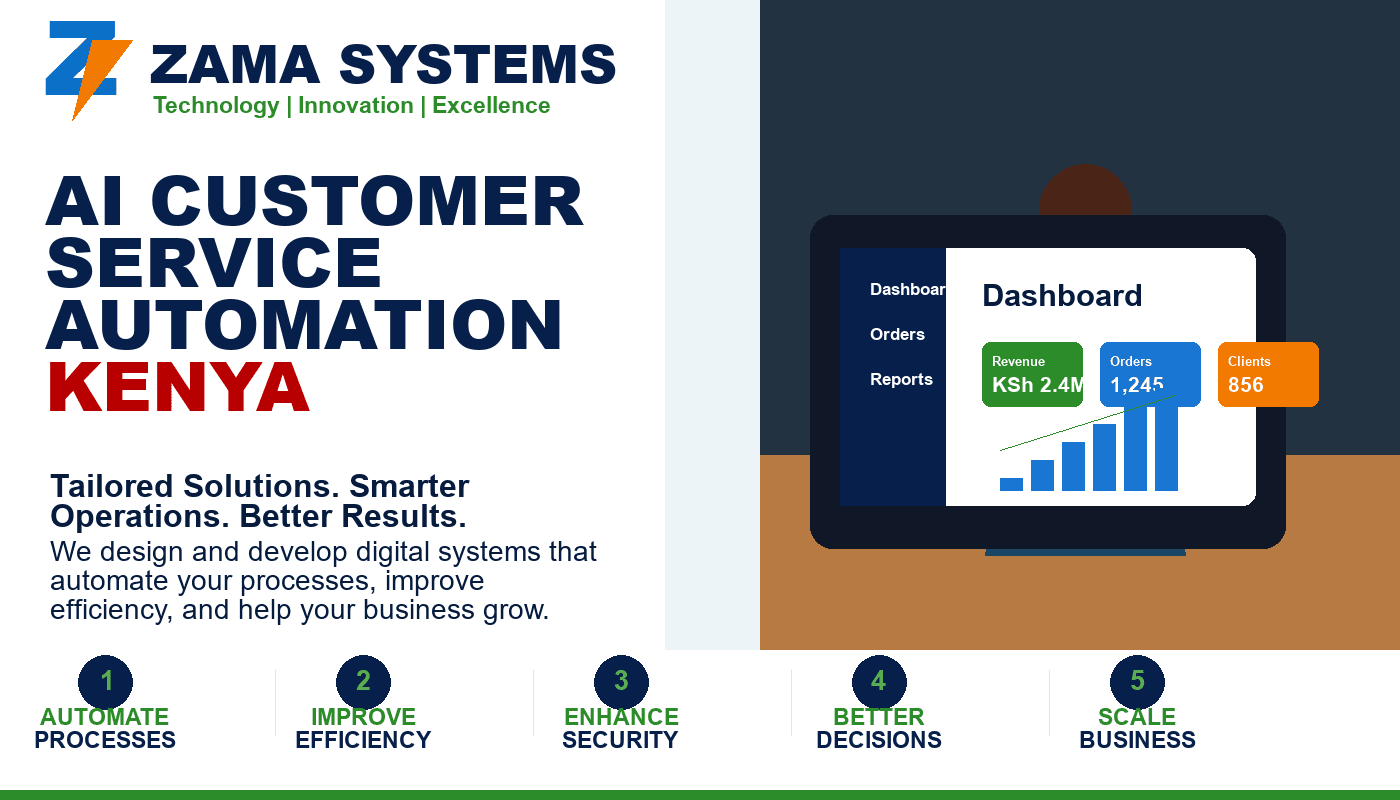
Automation is no longer limited to simple repetitive tasks. Modern systems are now capable of making intelligent decisions based on data inputs and predictive models.
Organizations are now deploying solutions that can:
- Automatically route customer inquiries to the right departments
- Predict inventory needs based on demand trends
- Generate financial reports in real time
- Optimize workforce scheduling based on performance data
This level of automation is significantly reducing operational delays and improving productivity across industries.
Data as a Strategic Business Asset
Data has become one of the most valuable resources in modern business operations. Companies are now focusing on collecting, processing, and analyzing data to guide decision-making at every level.
Key developments include:
- Centralized data warehouses for unified reporting
- Real-time analytics dashboards for executives
- Predictive modeling for sales and customer behavior
- Data visualization tools for performance tracking
With better data systems in place, businesses can respond faster to market changes and identify new growth opportunities.
Mobile-First Business Transformation
Mobile technology continues to dominate digital adoption in Kenya. As a result, most modern systems are now designed with a mobile-first approach.
This ensures that users can:
- Access business tools from anywhere
- Complete transactions on mobile devices
- Receive real-time notifications and updates
- Collaborate seamlessly through mobile applications
Mobile-first design is especially important for field-based industries such as logistics, retail, and agriculture.
Cloud Computing as the Foundation of Modern Systems
Cloud technology has become the backbone of modern digital infrastructure. It enables businesses to scale quickly without heavy investment in physical servers or infrastructure.
Key advantages include:
- Flexible resource allocation based on demand
- Enhanced data security and backup systems
- Faster deployment of new applications
- Reduced maintenance and operational costs
This shift to cloud-based systems is accelerating innovation and enabling faster digital transformation.
Cybersecurity and Digital Trust
As digital adoption increases, cybersecurity has become a critical priority. Businesses are investing heavily in protecting sensitive data and ensuring system integrity.
Modern security measures include:
- Multi-layer authentication systems
- Continuous threat monitoring and detection
- Secure encryption protocols for data transmission
- Regular vulnerability assessments and audits
Building digital trust is essential for sustaining long-term customer relationships and business credibility.
The Role of Innovation Hubs and Tech Communities
Innovation hubs and technology communities are playing a key role in shaping the future of software development. These ecosystems provide support for developers, startups, and enterprises through collaboration and knowledge sharing.
They contribute by:
- Supporting early-stage product development
- Providing mentorship and technical training
- Encouraging collaboration between startups and enterprises
- Promoting research and experimentation in new technologies
This collaborative environment is helping accelerate innovation across the country.
Expanding Global Competitiveness
Kenyan technology companies are increasingly competing on a global scale. With improved skills, infrastructure, and innovation capacity, local firms are delivering solutions to international markets.
This growth is driven by:
- High-quality engineering talent
- Competitive development costs
- Strong focus on problem-solving solutions
- Increasing adoption of global development standards
As a result, Kenya is positioning itself as a strong player in the global digital economy.
Conclusion
Custom software development is no longer a luxury—it is a necessity for businesses that want to remain competitive in 2026. In a rapidly evolving digital economy, especially in innovation hubs like Nairobi, companies that invest in tailored software solutions are better positioned to scale, innovate, and deliver exceptional customer experiences.
As digital transformation continues to accelerate across Kenya, custom software will remain one of the most important tools for long-term business success.