
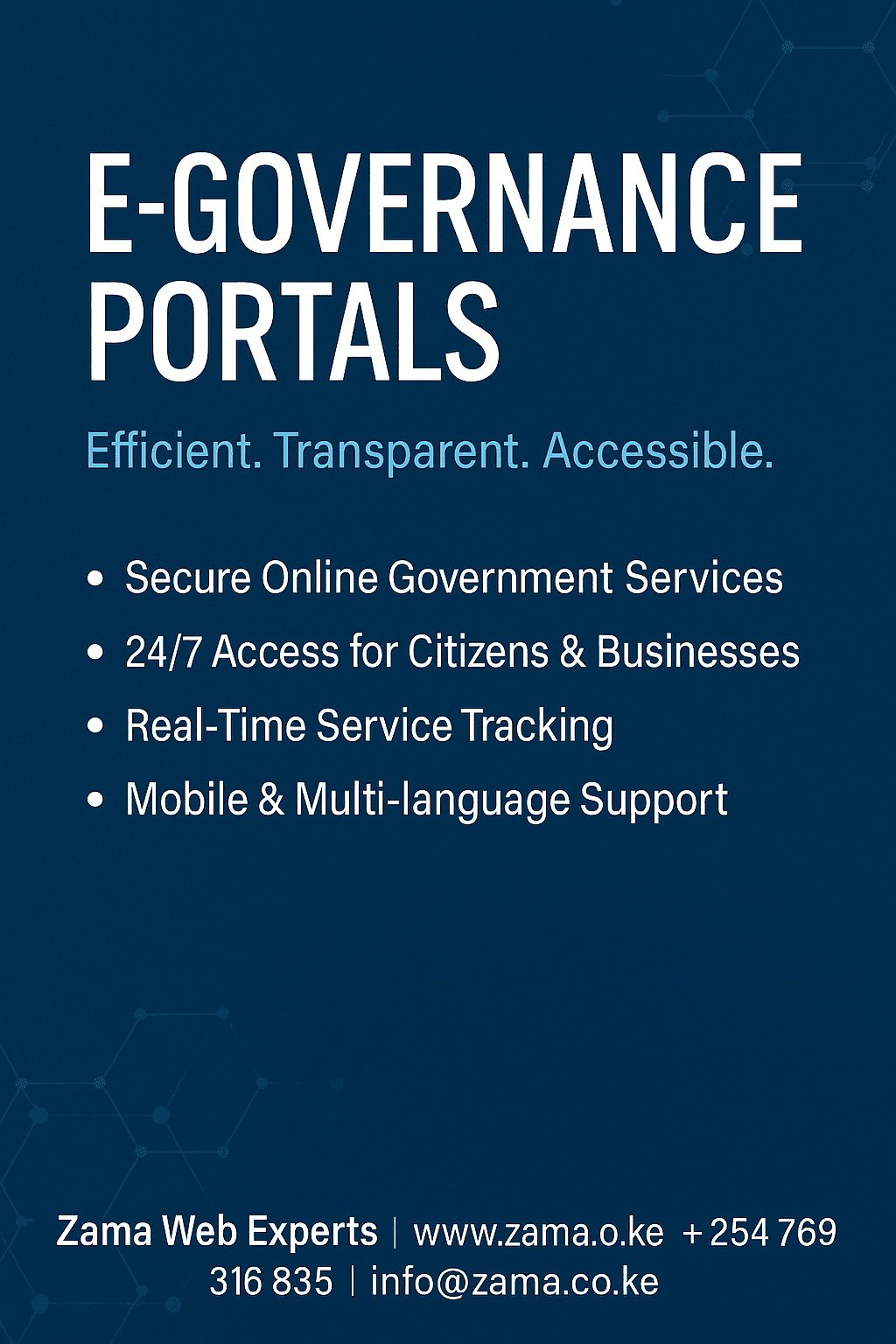
In the age of digital transformation, e-governance portals are revolutionizing the way governments deliver services to citizens, businesses, and other stakeholders. These online platforms enable seamless, transparent, and efficient access to a wide range of public services, making governance more accessible and accountable.
At its core, e-governance leverages information and communication technology (ICT) to enhance the interaction between government entities and the public, thereby improving service delivery, reducing corruption, and fostering citizen participation.
In this comprehensive article, we explore what e-governance portals are, their key features and benefits, challenges, implementation strategies, and future trends shaping digital governance worldwide.
What Are E-Governance Portals?
E-governance portals are web-based platforms designed to provide government services and information online. These portals act as one-stop-shops for citizens, businesses, and government officials to access services such as licensing, tax payments, public records, grievance redressal, and more.
They serve as the digital interface that connects government departments with the public, simplifying complex administrative processes and enabling 24/7 service availability.
Key Features of E-Governance Portals
Successful e-governance portals typically incorporate the following features:
User-Friendly Interface: Easy navigation and accessibility for all user groups, including those with disabilities.
Multi-Channel Access: Available via web browsers, mobile apps, and kiosks.
Comprehensive Service Catalog: Offering a wide range of services, from document applications to online payments.
Secure Authentication: Robust identity verification methods such as digital signatures and two-factor authentication.
Real-Time Tracking: Allow users to monitor application status or service requests.
Payment Integration: Support for multiple payment methods including mobile money, credit/debit cards, and bank transfers.
Multilingual Support: Catering to diverse linguistic demographics.
Feedback & Grievance Mechanisms: Allowing citizens to provide input and report issues easily.
Data Privacy & Security: Compliance with data protection laws and secure handling of sensitive information.
Benefits of E-Governance Portals
E-governance portals offer numerous advantages for governments and citizens alike:
For Citizens:
Convenience: Access government services anytime, anywhere without physical visits.
Transparency: Clear processes reduce corruption and increase trust.
Efficiency: Faster processing times and reduced paperwork.
Inclusivity: Reaches remote and underserved communities via digital access.
For Governments:
Cost Savings: Reduced administrative overhead and paper usage.
Improved Service Delivery: Streamlined workflows and centralized management.
Enhanced Data Management: Better record-keeping and data analytics capabilities.
Increased Citizen Engagement: Greater participation and feedback for policy improvement.
Challenges in Implementing E-Governance Portals
Despite their benefits, developing and deploying effective e-governance portals can face obstacles such as:
Digital Divide: Limited internet access and low digital literacy in some regions.
Infrastructure Gaps: Insufficient ICT infrastructure and maintenance.
Data Security Risks: Potential cyber threats and privacy concerns.
Resistance to Change: Bureaucratic inertia and lack of technical skills among staff.
Regulatory Hurdles: Compliance with legal frameworks and interoperability standards.
Best Practices for Successful E-Governance Portal Implementation
Conduct Stakeholder Engagement: Include citizens, government officials, and IT experts in the design process.
Invest in Infrastructure: Ensure reliable internet connectivity and hardware support.
Prioritize User Experience: Design intuitive interfaces and mobile-friendly platforms.
Implement Strong Security Measures: Use encryption, firewalls, and regular audits.
Provide Training & Support: For government staff and users to maximize adoption.
Adopt Open Standards: For interoperability and scalability.
Promote Awareness: Through campaigns to educate the public about available digital services.
Future Trends in E-Governance Portals
AI & Chatbots: Automating responses and simplifying user interactions.
Blockchain: Enhancing data integrity and transparency.
Big Data Analytics: Informing policy-making with citizen data insights.
Mobile Governance (m-Governance): Expanding services via mobile devices.
Cloud Computing: Offering scalable and cost-effective infrastructure.
Integrated Citizen Services: Creating unified portals connecting multiple departments.
E-governance portals are vital tools for modernizing public administration and fostering citizen-centric governance. By embracing digital platforms, governments can deliver efficient, transparent, and inclusive services that meet the evolving expectations of the digital age.
If you’re looking to develop or enhance an e-governance portal, partnering with experienced developers who understand both technology and governance is essential.
Contact Us
At Zama Web Experts, we specialize in building robust, secure, and user-friendly e-governance portals tailored to the unique needs of governments and public institutions.
Website: www.zama.co.ke
Phone: +254 769 316 835
Email: info@zama.co.ke
