
Employee Self-Service Portal Kenya: The Complete Guide to Improving Workplace Productivity in 2026
Introduction
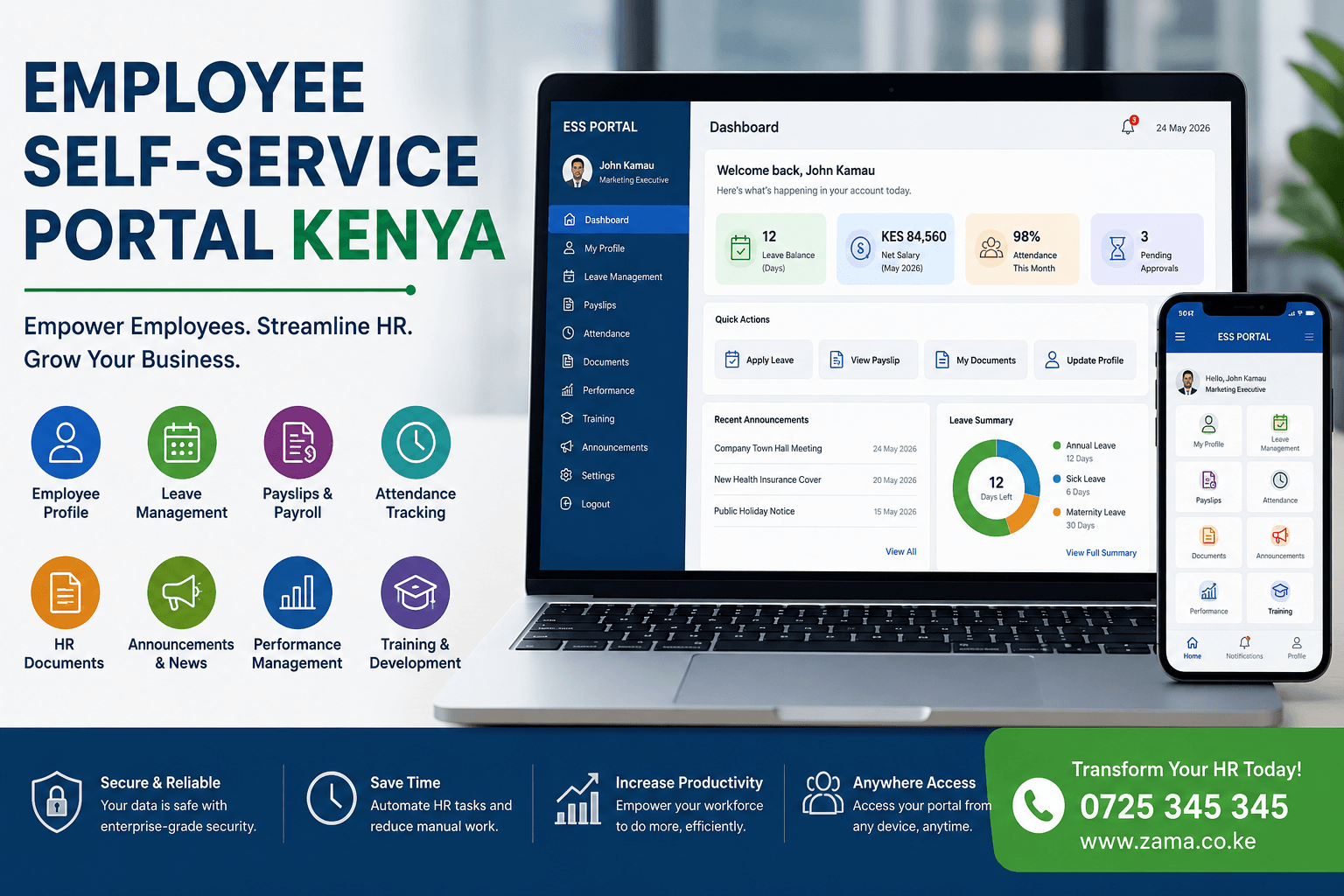
In today’s digital workplace, organizations are constantly looking for innovative ways to improve efficiency, reduce administrative workloads, and enhance employee satisfaction. One of the most effective solutions is an Employee Self-Service Portal Kenya, a secure online platform that empowers employees to manage their own work-related information without relying on HR personnel for every request.
Businesses across Kenya are embracing digital transformation to streamline operations, improve communication, and create better employee experiences. Whether you’re a startup with ten employees or a large enterprise with thousands of staff members, implementing an Employee Self-Service Portal Kenya can transform the way your organization operates.
Traditional HR departments spend countless hours processing leave requests, updating employee information, generating payslips, answering repetitive questions, and handling manual paperwork. An employee self-service portal automates these routine tasks, allowing HR teams to focus on strategic initiatives such as talent development, employee engagement, and organizational growth.
As remote work and hybrid workplaces become more common, employees expect instant access to HR services anytime and from anywhere. An Employee Self-Service Portal Kenya meets these expectations by providing secure, cloud-based access through computers, tablets, and smartphones.
This comprehensive guide explains everything businesses need to know about employee self-service portals, including their features, benefits, implementation process, costs, and why investing in one is a smart decision for organizations in Kenya.
What is an Employee Self-Service Portal?
An Employee Self-Service Portal Kenya is a web-based or mobile application that enables employees to access and manage their employment information independently.
Instead of emailing HR or filling out paper forms, employees can log into a secure portal to perform everyday tasks such as:
- Viewing payslips
- Applying for leave
- Updating personal information
- Downloading employment documents
- Checking attendance records
- Viewing company announcements
- Accessing HR policies
- Managing benefits
- Updating emergency contacts
- Tracking leave balances
The portal acts as a digital bridge between employees and the HR department, reducing paperwork while improving efficiency and transparency.
Why Kenyan Businesses Need an Employee Self-Service Portal
Many Kenyan companies still depend on manual HR processes involving spreadsheets, paper files, WhatsApp messages, and emails. While these methods may work for very small businesses, they quickly become inefficient as organizations grow.
An Employee Self-Service Portal Kenya helps businesses overcome common HR challenges such as:
- Lost paperwork
- Delayed approvals
- Payroll errors
- Miscommunication
- Inaccurate employee records
- Poor employee engagement
- High administrative costs
By digitizing HR operations, companies can save time, reduce operational costs, and provide employees with a better workplace experience.
How an Employee Self-Service Portal Works
The system operates through secure employee accounts.
Every employee receives login credentials that allow them to access their personalized dashboard.
From this dashboard, they can:
- View personal information
- Submit requests
- Receive approvals
- Access HR documents
- Track leave
- Monitor attendance
- Download payslips
- Update profile details
Managers also have dashboards where they can approve requests, monitor attendance, review team performance, and communicate with employees.
HR administrators have advanced access to oversee all employee records, generate reports, configure workflows, and maintain compliance.
Core Features of an Employee Self-Service Portal Kenya
1. Employee Profile Management
Employees can securely update their own personal information, including:
- Address
- Phone number
- Email address
- Next of kin
- Bank details
- Emergency contacts
This eliminates repetitive HR data entry while ensuring records remain accurate.
2. Leave Management
Leave management is among the most popular features of an Employee Self-Service Portal Kenya.
Employees can:
- Apply for leave
- View leave balances
- Track approval status
- Cancel leave requests
- Check public holidays
Managers receive instant notifications and can approve or reject leave requests with a single click.
3. Digital Payslips
Instead of printing payslips every month, companies can publish them securely online.
Employees can:
- Download PDF payslips
- View payroll history
- Access tax deductions
- Check allowances
- Review overtime payments
This reduces printing costs while improving convenience.
4. Attendance Tracking
Employees can monitor:
- Clock-in times
- Clock-out times
- Working hours
- Late arrivals
- Overtime
- Attendance summaries
Managers can identify attendance trends and improve workforce planning.
5. Document Management
Employees often require documents such as:
- Employment contracts
- HR policies
- Company handbook
- Tax forms
- Performance reviews
- Medical insurance documents
An employee portal stores these documents securely for easy access.
6. Internal Communication
A modern Employee Self-Service Portal Kenya includes communication tools such as:
- Company announcements
- News updates
- Holiday notices
- Policy updates
- Event invitations
- Staff recognition
This ensures all employees receive important information promptly.
7. Performance Management
Organizations can conduct digital performance evaluations through the portal.
Employees can:
- View goals
- Complete self-assessments
- Receive feedback
- Track performance history
- Monitor career development
Managers benefit from structured appraisal processes and comprehensive reporting.
8. Training Management
Employee development becomes easier through integrated learning modules.
Staff can:
- Register for training
- Access online courses
- Download certificates
- Track learning progress
- Complete assessments
Continuous learning improves employee skills and organizational competitiveness.
Benefits of an Employee Self-Service Portal Kenya
Improved Employee Experience
Employees appreciate having immediate access to the information they need without waiting for HR responses.
This convenience increases satisfaction and engagement.
Increased HR Productivity
Routine administrative tasks consume a significant portion of HR departments’ time.
Automation allows HR professionals to focus on strategic activities such as:
- Recruitment
- Employee engagement
- Workforce planning
- Leadership development
- Talent management
Reduced Administrative Costs
Paper forms, printing, filing cabinets, and manual data entry become unnecessary.
Businesses save money through:
- Reduced paper usage
- Lower printing expenses
- Faster approvals
- Fewer administrative errors
- Improved operational efficiency
Better Data Accuracy
Since employees maintain their own profiles, information stays current and accurate.
Accurate employee records improve payroll processing, compliance, and communication.
Enhanced Security
An Employee Self-Service Portal Kenya protects sensitive HR information through:
- User authentication
- Role-based permissions
- Data encryption
- Secure cloud hosting
- Activity logs
- Automated backups
Only authorized users can access confidential information.
Faster Decision Making
Managers gain access to real-time reports covering:
- Attendance
- Leave balances
- Workforce trends
- Performance metrics
- Employee records
This enables quicker and better-informed decisions.
Improved Compliance
Kenyan businesses must comply with labour regulations and maintain accurate employment records.
Digital HR systems help organizations maintain documentation required for audits and regulatory compliance while reducing the risk of missing or incomplete records.
Who Should Use an Employee Self-Service Portal?
An Employee Self-Service Portal Kenya is suitable for organizations of all sizes, including:
- SMEs
- Corporate companies
- Manufacturing firms
- Educational institutions
- Healthcare providers
- NGOs
- Government agencies
- Financial institutions
- Logistics companies
- Retail businesses
- Hospitality businesses
- Construction firms
- Technology companies
Regardless of industry, organizations with growing workforces can benefit from streamlined HR processes and improved employee access to information.
Advanced Features of an Employee Self-Service Portal Kenya
As businesses continue to embrace digital transformation, the expectations placed on HR technology are also increasing. A modern Employee Self-Service Portal Kenya goes beyond basic HR functions by incorporating advanced features that improve collaboration, efficiency, and employee satisfaction.
Payroll Integration
One of the most valuable capabilities of an Employee Self-Service Portal Kenya is seamless payroll integration. Instead of maintaining separate payroll and HR systems, businesses can synchronize employee data automatically.
Payroll integration enables employees to:
- Access monthly payslips
- View salary history
- Download P9 forms
- Monitor statutory deductions
- Check overtime payments
- View allowances and bonuses
HR teams also benefit from reduced payroll errors because employee records are updated automatically across systems.
Biometric Attendance Integration
Many Kenyan businesses use biometric devices to record attendance. A modern employee portal can integrate with:
- Fingerprint scanners
- Facial recognition systems
- RFID card readers
- Mobile GPS attendance
- QR code check-ins
Attendance records are synchronized automatically, allowing employees to monitor their working hours while giving managers real-time workforce visibility.
Mobile Accessibility
Today’s workforce expects access to HR services on the go. A responsive Employee Self-Service Portal Kenya allows employees to use smartphones and tablets to:
- Apply for leave
- Download payslips
- View announcements
- Update personal information
- Track approvals
- Access company documents
This flexibility is especially valuable for employees working remotely, traveling, or operating in the field.
Workflow Automation
Workflow automation eliminates repetitive manual tasks.
Examples include:
- Automatic leave approvals
- Manager notifications
- HR reminders
- Employee onboarding checklists
- Contract renewal alerts
- Probation reviews
- Birthday notifications
- Performance appraisal reminders
Automation ensures that no important HR process is overlooked.
Employee Onboarding
New employees often spend days completing paperwork.
With an Employee Self-Service Portal Kenya, onboarding becomes a streamlined digital experience.
New hires can:
- Complete registration forms
- Upload identification documents
- Sign contracts electronically
- Review company policies
- Access orientation materials
- Complete mandatory training
This creates a positive first impression while reducing HR workload.
Offboarding Management
When employees leave an organization, the portal can automate:
- Exit clearance
- Asset return
- Final approvals
- Exit interviews
- Final payroll processing
- Account deactivation
A structured offboarding process protects company assets and maintains accurate HR records.
Industries Benefiting from an Employee Self-Service Portal Kenya
Financial Institutions
Banks, SACCOs, and insurance companies manage large workforces with strict compliance requirements. Employee portals simplify document management, leave approvals, and secure communication.
Healthcare
Hospitals and clinics require efficient staff scheduling and attendance monitoring. Medical staff can manage shifts, leave requests, and access HR documents through the portal.
Manufacturing
Manufacturing companies often operate multiple shifts. An Employee Self-Service Portal Kenya helps employees monitor attendance, overtime, and shift schedules while improving workforce planning.
Retail
Retail chains with multiple branches can centralize HR operations, ensuring employees across different locations receive consistent information and services.
Education
Schools, colleges, and universities can manage teaching and non-teaching staff efficiently through digital HR systems.
Logistics and Transport
Companies with mobile employees benefit from GPS attendance, digital communication, and centralized employee management.
Hospitality
Hotels, restaurants, and resorts experience frequent staff scheduling changes. Employee portals improve communication and simplify leave management.
How to Successfully Implement an Employee Self-Service Portal Kenya
Step 1: Assess Business Needs
Before implementation, identify the HR challenges your organization wants to solve.
Questions to consider include:
- Are leave approvals delayed?
- Is payroll processing inefficient?
- Are employee records inaccurate?
- Is HR overwhelmed with paperwork?
Clearly defining objectives ensures the portal addresses real business needs.
Step 2: Identify Required Features
Every business has unique requirements.
Typical features include:
- Leave management
- Attendance tracking
- Payroll integration
- Document management
- Employee directory
- Performance management
- Recruitment
- Training
- Expense claims
- Internal communication
Choose only the features that align with your operational goals.
Step 3: Migrate Existing Data
Existing employee records should be cleaned and imported into the new system.
This includes:
- Employee profiles
- Job titles
- Departments
- Leave balances
- Payroll information
- Attendance history
Accurate data migration ensures a smooth transition.
Step 4: Train Employees
Even the best software requires proper user adoption.
Provide:
- User manuals
- Video tutorials
- Live demonstrations
- Frequently asked questions
- Ongoing support
Training helps employees confidently use the portal from day one.
Step 5: Launch Gradually
Many organizations begin with a pilot department before company-wide deployment.
This approach allows businesses to:
- Gather feedback
- Identify issues
- Improve workflows
- Increase employee confidence
Step 6: Monitor Performance
After implementation, continuously evaluate:
- User adoption rates
- Employee satisfaction
- HR efficiency
- Cost savings
- Processing times
Regular improvements maximize the return on investment.
Common Challenges and Solutions
Employee Resistance
Some employees may prefer traditional paper-based processes.
Solution: Provide training, demonstrate the benefits, and offer continuous support.
Data Security Concerns
Organizations often worry about protecting sensitive HR information.
Solution: Use encryption, role-based access controls, secure hosting, and regular backups.
Integration Issues
Older payroll or accounting systems may require custom integrations.
Solution: Choose software that supports APIs and integration with existing business applications.
Budget Constraints
Small businesses may hesitate due to implementation costs.
Solution: Cloud-based subscription models reduce upfront investment while offering scalability.
Case Study: How a Kenyan Company Improved HR Efficiency
A Nairobi-based distribution company with over 180 employees relied on paper forms, spreadsheets, and email for HR operations. Leave approvals often took several days, employee records were frequently outdated, and HR staff spent hours responding to routine requests.
After implementing an Employee Self-Service Portal Kenya, the company achieved significant improvements within six months:
- Leave approval times reduced from three days to less than one day.
- HR administrative workload dropped by approximately 50%.
- Employees accessed payslips and tax documents online without contacting HR.
- Attendance records became more accurate through biometric integration.
- Employee satisfaction improved because staff could access HR services anytime.
The company also reduced printing costs, minimized manual errors, and improved compliance by maintaining centralized digital employee records.
The future of human resource management is digital, and organizations that invest in modern HR technology today will be better equipped to compete tomorrow. An Employee Self-Service Portal Kenya empowers employees to take control of routine HR tasks while enabling HR teams to focus on strategic initiatives that drive business growth.
Whether your goal is to automate leave management, simplify payroll access, improve communication, or strengthen compliance, an Employee Self-Service Portal Kenya delivers measurable value across the organization. Employees enjoy instant access to information, managers make faster decisions, and HR departments spend less time on repetitive administrative work.
As Kenyan businesses continue to embrace digital transformation, implementing an Employee Self-Service Portal Kenya is becoming a necessity rather than an option. From startups and SMEs to large enterprises, organizations of every size can benefit from improved efficiency, enhanced employee engagement, and lower operational costs.
Choosing the right Employee Self-Service Portal Kenya also prepares your business for future growth. A scalable platform can integrate with payroll systems, biometric attendance devices, accounting software, CRM platforms, and other business applications, creating a connected digital workplace.
If your organization is still relying on spreadsheets, paper forms, emails, or manual approvals, now is the ideal time to upgrade. A modern Employee Self-Service Portal Kenya streamlines HR operations, reduces errors, strengthens data security, and improves the overall employee experience.
Investing in an Employee Self-Service Portal Kenya is an investment in productivity, transparency, and long-term success. As your workforce grows, the portal grows with you, providing the flexibility and automation needed to support changing business requirements.
Businesses that implement an Employee Self-Service Portal Kenya today will be better positioned to attract top talent, retain employees, improve operational efficiency, and build a more engaged workforce. Whether you’re looking to reduce paperwork, automate approvals, or provide employees with secure self-service access, an Employee Self-Service Portal Kenya offers a reliable and future-ready solution.
In conclusion, an Employee Self-Service Portal Kenya is more than just HR software—it is a strategic business tool that transforms the way organizations manage people, processes, and performance. By adopting an Employee Self-Service Portal Kenya, companies can improve service delivery, reduce administrative burdens, and create a modern workplace where employees are empowered to succeed. If you’re planning your next digital transformation initiative, make Employee Self-Service Portal Kenya a top priority and position your business for sustainable growth in 2026 and beyond.
Frequently Asked Questions
Is an Employee Self-Service Portal suitable for small businesses?
Yes. Even businesses with fewer than 20 employees can benefit from automated leave management, digital employee records, and online document access.
Can employees access the portal remotely?
Yes. Cloud-based portals allow secure access from any location using a computer, tablet, or smartphone.
Is employee information secure?
Modern systems use encryption, secure authentication, role-based permissions, and regular backups to protect sensitive employee data.
Can the portal integrate with payroll software?
Absolutely. Most modern solutions integrate with payroll, accounting systems, attendance devices, and other business applications.
How long does implementation take?
Implementation depends on business size and customization requirements. Small businesses may complete deployment within a few weeks, while larger organizations with complex workflows may require several months.
Can managers approve requests using mobile phones?
Yes. Managers can review and approve leave requests, expense claims, and other HR workflows from mobile devices, making approvals faster and more convenient.
Before Implementation
An Employee Self-Service Portal Kenya is no longer a luxury reserved for large corporations. It has become an essential tool for organizations seeking to improve productivity, enhance employee satisfaction, and modernize HR operations.
Whether your business employs 20 people or 2,000, investing in a secure and scalable employee portal can reduce administrative costs, improve data accuracy, and provide employees with the self-service experience they increasingly expect.
By choosing a solution that integrates seamlessly with payroll, attendance systems, and other business applications, your organization will be better positioned for sustainable growth in Kenya’s increasingly digital business environment.