
: A Complete Guide for Businesses
Introduction
In today’s fast-paced digital world, businesses are constantly looking for ways to streamline operations, improve efficiency, and stay competitive. One of the most effective ways to achieve this is through end to end system development. This approach ensures that every stage of a system—from planning and design to deployment and maintenance—is handled seamlessly under one unified process.
Whether you’re a startup, SME, or enterprise, investing in end to end system development can transform how your organization operates, enabling scalability, automation, and improved decision-making.
What is End to End System Development?
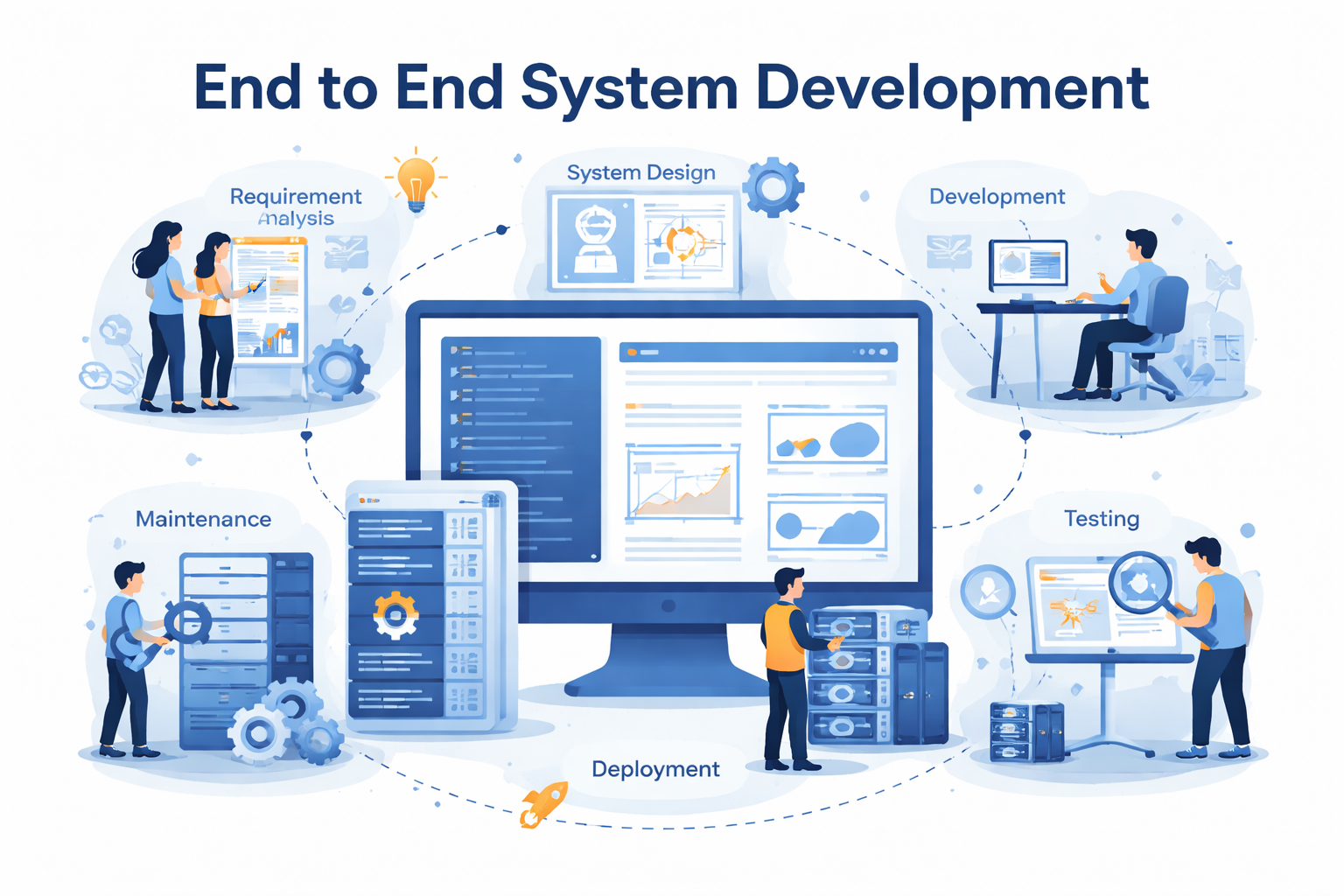
End to end system development refers to the complete lifecycle of building a software system, covering all phases from initial concept to final deployment and ongoing support.
It includes:
Requirement gathering
System design
Development (coding)
Testing
Deployment
Maintenance and updates
Unlike fragmented development approaches, this method ensures full integration, consistency, and efficiency across all stages.
Why End to End System Development Matters
1. Seamless Integration
One of the biggest advantages is that all components of the system are built to work together. This eliminates compatibility issues and ensures smooth data flow across departments.
2. Improved Efficiency
By handling everything under one development framework, businesses avoid delays caused by miscommunication between different teams or vendors.
3. Cost-Effectiveness
Although it may seem like a large upfront investment, end to end development reduces long-term costs by minimizing rework, errors, and maintenance issues.
4. Better Scalability
Systems built end-to-end are easier to scale as your business grows. New features and modules can be added without disrupting existing operations.
5. Enhanced Security
Security is integrated at every stage, ensuring data protection and compliance with industry standards.
Key Stages of End to End System Development
1. Requirement Analysis
This is the foundation of the entire process. Developers work closely with stakeholders to understand:
Business goals
User needs
System functionality
Technical requirements
A detailed requirement document is created to guide the project.
2. System Design
At this stage, the architecture of the system is planned. This includes:
Database structure
User interface design
System workflows
Technology stack selection
A well-designed system ensures optimal performance and scalability.
3. Development
This is where the actual coding happens. Developers build:
Frontend (user interface)
Backend (server logic)
APIs (integration tools)
Modern technologies such as cloud computing, mobile-first frameworks, and microservices are often used to enhance system capabilities.
4. Testing and Quality Assurance
Before deployment, the system undergoes rigorous testing to ensure:
Functionality
Performance
Security
Usability
Common testing methods include:
Unit testing
Integration testing
User acceptance testing (UAT)
5. Deployment
Once testing is complete, the system is deployed into a live environment. This may involve:
Cloud hosting
Server configuration
Data migration
User training
A smooth deployment ensures minimal disruption to business operations.
6. Maintenance and Support
After launch, continuous monitoring and updates are essential. This includes:
Bug fixes
Performance optimization
Feature enhancements
Security updates
Ongoing support ensures the system remains efficient and relevant.
Features of a Successful End to End System
A well-developed system should include:
1. User-Friendly Interface
Easy navigation improves user adoption and productivity.
2. Automation Capabilities
Automating repetitive tasks saves time and reduces errors.
3. Real-Time Data Access
Allows businesses to make informed decisions quickly.
4. Integration with Other Systems
Compatibility with tools like accounting software, CRM systems, and payment gateways.
5. High-Level Security
Data encryption, authentication, and role-based access control.
Industries That Benefit from End to End System Development
1. Retail and E-commerce
Inventory management
Sales tracking
Customer relationship management
2. Real Estate
Tenant management
Rent tracking
Property maintenance systems
3. Healthcare
Patient records
Appointment scheduling
Billing systems
4. Education
Learning management systems
Student records
Online exam platforms
5. Finance
Accounting systems
Payment processing
Fraud detection
Custom vs Off-the-Shelf Systems
Custom End to End Systems
Advantages:
Tailored to your business needs
Scalable and flexible
Better integration
Disadvantages:
Higher initial cost
Longer development time
Off-the-Shelf Systems
Advantages:
Quick implementation
Lower upfront cost
Disadvantages:
Limited customization
May not fit all business processes
Technologies Used in End to End Development
Modern system development relies on a wide range of technologies:
Frontend Technologies
HTML, CSS, JavaScript
React, Angular, Vue.js
Backend Technologies
Node.js
Python
PHP
Java
Databases
MySQL
PostgreSQL
MongoDB
Cloud Platforms
AWS
Microsoft Azure
Google Cloud
DevOps Tools
Docker
Kubernetes
CI/CD pipelines
Benefits of Hiring a Professional Development Team
Working with an experienced team ensures:
High-quality code
Faster project completion
Better system architecture
Ongoing support and maintenance
A professional team also helps in identifying potential risks early and providing effective solutions.
Challenges in End to End System Development
While highly beneficial, there are some challenges:
1. Complex Requirements
Understanding and documenting all requirements can be difficult.
2. Time-Consuming Process
Full-cycle development requires careful planning and execution.
3. Budget Constraints
Custom systems may require significant investment.
4. Technical Risks
Choosing the wrong technology stack can affect performance.
Best Practices for Successful Implementation
To ensure success, businesses should follow these best practices:
1. Define Clear Objectives
Know exactly what you want to achieve.
2. Choose the Right Development Partner
Experience and expertise matter.
3. Focus on User Experience
Design systems that are easy to use.
4. Prioritize Security
Protect your data from cyber threats.
5. Plan for Scalability
Build systems that can grow with your business.
Future Trends in End to End System Development
1. Artificial Intelligence Integration
AI-powered systems will automate decision-making and improve efficiency.
2. Cloud-Native Applications
More businesses are moving to cloud-based solutions for flexibility and cost savings.
3. Low-Code and No-Code Platforms
Faster development with minimal coding requirements.
4. IoT Integration
Connecting devices for real-time data collection and analysis.
5. Enhanced Cybersecurity Measures
Stronger security protocols to combat increasing threats.
Conclusion
End to end system development is a powerful approach that enables businesses to build robust, scalable, and efficient software solutions. By covering every stage of the development lifecycle, it ensures seamless integration, improved performance, and long-term success.
Whether you’re looking to automate processes, enhance customer experience, or scale your operations, investing in a complete system development solution is a strategic move that can drive growth and innovation.
