
Enterprise Software Company Kenya: The Complete Guide to Business Growth Through Enterprise Software
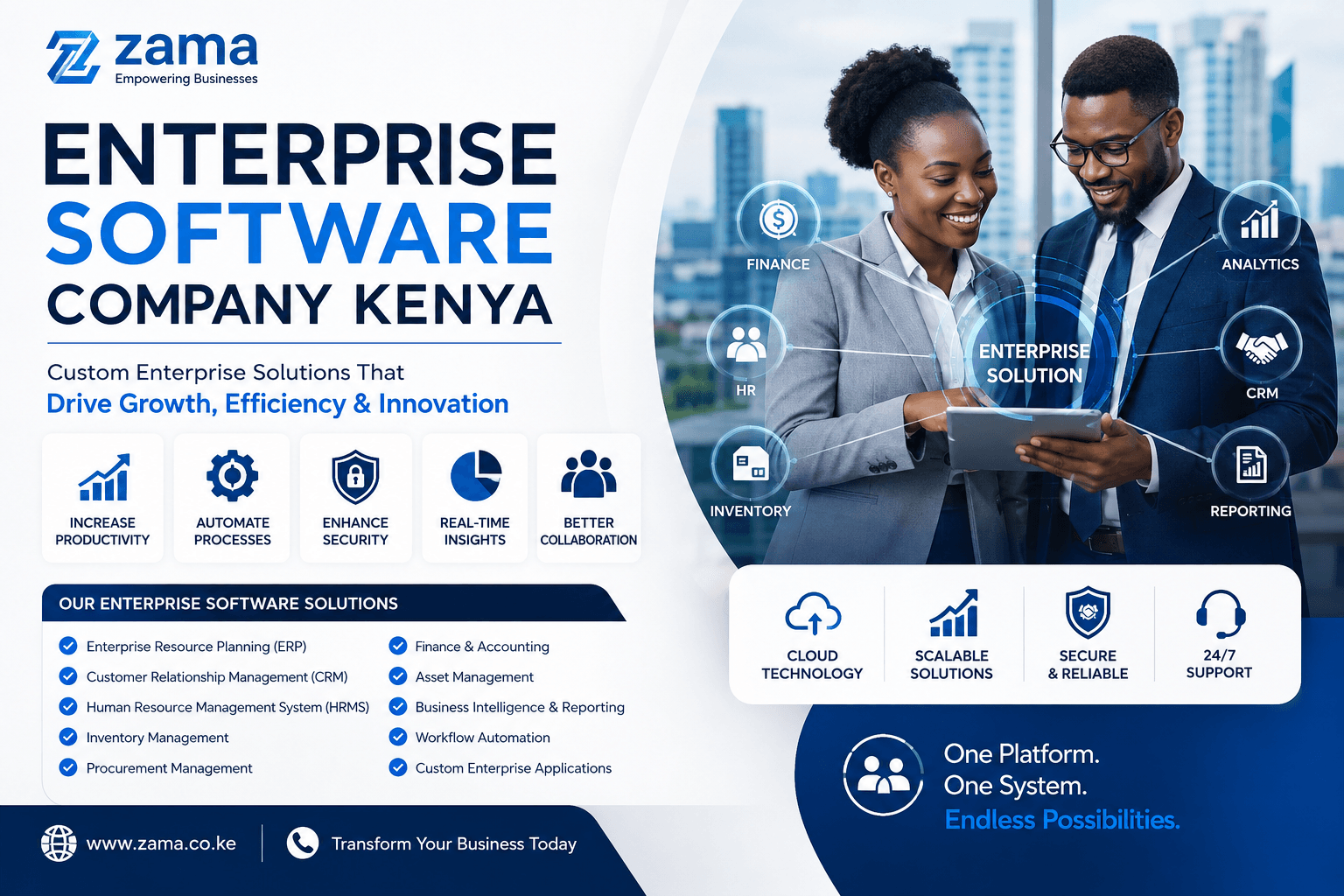
In today’s competitive digital economy, businesses need more than basic software to remain productive and profitable. They require integrated systems that automate operations, improve communication, strengthen security, and provide valuable business insights. Choosing the right Enterprise Software Company Kenya can make the difference between a business that struggles with manual processes and one that scales efficiently.
Whether you operate a manufacturing company, logistics firm, healthcare facility, financial institution, educational organization, retail chain, or government agency, enterprise software has become an essential investment. A trusted Enterprise Software Company Kenya delivers customized software solutions designed specifically for your business needs instead of forcing your organization to adapt to generic software.
This comprehensive guide explains why enterprise software matters, the types of enterprise solutions available, the benefits of digital transformation, and why businesses across Kenya are increasingly partnering with an experienced Enterprise Software Company Kenya.
What Is Enterprise Software?
Enterprise software refers to large-scale applications developed to support the daily operations of organizations. Unlike consumer applications, enterprise software is designed to manage multiple departments, thousands of transactions, and complex workflows.
An experienced Enterprise Software Company Kenya develops systems that integrate finance, procurement, customer management, inventory, human resources, reporting, and operations into one centralized platform.
Instead of employees using disconnected spreadsheets and multiple applications, enterprise software creates one reliable source of information for the entire organization.
Why Kenyan Businesses Need Enterprise Software
Many Kenyan businesses still rely on manual processes that consume valuable time and increase operational costs.
Common challenges include:
- Duplicate data entry
- Human errors
- Delayed reporting
- Poor customer service
- Slow approval processes
- Limited visibility into operations
- Data loss
- Difficult collaboration between departments
Working with a professional Enterprise Software Company Kenya helps organizations eliminate these challenges through automation and centralized business management.
Digital transformation is no longer optional. Businesses that invest in modern enterprise solutions gain a competitive advantage through improved efficiency, better customer experiences, and informed decision-making.
Characteristics of Enterprise Software
A reliable Enterprise Software Company Kenya develops solutions with features such as:
Scalability
As your organization grows, the software should support additional employees, branches, customers, and transactions without requiring complete replacement.
Security
Enterprise software protects sensitive company information using:
- Role-based access
- Data encryption
- Audit trails
- Secure authentication
- Automatic backups
Integration
Modern enterprise systems integrate with:
- ERP platforms
- CRM software
- Accounting systems
- Payment gateways
- Mobile applications
- Business intelligence tools
- Cloud storage
A reputable Enterprise Software Company Kenya ensures seamless integration between existing systems.
Automation
Routine tasks can be automated, including:
- Invoice generation
- Purchase approvals
- Employee leave approvals
- Payroll processing
- Inventory updates
- Customer notifications
- Report generation
Automation reduces manual work while improving productivity.
Industries That Benefit from Enterprise Software
Almost every sector benefits from working with an experienced Enterprise Software Company Kenya.
Manufacturing
Manufacturers use enterprise software to manage:
- Production planning
- Raw materials
- Procurement
- Inventory
- Equipment maintenance
- Quality control
Healthcare
Hospitals automate:
- Patient records
- Appointment scheduling
- Pharmacy management
- Billing
- Laboratory systems
- Medical reporting
Retail
Retail businesses improve:
- Point of sale
- Inventory management
- Customer loyalty
- Supplier management
- Sales reporting
Logistics
Transport companies use enterprise software for:
- Fleet management
- Delivery tracking
- Route optimization
- Driver management
- Fuel monitoring
Education
Schools and universities automate:
- Admissions
- Student records
- Timetables
- Fee management
- Online learning
- Staff management
Financial Services
Banks and SACCOs benefit from:
- Loan management
- Customer onboarding
- Compliance reporting
- Risk management
- Financial analytics
An experienced Enterprise Software Company Kenya customizes these solutions to meet industry-specific requirements.
Types of Enterprise Software Solutions
Enterprise Resource Planning (ERP)
ERP software connects multiple departments into one integrated platform.
Modules typically include:
- Finance
- Procurement
- Inventory
- Sales
- Human resources
- Projects
- Assets
- Reporting
A professional Enterprise Software Company Kenya designs ERP systems that eliminate duplicate work and improve operational visibility.
Customer Relationship Management (CRM)
CRM software helps businesses:
- Track leads
- Manage customers
- Record interactions
- Improve follow-ups
- Increase sales
- Measure performance
Businesses that implement CRM often experience better customer satisfaction and increased revenue.
Human Resource Management Systems
HR software simplifies:
- Employee records
- Payroll
- Leave management
- Performance reviews
- Recruitment
- Attendance
- Training
A trusted Enterprise Software Company Kenya can customize HR software to comply with Kenyan employment requirements.
Inventory Management Systems
Inventory software enables businesses to monitor stock in real time.
Features include:
- Barcode scanning
- Purchase orders
- Supplier management
- Warehouse transfers
- Stock valuation
- Low-stock alerts
These systems reduce losses and improve inventory accuracy.
Procurement Management
Procurement software automates:
- Purchase requests
- Supplier approvals
- Quotations
- Purchase orders
- Goods received notes
- Invoice processing
This improves transparency and reduces procurement delays.
Finance Management Software
Finance modules provide:
- Budgeting
- Accounting
- Expense management
- Cash flow monitoring
- Financial reporting
- Tax calculations
A reliable Enterprise Software Company Kenya ensures financial systems integrate with other enterprise applications for accurate reporting.
Case Study 1: Manufacturing Company Improves Efficiency
A medium-sized manufacturing company in Kenya relied on spreadsheets and paper-based records to manage production, procurement, and inventory. This resulted in delayed reporting, stock shortages, and inefficient communication between departments.
After partnering with an Enterprise Software Company Kenya, the organization implemented a customized Enterprise Resource Planning (ERP) system. The solution integrated inventory management, procurement, finance, production planning, and reporting into one centralized platform.
Results
- Reduced inventory discrepancies by 75%
- Faster procurement approval processes
- Improved production scheduling
- Real-time inventory visibility
- More accurate financial reporting
- Increased overall operational efficiency
The company was able to make faster decisions and support future growth with confidence.
Case Study 2: Retail Chain Streamlines Operations
A growing retail business with multiple branches struggled to consolidate sales data and monitor stock across locations. Managers often made decisions using outdated reports.
An experienced Enterprise Software Company Kenya developed a cloud-based retail management system that connected all branches through a centralized database.
Outcomes
- Real-time sales reporting
- Centralized inventory management
- Improved customer service
- Faster stock replenishment
- Better supplier coordination
- Increased profitability through data-driven decisions
Case Study 3: Healthcare Provider Enhances Patient Services
A healthcare provider faced challenges managing patient appointments, billing, laboratory records, and medical histories across several facilities.
Working with an Enterprise Software Company Kenya, the organization implemented an integrated healthcare management system.
Benefits Achieved
- Faster patient registration
- Improved appointment scheduling
- Secure electronic medical records
- Accurate billing
- Enhanced reporting
- Better patient satisfaction
Why Choose Zama as Your Enterprise Software Company Kenya?
At Zama, we help organizations transform their operations with reliable, secure, and scalable enterprise software solutions. Our team works closely with clients to understand their unique business processes and develop systems that solve real operational challenges.
Our Services
We offer a wide range of enterprise software solutions, including:
- Custom Enterprise Resource Planning (ERP)
- Customer Relationship Management (CRM)
- Human Resource Management Systems (HRMS)
- Inventory Management Systems
- Procurement Management Software
- Finance and Accounting Systems
- Asset Management Solutions
- Document Management Systems
- Workflow Automation
- Business Intelligence Dashboards
- Mobile Applications
- Cloud Software Development
- API Development and Integration
- Customer Self-Service Portals
- Enterprise Web Applications
- Software Maintenance and Support
As a trusted Enterprise Software Company Kenya, we focus on delivering software that is secure, scalable, user-friendly, and tailored to your business goals.
Why Businesses Trust Zama
Organizations choose Zama because we provide:
- Custom-built solutions instead of one-size-fits-all software
- Experienced software developers and business analysts
- Modern cloud technologies
- Secure application architecture
- Responsive technical support
- Scalable enterprise systems
- Seamless integration with existing software
- Affordable implementation packages
- Continuous system improvements
- Long-term technology partnerships
Choosing the right Enterprise Software Company Kenya means selecting a partner committed to your long-term success.
Client Testimonials
Manufacturing Client
“Our production processes are now fully automated, and reporting that once took days is now available instantly. The system has transformed how we operate.”
Retail Business Owner
“The centralized dashboard allows us to monitor all our branches in real time. Inventory management has never been easier.”
Healthcare Administrator
“The customized solution simplified patient management and improved service delivery across our facilities. We highly recommend Zama.”
Emerging Technologies Shaping Enterprise Software in Kenya
Technology is evolving rapidly, and modern enterprises must adapt to remain competitive. An experienced Enterprise Software Company Kenya stays ahead of these trends by incorporating innovative technologies into business solutions that improve efficiency, security, and customer experiences.
Internet of Things (IoT)
IoT devices collect real-time data from equipment, vehicles, warehouses, and production lines. Enterprise software can process this information to monitor asset performance, predict maintenance needs, and reduce downtime. For manufacturers, logistics providers, and utility companies, IoT integration creates greater visibility across operations.
Robotic Process Automation (RPA)
RPA automates repetitive, rule-based tasks such as data entry, invoice matching, report generation, and employee onboarding. Unlike traditional automation, software robots can interact with existing applications without major system changes. Businesses benefit from faster processing times, fewer human errors, and improved compliance.
Low-Code and No-Code Platforms
Low-code development platforms enable organizations to build internal applications more quickly using visual interfaces. While these platforms accelerate development for simple workflows, complex enterprise systems still require the expertise of an Enterprise Software Company Kenya to ensure scalability, security, and integration with existing infrastructure.
Data Governance and Compliance
As organizations generate increasing amounts of data, effective governance becomes essential. Enterprise software should help businesses maintain accurate, secure, and compliant information throughout its lifecycle.
Key data governance practices include:
- Standardized data entry procedures
- Data quality monitoring
- Record retention policies
- Access control based on user roles
- Compliance with industry regulations
- Secure archival and disposal processes
Good data governance improves reporting accuracy and builds trust among customers, partners, and regulators.
Change Management for Successful Software Adoption
Technology alone does not guarantee success. Employees must understand, accept, and effectively use the new system.
A structured change management strategy should include:
Executive Leadership Support
Senior management should actively champion the project and communicate its importance to the organization.
Employee Training
Hands-on training sessions ensure users understand system features and best practices before deployment.
Clear Communication
Regular updates reduce uncertainty and help employees understand project milestones, timelines, and expected benefits.
User Feedback
Collecting feedback during implementation helps identify usability issues and opportunities for improvement before full rollout.
Organizations that invest in change management experience higher adoption rates and achieve faster returns on their software investment.
Measuring Return on Investment (ROI)
Enterprise software should deliver measurable business value. Organizations can evaluate success using key performance indicators such as:
- Reduction in operational costs
- Faster order processing
- Improved employee productivity
- Reduced manual errors
- Increased customer satisfaction
- Higher revenue growth
- Improved inventory accuracy
- Faster financial reporting
- Better compliance performance
Monitoring these metrics helps businesses continually optimize their processes and maximize the value of their software investment.
Best Practices for Maintaining Enterprise Software
Implementing enterprise software is only the beginning. Continuous maintenance ensures the system remains secure, reliable, and aligned with evolving business requirements.
Recommended practices include:
- Regular software updates
- Periodic security assessments
- Database optimization
- Performance monitoring
- Backup verification
- User access reviews
- Documentation updates
- Continuous employee training
Preventive maintenance reduces downtime and extends the lifespan of enterprise applications.
Future Trends in Enterprise Software
The enterprise software landscape continues to evolve. Businesses that embrace innovation will be better positioned to compete in local and global markets.
Key trends include:
- Hyperautomation across business processes
- AI-powered decision support systems
- Predictive analytics for strategic planning
- Blockchain for secure transactions and traceability
- Voice-enabled business applications
- Digital twins for manufacturing and asset management
- Greater use of cloud-native architectures
- Advanced cybersecurity powered by machine learning
- Sustainability reporting integrated into enterprise platforms
- Industry-specific software tailored to unique operational needs
Organizations that prepare for these developments today will be more agile and resilient in the years ahead.
Choosing the Right Enterprise Software Partner
Selecting the right technology partner is just as important as choosing the software itself. Consider the following factors when evaluating providers:
- Proven experience with enterprise projects
- Industry-specific expertise
- Strong portfolio of completed implementations
- Ability to customize solutions
- Robust security practices
- Comprehensive training and support
- Transparent project management
- Long-term maintenance services
- Scalable technology stack
- Positive client references
A reliable software partner will work collaboratively with your team to ensure the solution aligns with your business strategy and delivers lasting value.
Enterprise software has become the foundation of efficient, data-driven organizations. By integrating departments, automating workflows, and providing real-time insights, these systems enable businesses to respond more quickly to market changes and customer needs.
Whether your organization is expanding operations, improving customer service, or modernizing internal processes, investing in a well-designed enterprise solution is a strategic decision that supports sustainable growth. The right implementation not only solves today’s operational challenges but also prepares your business for future opportunities in an increasingly digital economy.
Frequently Asked Questions
What is enterprise software?
Enterprise software is designed to manage and automate core business operations such as finance, HR, inventory, procurement, customer management, and reporting across an organization.
Why should I hire an Enterprise Software Company Kenya?
An Enterprise Software Company Kenya understands local business environments, regulatory requirements, and industry challenges. They can develop customized solutions that align with your operational needs and growth objectives.
How long does enterprise software development take?
Project timelines vary depending on complexity. Small systems may take a few months, while comprehensive enterprise platforms can take several months to develop, test, and deploy.
Is enterprise software secure?
Yes. Modern enterprise software includes advanced security features such as data encryption, role-based access, audit trails, secure authentication, and regular backups.
Can enterprise software integrate with existing systems?
Yes. A professional Enterprise Software Company Kenya can integrate enterprise software with accounting platforms, payment gateways, CRMs, HR systems, mobile apps, and other third-party solutions.
Is cloud-based enterprise software better than on-premise software?
The best option depends on your organization’s needs. Cloud solutions offer flexibility and scalability, while on-premise systems provide greater control over infrastructure. A trusted Enterprise Software Company Kenya can help you choose the right deployment model.
Conclusion
Digital transformation is no longer a luxury—it is a necessity for organizations that want to remain competitive in today’s fast-changing business environment. Enterprise software enables businesses to automate operations, improve collaboration, enhance customer experiences, strengthen security, and make better decisions using real-time data.
Whether you operate in manufacturing, healthcare, education, logistics, finance, retail, or the public sector, partnering with an experienced Enterprise Software Company Kenya provides the expertise needed to design and implement software that supports long-term growth.
The right enterprise solution is more than just technology; it is a strategic investment that increases efficiency, reduces operational costs, and creates opportunities for innovation. By working with a reliable Enterprise Software Company Kenya, businesses can streamline complex processes, integrate departments, and build a strong digital foundation for the future.
If your organization is ready to embrace digital transformation, now is the perfect time to partner with a trusted \ that understands your unique business needs and delivers customized, scalable, and secure software solutions.
Call to Action
Looking for a reliable Enterprise Software Company Kenya to transform your business operations?
Zama specializes in designing and developing custom enterprise software that helps organizations improve efficiency, automate workflows, and accelerate growth. Whether you need an ERP, CRM, HRMS, inventory management system, procurement platform, or a fully customized enterprise application, our experienced team is ready to help.
Contact Zama today to schedule a consultation and discover how our enterprise software solutions can help your business achieve greater productivity, smarter decision-making, and sustainable growth.