
Transformative Enterprise Web Portal Development in Kenya: The Game-changing Complete Guide for Businesses in 2026

Introduction
As businesses across Kenya continue embracing digital transformation, the demand for enterprise web portal development in Kenya has grown significantly. Organizations are looking for efficient ways to streamline operations, improve customer engagement, enhance collaboration, and automate business processes. Enterprise web portals have become powerful digital platforms that connect employees, customers, suppliers, and stakeholders through a centralized and secure online environment.
Whether you run a large corporation, government institution, SACCO, educational institution, healthcare facility, logistics company, or real estate organization, investing in enterprise web portal development in Kenya can dramatically improve productivity and operational efficiency.
Modern businesses generate vast amounts of information daily. Managing this information manually often leads to inefficiencies, communication breakdowns, and increased operational costs. Enterprise web portals solve these challenges by creating a single platform where users can access information, submit requests, track workflows, and interact with business systems seamlessly.
In this comprehensive guide, we explore everything businesses need to know about enterprise web portal development in Kenya, including benefits, features, development processes, industry applications, and future trends.
What is Enterprise Web Portal Development?
Enterprise web portal development refers to the creation of centralized online platforms that provide authorized users with access to business information, services, applications, and communication tools through a single interface.
Unlike traditional websites that mainly provide information, enterprise portals are interactive systems designed to support business operations and workflows.
A well-designed enterprise portal can integrate multiple business systems including:
- ERP systems
- CRM platforms
- HR management systems
- Accounting software
- Inventory management solutions
- Customer support systems
- Document management platforms
- Payment gateways
- M-Pesa integrations
The goal of enterprise web portal development in Kenya is to create a unified digital workspace that improves collaboration and operational efficiency.
Why Enterprise Web Portal Development in Kenya is Growing
Several factors are driving demand for enterprise web portal development in Kenya:
Digital Transformation Initiatives
Organizations are digitizing their operations to remain competitive in a rapidly changing business environment.
Remote and Hybrid Work
Businesses need secure platforms that allow employees to access information and collaborate from anywhere.
Customer Expectations
Customers expect self-service portals where they can access services, track requests, and communicate with organizations online.
Automation Requirements
Companies are increasingly automating repetitive tasks to reduce costs and improve service delivery.
Government Digitalization
Public institutions are adopting digital platforms to improve transparency, efficiency, and citizen engagement.
These factors make enterprise web portal development in Kenya a strategic investment for modern organizations.
Key Benefits of Enterprise Web Portals
Improved Operational Efficiency
Enterprise portals automate workflows and eliminate manual processes, reducing delays and administrative overhead.
Centralized Information Access
Users can access all relevant information from a single platform, reducing confusion and improving productivity.
Enhanced Collaboration
Teams can communicate, share documents, and manage projects more effectively.
Better Customer Experience
Customer portals provide self-service options that improve satisfaction and reduce support workloads.
Increased Data Security
Role-based access controls ensure sensitive information is only accessible to authorized users.
Cost Reduction
Automation minimizes operational expenses and improves resource utilization.
Real-Time Reporting
Management gains access to real-time dashboards and analytics for informed decision-making.
Essential Features of Enterprise Web Portals
Successful enterprise web portal development in Kenya typically includes the following features:
User Authentication and Access Control
Secure login systems with role-based permissions ensure data protection.
Dashboard Management
Interactive dashboards provide users with relevant information and insights.
Document Management
Organizations can store, organize, and retrieve documents efficiently.
Workflow Automation
Automated approval processes and task management improve operational efficiency.
Notifications and Alerts
Users receive real-time updates and reminders regarding important activities.
Reporting and Analytics
Advanced reporting tools support data-driven decision-making.
Communication Tools
Messaging systems facilitate collaboration among users.
Mobile Responsiveness
Modern portals are optimized for smartphones and tablets.
API Integrations
Enterprise portals integrate with existing business systems and third-party applications.
Types of Enterprise Web Portals
Employee Portals
Provide staff with access to company resources, HR services, and internal communication tools.
Customer Portals
Allow customers to access services, manage accounts, submit requests, and track transactions.
Vendor Portals
Enable suppliers and partners to collaborate efficiently with organizations.
Partner Portals
Support communication and collaboration with strategic business partners.
Government Service Portals
Provide citizens with digital access to government services and information.
Knowledge Management Portals
Centralize organizational knowledge and documentation.
Industries Benefiting from Enterprise Web Portal Development in Kenya
Real Estate
Property management companies use portals for tenant management, rent collection, maintenance requests, and reporting.
Healthcare
Hospitals implement patient portals for appointment booking, medical records access, and communication.
Education
Schools and universities utilize portals for student management, learning resources, and communication.
Financial Services
Banks and SACCOs provide online services through secure enterprise portals.
Logistics
Transport companies use portals for shipment tracking, fleet management, and customer communication.
Manufacturing
Manufacturers streamline supply chain management and production workflows through enterprise portals.
Enterprise Portal Development Process
Requirements Analysis
Developers gather business requirements and identify organizational goals.
System Design
Architects create portal structures, workflows, and user interfaces.
Development
Developers build the portal using modern technologies and frameworks.
Integration
The portal is connected to existing business systems and third-party services.
Testing
Comprehensive testing ensures security, functionality, and performance.
Deployment
The portal is launched in a production environment.
Maintenance and Support
Continuous updates and improvements ensure long-term success.
Technologies Used in Enterprise Web Portal Development
Leading software development companies in Kenya use modern technologies including:
Front-End Technologies
- React.js
- Angular
- Vue.js
- HTML5
- CSS3
- JavaScript
Back-End Technologies
- Laravel
- PHP
- Node.js
- Python
- ASP.NET
Databases
- MySQL
- PostgreSQL
- SQL Server
- MongoDB
Cloud Platforms
- AWS
- Microsoft Azure
- Google Cloud Platform
These technologies enable scalable and secure enterprise web portal development in Kenya.
M-Pesa Integration for Enterprise Portals
One of the biggest advantages of enterprise web portal development in Kenya is the ability to integrate M-Pesa payment services.
Organizations can:
- Accept online payments
- Automate invoicing
- Process subscriptions
- Collect fees
- Generate payment reports
M-Pesa integration improves convenience for customers and enhances cash flow management.
Security Considerations
Security is critical for enterprise portals.
Best practices include:
- SSL encryption
- Multi-factor authentication
- Data encryption
- Regular security audits
- Role-based access controls
- Secure API integrations
- Backup and disaster recovery planning
A secure enterprise portal protects organizational data and maintains user trust.
Future Trends in Enterprise Web Portal Development in Kenya
Artificial Intelligence
AI-powered portals provide intelligent recommendations and automation.
Chatbots
Virtual assistants enhance customer support and user engagement.
Predictive Analytics
Organizations gain insights that support strategic planning.
Cloud-Native Development
Cloud infrastructure improves scalability and reliability.
Mobile-First Experiences
Users increasingly access enterprise portals via mobile devices.
Business Process Automation
Advanced automation further improves operational efficiency.
Businesses investing in enterprise web portal development in Kenya today will be better positioned for future growth and innovation.
Choosing the Right Enterprise Web Portal Development Partner
When selecting a development company, consider:
- Industry experience
- Technical expertise
- Security capabilities
- Integration experience
- Ongoing support services
- Client testimonials
- Portfolio quality
The right partner can significantly impact the success of your enterprise portal project.
Measuring the Return on Investment (ROI) of Enterprise Web Portals
Many organizations hesitate to implement digital platforms because they focus solely on development costs rather than long-term value. However, a properly designed enterprise portal often delivers substantial returns through increased productivity, reduced operational expenses, and improved customer retention.
Key performance indicators that businesses can use to measure portal success include:
- Reduction in administrative workload
- Faster service delivery times
- Increased customer satisfaction scores
- Lower paper and printing costs
- Improved employee productivity
- Higher customer retention rates
- Faster approval and decision-making processes
- Increased revenue from digital channels
Organizations that track these metrics often discover that enterprise portals become one of their most valuable technology investments.
Common Challenges Solved by Enterprise Portals
Information Silos
Many companies store data in separate systems that do not communicate with each other. This creates inefficiencies and duplication of work. Enterprise portals unify data sources, allowing users to access accurate information from a single location.
Inefficient Communication
Without centralized communication channels, important updates can be missed. Portals facilitate announcements, messaging, and collaboration tools that keep everyone informed.
Manual Approval Processes
Traditional approval workflows involving paperwork and email chains often cause delays. Digital workflows speed up approvals while providing complete audit trails.
Customer Service Bottlenecks
Organizations frequently struggle to handle growing volumes of customer inquiries. Self-service capabilities empower customers to find information and complete transactions independently.
Compliance Management
Regulatory requirements continue to increase across industries. Enterprise portals help organizations maintain compliance through documentation, tracking, and reporting features.
The Role of Enterprise Portals in Business Continuity
Unexpected disruptions can significantly impact operations. Whether facing natural disasters, infrastructure failures, or market disruptions, businesses need systems that support continuity.
Enterprise portals contribute to resilience by:
- Enabling remote access to critical systems
- Centralizing business information
- Supporting distributed teams
- Facilitating emergency communication
- Maintaining digital records and backups
- Allowing uninterrupted customer service
Organizations with strong digital infrastructure are generally better prepared to adapt to changing circumstances.
Custom Enterprise Portals vs Off-the-Shelf Solutions
Businesses often face a decision between purchasing ready-made software and investing in custom-built systems.
Advantages of Custom Development
Custom portals are designed around specific business processes, providing:
- Greater flexibility
- Tailored workflows
- Unique branding
- Easier scalability
- Better integration opportunities
- Competitive differentiation
Limitations of Generic Platforms
Pre-packaged software may appear affordable initially but often presents challenges such as:
- Limited customization options
- Unnecessary features
- Vendor dependency
- Licensing restrictions
- Integration difficulties
As organizations grow, many discover that custom solutions provide better long-term value and adaptability.
User Experience and Portal Adoption
Technology success depends largely on user adoption. Even the most sophisticated platform will fail if users find it difficult to navigate.
Successful enterprise portals prioritize:
Simple Navigation
Users should quickly locate information and complete tasks without extensive training.
Fast Performance
Slow-loading pages negatively affect productivity and user satisfaction.
Accessibility
Portals should accommodate users with different abilities and technical skill levels.
Personalized Experiences
Role-specific dashboards help users focus on relevant information and responsibilities.
Consistent Design
A professional and intuitive interface encourages engagement and confidence in the system.
Integrating Emerging Technologies
The next generation of enterprise portals is increasingly incorporating advanced technologies to improve functionality and decision-making.
Machine Learning
Machine learning algorithms can identify patterns, forecast trends, and optimize business processes.
Intelligent Search
Advanced search capabilities enable users to locate documents and information quickly.
Robotic Process Automation (RPA)
Routine tasks such as data entry, notifications, and report generation can be automated.
Internet of Things (IoT)
Connected devices can transmit real-time data directly into enterprise systems for monitoring and analysis.
Advanced Analytics
Interactive dashboards provide deeper insights into organizational performance and operational trends.
Building a Scalable Digital Ecosystem
Forward-thinking organizations view enterprise portals not as standalone systems but as the foundation of a broader digital ecosystem.
A scalable ecosystem may eventually include:
- Customer relationship management platforms
- Human resource systems
- Accounting solutions
- E-commerce platforms
- Inventory management systems
- Mobile applications
- Business intelligence tools
- Customer support platforms
Creating interconnected digital environments allows businesses to operate more efficiently while supporting future growth initiatives.
Why 2026 Is the Right Time to Invest
The business environment is becoming increasingly digital. Customers expect online services, employees require flexible access to information, and executives need real-time insights to remain competitive.
Organizations that delay digital transformation risk:
- Reduced operational efficiency
- Increased administrative costs
- Lower customer satisfaction
- Difficulty attracting modern talent
- Slower response to market changes
By implementing advanced portal solutions now, businesses can establish stronger foundations for innovation, growth, and operational excellence over the coming years.
Enterprise portals are no longer optional tools reserved for large corporations. They have become essential digital assets for organizations seeking to improve efficiency, strengthen stakeholder relationships, and compete effectively in a technology-driven marketplace.
As Kenyan businesses continue embracing digital transformation, enterprise portal solutions will increasingly serve as the central hub connecting people, processes, and technology. Organizations that invest strategically in modern digital platforms today will be better equipped to navigate future challenges, capitalize on emerging opportunities, and achieve sustainable growth in an evolving
How Enterprise Web Portal Development in Kenya Supports Digital Transformation
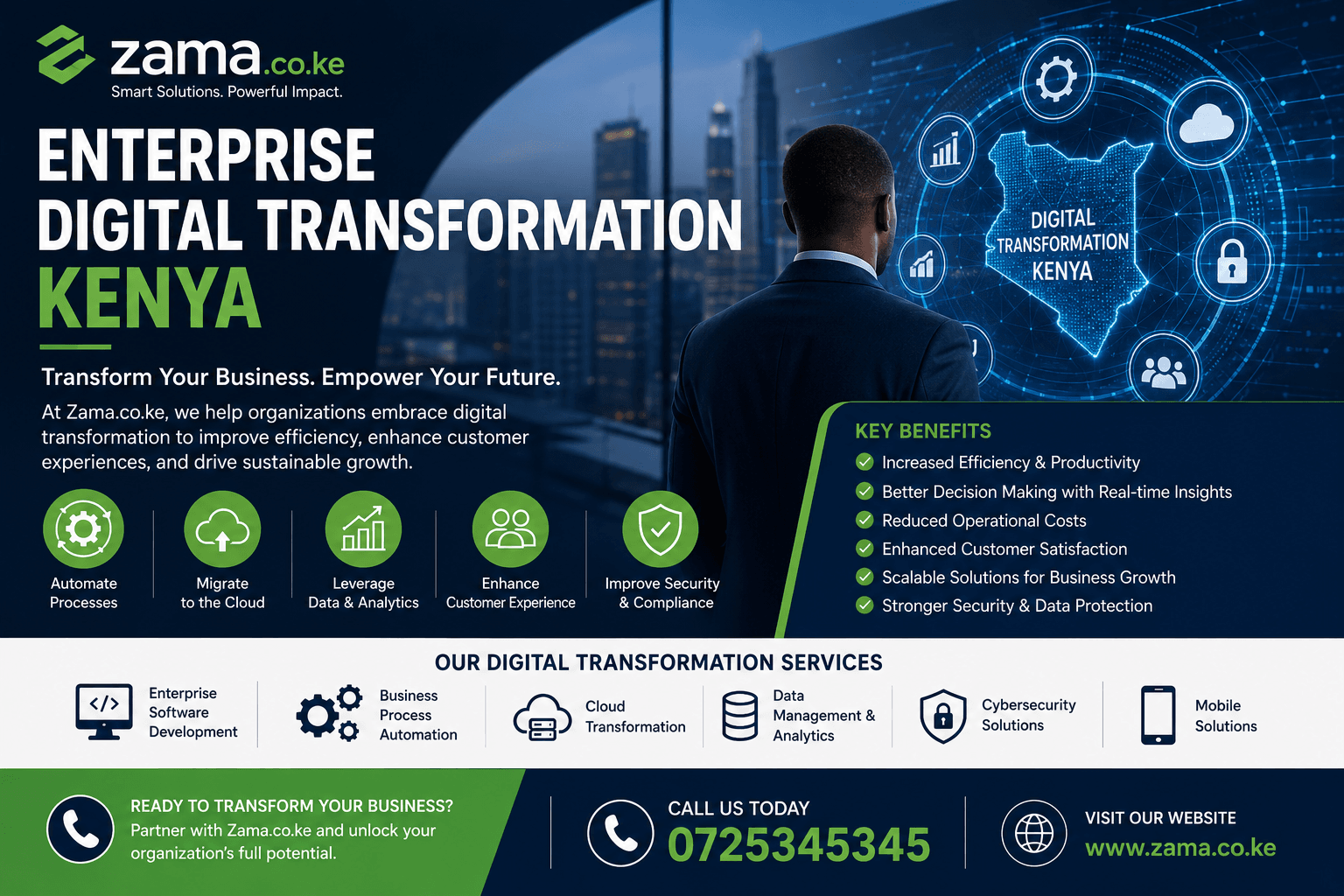
Digital transformation is no longer a luxury for modern organizations. It has become a necessity for businesses seeking efficiency, competitiveness, and sustainable growth. One of the most effective ways organizations are achieving this transformation is through enterprise web portal development in Kenya.
Companies that invest in enterprise web portal development in Kenya gain access to centralized platforms that simplify communication, automate workflows, and provide real-time access to business information. Instead of relying on disconnected systems and manual processes, organizations can create a unified environment where employees, customers, suppliers, and management interact seamlessly.
The demand for enterprise web portal development in Kenya continues to rise because businesses increasingly recognize the need for integrated digital solutions. Whether managing customer relationships, processing transactions, handling employee services, or coordinating operations across multiple branches, a robust portal provides the necessary infrastructure.
Competitive Advantages of Enterprise Portals
Organizations implementing enterprise web portal development in Kenya often gain significant competitive advantages over businesses still relying on outdated systems.
Some of these advantages include:
- Faster service delivery
- Improved operational transparency
- Enhanced stakeholder engagement
- Better resource allocation
- Increased employee productivity
- More accurate reporting
- Stronger data management capabilities
Through enterprise web portal development in Kenya, companies can streamline complex processes that would otherwise require substantial manual effort. This efficiency allows organizations to focus on strategic initiatives rather than administrative tasks.
Enterprise Portals and Customer Satisfaction
Customer expectations continue to evolve. Today’s customers want convenient, self-service experiences that allow them to access information and complete transactions at any time.
Organizations investing in enterprise web portal development in Kenya can create customer portals that provide:
- Account management services
- Online payments
- Service request tracking
- Support ticket management
- Digital document access
- Personalized communications
By implementing enterprise web portal development in Kenya, businesses improve customer experiences while reducing the burden on support teams. Customers appreciate the convenience, and organizations benefit from improved efficiency.
Enterprise Portal Development for Multi-Branch Organizations
Many growing companies operate across multiple regions, making coordination and communication increasingly challenging.
Through enterprise web portal development in Kenya, organizations can establish a centralized platform that connects all branches and departments. Staff can access consistent information, management can monitor performance in real time, and decision-makers can gain visibility across the entire organization.
This makes enterprise web portal development in Kenya particularly valuable for:
- Real estate companies
- Financial institutions
- Educational institutions
- Healthcare organizations
- Logistics companies
- Government agencies
- Retail chains
A centralized portal helps maintain operational consistency regardless of geographical location.
The Financial Impact of Enterprise Portal Investments
While some businesses focus on the upfront cost of implementation, the long-term financial benefits of enterprise web portal development in Kenya are often substantial.
Organizations typically experience:
- Reduced paperwork expenses
- Lower administrative costs
- Improved operational efficiency
- Increased revenue opportunities
- Better customer retention
- Reduced error rates
- Enhanced employee productivity
As a result, many businesses view enterprise web portal development in Kenya as an investment that delivers measurable returns over time rather than merely a technology expense.
Security and Compliance Benefits
Data security has become a major concern for organizations across every industry. Enterprise portals help strengthen security through advanced authentication mechanisms, user permissions, audit trails, and encrypted communications.
Professional enterprise web portal development in Kenya incorporates industry best practices to protect sensitive information while maintaining accessibility for authorized users.
Security features commonly include:
- Multi-factor authentication
- Role-based permissions
- Activity logging
- Secure cloud hosting
- Automated backups
- Data encryption
- Compliance reporting tools
Organizations pursuing enterprise web portal development in Kenya can significantly improve their cybersecurity posture while meeting regulatory requirements.
Future Opportunities for Kenyan Businesses
As technology adoption accelerates, enterprise web portal development in Kenya will continue evolving to support new business models and emerging technologies.
Future-ready portals are expected to incorporate:
- Artificial Intelligence
- Predictive analytics
- Workflow intelligence
- Voice-enabled interactions
- Advanced automation
- Intelligent document processing
- Enhanced mobile experiences
Businesses embracing enterprise web portal development in Kenya today are positioning themselves to take advantage of these innovations as they become mainstream.
Why Organizations Choose Custom Portal Development
Every business has unique operational requirements. Off-the-shelf software often forces organizations to adapt their processes to fit the software rather than the other way around.
With enterprise web portal development in Kenya, organizations receive solutions designed specifically around their workflows, objectives, and industry requirements.
Custom development offers:
- Tailored functionality
- Greater flexibility
- Improved scalability
- Better integration capabilities
- Enhanced user experiences
- Long-term adaptability
These advantages explain why demand for enterprise web portal development in Kenya continues to grow among organizations seeking sustainable digital transformation.
Strategic Outlook for the Next Decade
The future belongs to organizations that successfully leverage technology to improve efficiency and deliver exceptional experiences. Enterprise web portal development in Kenya is becoming a cornerstone of this transformation by providing scalable platforms that connect systems, people, and processes.
Businesses that invest early in enterprise web portal development in Kenya will be better equipped to respond to changing market conditions, support innovation, and maintain long-term competitiveness. As digital adoption expands across every sector, enterprise web portal development in Kenya will remain one of the most important investments organizations can make to secure future growth and operational excellence.
business landscape.
Conclusion
Enterprise web portal development in Kenya is transforming how organizations operate, communicate, and deliver services. Businesses are increasingly recognizing the value of centralized digital platforms that improve efficiency, automate workflows, enhance collaboration, and deliver superior user experiences.
Whether your organization seeks to improve internal operations, strengthen customer relationships, streamline vendor management, or accelerate digital transformation initiatives, investing in enterprise web portal development in Kenya provides a strong foundation for long-term success. Modern enterprise portals offer scalability, security, automation, and integration capabilities that help businesses remain competitive in today’s digital economy.
As technology continues to evolve, enterprise web portal development in Kenya will play an even greater role in driving innovation, productivity, and sustainable growth across industries. Organizations that embrace enterprise portal solutions today are positioning themselves to thrive in the increasingly connected and technology-driven future.