
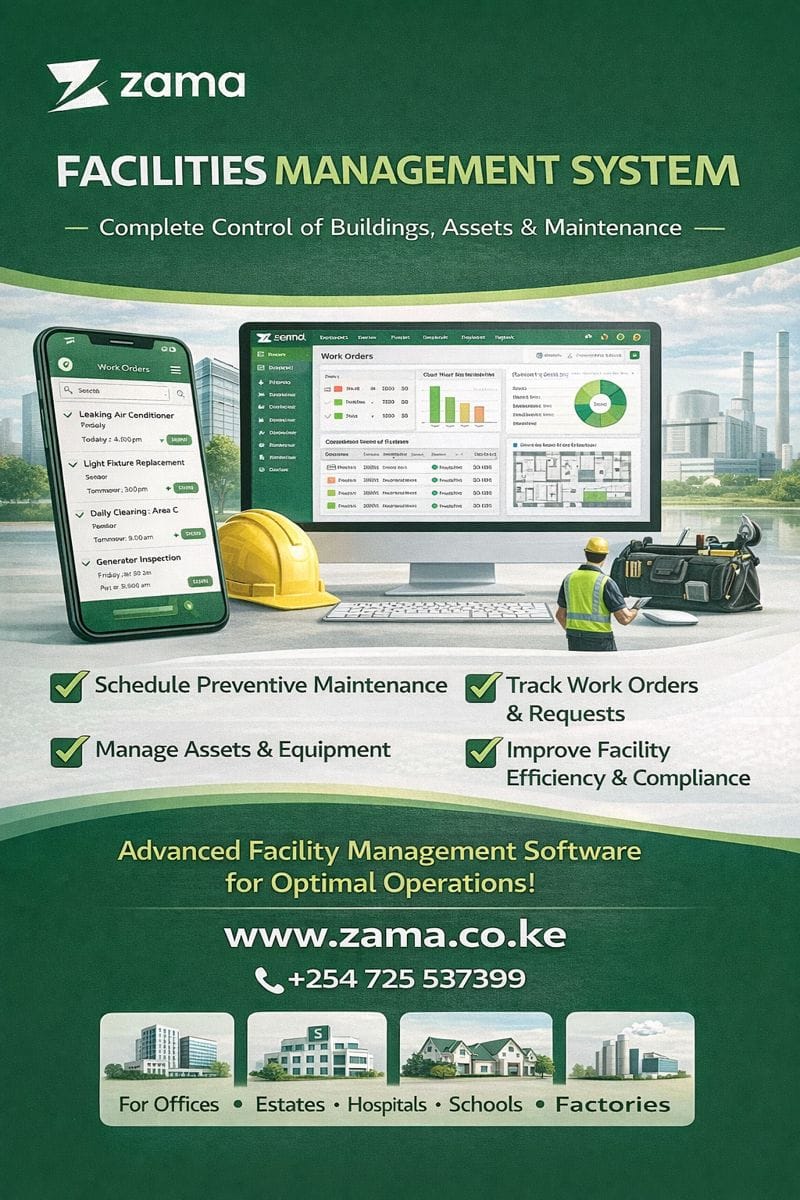
Enterprise Workflow Management System Kenya: Transforming How Organizations Operate
Every organization depends on processes. Whether approving expenses, onboarding employees, processing customer requests, managing projects, or handling procurement, workflows determine how efficiently a business operates.
Unfortunately, many businesses still manage these processes through emails, spreadsheets, paper forms, and manual follow-ups.
The result is often:
- Delayed approvals
- Lost documents
- Poor accountability
- Reduced productivity
- Limited visibility
To overcome these challenges, organizations are increasingly investing in Enterprise Workflow Management Systems.
An Enterprise Workflow Management System provides a centralized platform that automates business processes, improves collaboration, and gives management real-time visibility into operations.
, we develop enterprise-grade workflow management solutions designed to help businesses improve efficiency, reduce costs, and scale successfully.
For consultation, contact +254725345345.
What Is an Enterprise Workflow Management System?
An Enterprise Workflow Management System is software that automates, monitors, and optimizes business processes across departments.
The platform ensures tasks move automatically through predefined workflows without unnecessary delays.
For example:
Traditional Process
Employee submits request → Email sent → Manager forgets approval → Follow-up emails → Delayed completion.
Automated Workflow
Employee submits request → Manager receives notification → Approval completed digitally → System updates records automatically.
The workflow becomes faster, transparent, and more efficient.
Why Kenyan Businesses Need Workflow Management Systems
Organizations are becoming more complex.
As businesses grow, managing operations manually becomes increasingly difficult.
Common challenges include:
Approval Delays
Managers often struggle to track requests.
Workflow systems automate approvals.
Process Bottlenecks
Tasks become stuck between departments.
Automation ensures smooth progression.
Limited Accountability
Without tracking systems, responsibility becomes unclear.
Workflow systems create complete audit trails.
Poor Reporting
Management lacks operational visibility.
Digital platforms provide real-time reporting.
Benefits of Enterprise Workflow Management Systems
Faster Business Processes
Automation eliminates unnecessary delays.
Tasks move efficiently from one stage to another.
Improved Productivity
Employees spend less time managing administrative work.
More time is spent on strategic activities.
Enhanced Visibility
Management can monitor process status in real time.
Better Compliance
Organizations maintain consistent operational procedures.
Reduced Operational Costs
Automation reduces manual effort and administrative overhead.
Greater Scalability
Businesses can handle growth without significantly increasing operational complexity.
Core Components of a Workflow Management System
Process Automation Engine
The automation engine manages workflow execution.
Examples include:
- Leave approvals
- Expense requests
- Procurement approvals
- Service requests
Task Management
Employees receive assigned tasks automatically.
Deadlines and responsibilities remain clear.
Notification System
Users receive updates through:
- SMS
- In-app notifications
Communication improves significantly.
Dashboard Reporting
Executives gain visibility into:
- Process performance
- Team productivity
- Pending approvals
- Operational KPIs
Audit Logs
Every activity is recorded.
This improves accountability and compliance.
Business Processes That Can Be Automated
Human Resource Workflows
HR departments automate:
Leave Management
Applications and approvals are digitized.
Employee Onboarding
New employee processes become structured.
Performance Evaluations
Reviews follow standardized workflows.
Employee Records
Information remains centralized.
Finance Workflows
Finance teams automate:
Invoice Approvals
Requests move through approval chains.
Expense Management
Approval processes become faster.
Budget Requests
Workflows ensure accountability.
Financial Reporting
Reports are generated automatically.
Procurement Workflows
Organizations streamline:
- Purchase requests
- Supplier approvals
- Procurement tracking
- Expense monitoring
Customer Service Workflows
Support teams automate:
- Ticket management
- Escalations
- Follow-ups
- Resolution tracking
Industries Benefiting from Workflow Management Systems
Real Estate
Automate:
- Tenant onboarding
- Maintenance requests
- Rent collection processes
- Financial approvals
Healthcare
Manage:
- Patient workflows
- Internal approvals
- Administrative processes
Education
Automate:
- Student admissions
- Fee approvals
- Administrative workflows
Logistics
Coordinate:
- Dispatch approvals
- Delivery workflows
- Fleet operations
Financial Services
Manage:
- Loan processing
- Compliance workflows
- Customer onboarding
Why Enterprise Workflows Require Custom Development
Every organization operates differently.
Generic software often lacks flexibility.
Custom workflow systems provide:
Tailored Business Processes
Software reflects actual organizational operations.
Better User Experience
Employees work within familiar workflows.
Flexible Integrations
Connect existing systems seamlessly.
Future Scalability
Add new workflows as requirements evolve.
M-Pesa Integration for Workflow Automation
For Kenyan businesses, M-Pesa integration enhances operational efficiency.
Benefits include:
Automated Payment Verification
Transactions are confirmed instantly.
Reconciliation
Payments are matched automatically.
Financial Workflows
Payment approvals become streamlined.
Real-Time Reporting
Revenue data updates immediately.
Features Every Modern Workflow Management System Should Include
Role-Based Access Control
Secure user permissions.
Mobile Accessibility
Access workflows from any device.
Automated Notifications
Keep stakeholders informed.
Process Tracking
Monitor workflow progress.
Reporting Dashboards
Support data-driven decisions.
Document Management
Centralize business records.
API Integrations
Connect external systems.
Cloud Infrastructure
Support reliability and scalability.
Future Trends in Workflow Management
The future of workflow automation includes:
Artificial Intelligence
AI-driven workflow recommendations.
Predictive Analytics
Identifying delays before they occur.
Hyperautomation
Automating entire operational ecosystems.
Intelligent Reporting
Real-time business insights.
Low-Code Process Design
Faster workflow creation and modification.
Organizations adopting these innovations gain significant competitive advantages.
Why Choose Zama Web Experts?
, we specialize in building workflow management systems that improve operational efficiency and business performance.
Our services include:
- Enterprise Workflow Management Systems
- Business Process Automation
- Web Portal Development
- SaaS Development
- Enterprise Software Solutions
- Mobile Applications
- M-Pesa Integrations
- API Development
- Long-Term System Support
We create scalable software solutions designed around real business operations.
Conclusion
An Enterprise Workflow Management System is one of the most valuable investments an organization can make. By automating approvals, improving visibility, reducing delays, and centralizing operations, businesses gain the efficiency needed to compete in today’s digital economy.
Organizations that continue relying on manual workflows often struggle with inefficiencies and operational bottlenecks. Those that embrace workflow automation gain greater control, productivity, and scalability.
If you’re searching for a reliable Enterprise Workflow Management System in Kenya, partner with Zama Web Experts
.
Contact Zama Web Experts
📞 Phone: +254725345345
🌐 Website: Zama Web Experts
📍 Ruiru, Kenya
Modernize your business operations with a custom Enterprise Workflow Management System built for efficiency, automation, and long-term growth.