
Estate Management Software in Zimbabwe: Transforming Property Management for Modern Real Estate Businesses
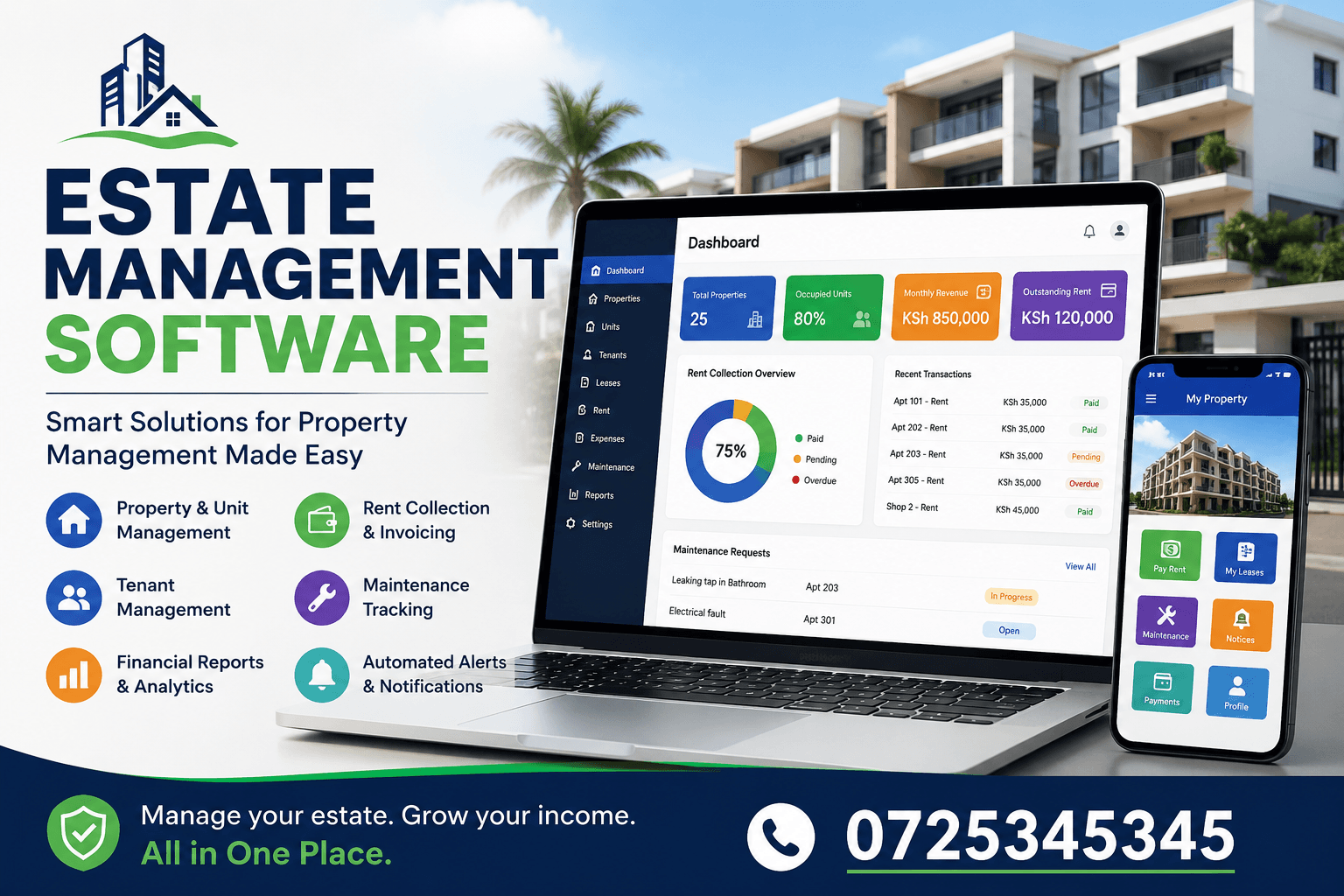
The Zimbabwean real estate sector has experienced remarkable growth over the past decade. Residential estates, commercial buildings, gated communities, apartment complexes, shopping centers, and mixed-use developments continue to expand across cities such as Harare, Bulawayo, Mutare, Gweru, and Victoria Falls. As the number of properties increases, property owners and managers are finding it increasingly difficult to manage operations using manual methods.
Traditional paperwork, spreadsheets, and disconnected accounting systems often lead to errors, delayed rent collection, lost maintenance requests, and poor communication with tenants. These challenges reduce profitability and create unnecessary stress for estate managers.
This is where estate management software in Zimbabwe becomes an essential business tool.
Modern estate management software enables landlords, property managers, estate developers, housing cooperatives, and real estate companies to automate daily operations from a single platform. Instead of relying on manual records, businesses can digitally manage tenants, leases, invoices, maintenance, accounting, reporting, and communications.
Whether managing 20 apartments or thousands of rental units, investing in estate management software in Zimbabwe helps improve efficiency, reduce operational costs, and increase customer satisfaction.
What is Estate Management Software?
Estate management software is an integrated digital platform designed to simplify the management of residential, commercial, and mixed-use properties.
It combines multiple business processes into one centralized system, allowing property managers to oversee every aspect of their estates from one dashboard.
Typical activities include:
- Tenant registration
- Lease management
- Rent collection
- Utility billing
- Maintenance tracking
- Financial reporting
- Property inspections
- Staff management
- Owner reporting
- Occupancy tracking
- Security records
- Communication management
Rather than maintaining several separate systems, estate managers gain complete visibility over their properties through one secure application.
Why Zimbabwe’s Real Estate Industry Needs Digital Transformation
Zimbabwe’s property market is becoming increasingly competitive. Tenants now expect professional services, faster communication, online payment options, and timely maintenance.
Manual management methods often create challenges such as:
- Missing rent payments
- Lost lease agreements
- Inaccurate financial reports
- Delayed maintenance
- Double-booked units
- Poor tenant communication
- Slow decision-making
- High administrative costs
Digital transformation allows property businesses to become more organized while providing better services to tenants and investors.
This is one of the main reasons demand for estate management software in Zimbabwe continues to grow among both small landlords and large property management companies.
Key Features of Estate Management Software in Zimbabwe
A comprehensive solution includes numerous modules that work together seamlessly.
1. Property Management
The software stores information about every property, including:
- Apartments
- Houses
- Office buildings
- Warehouses
- Shopping centers
- Industrial units
- Parking spaces
- Land parcels
Managers can instantly view occupancy rates, availability, rental income, and maintenance history.
2. Tenant Management
Tenant records are securely stored in one location.
Information may include:
- Personal details
- Identification documents
- Lease agreements
- Payment history
- Emergency contacts
- Occupancy dates
- Communication records
Having complete tenant profiles helps managers provide better customer service while reducing paperwork.
3. Lease Management
Lease agreements are the backbone of every rental business.
Estate management software automates:
- Lease creation
- Renewals
- Expiry notifications
- Rent revisions
- Security deposits
- Contract amendments
Managers receive alerts before leases expire, reducing vacancies.
4. Online Rent Collection
Collecting rent manually often results in delays.
Modern systems support digital payments through:
- Bank transfers
- Mobile money
- Online payment gateways
- Card payments
Automatic payment reminders encourage tenants to pay on time.
This makes estate management software in Zimbabwe particularly valuable for landlords seeking predictable cash flow.
5. Automated Invoicing
Instead of preparing invoices every month manually, the software automatically generates:
- Rent invoices
- Service charge invoices
- Utility bills
- Penalty invoices
- Parking fees
- Maintenance charges
Invoices can be emailed or shared electronically with tenants.
6. Maintenance Management
Maintenance directly affects tenant satisfaction.
A maintenance module allows tenants to report issues such as:
- Plumbing problems
- Electrical faults
- Broken windows
- Security concerns
- Water shortages
- Internet outages
- HVAC repairs
Property managers can assign technicians, monitor progress, and record completion dates.
7. Financial Management
Accounting becomes much easier with integrated financial tools.
Managers can track:
- Rental income
- Expenses
- Profit margins
- Cash flow
- Outstanding balances
- Utility collections
- Maintenance costs
Real-time financial reports improve decision-making.
8. Vacancy Management
Knowing which units are vacant is essential.
The software displays:
- Available apartments
- Vacant offices
- Reserved units
- Occupied spaces
- Upcoming vacancies
This enables faster marketing and tenant placement.
9. Document Management
Estate businesses generate numerous documents.
Instead of filing paper copies, managers can securely store:
- Lease agreements
- Property titles
- Inspection reports
- Insurance documents
- Contractor agreements
- Tenant correspondence
Digital storage minimizes document loss.
10. Reporting Dashboard
Managers gain access to real-time business intelligence.
Reports may include:
- Occupancy rates
- Rental income
- Outstanding rent
- Maintenance costs
- Lease expiries
- Revenue trends
- Expense summaries
Interactive dashboards support faster decision-making.
Benefits of Estate Management Software in Zimbabwe
Improved Efficiency
Routine tasks become automated, reducing repetitive manual work.
Staff spend less time processing paperwork and more time serving tenants.
Increased Revenue Collection
Automated reminders encourage timely rent payments.
Businesses experience:
- Fewer late payments
- Reduced arrears
- Better cash flow
- Improved financial planning
Better Tenant Experience
Satisfied tenants are more likely to renew leases.
The software enables:
- Faster communication
- Quick maintenance response
- Transparent billing
- Online payment options
- Convenient service requests
Reduced Administrative Costs
Automation reduces the need for excessive paperwork and manual data entry.
This lowers operational expenses while improving productivity.
Enhanced Security
Modern systems protect sensitive information using:
- User authentication
- Role-based access
- Encrypted databases
- Automatic backups
- Activity logs
This minimizes the risk of unauthorized access or data loss.
Real-Time Decision Making
Instead of waiting for monthly reports, managers can access live dashboards showing property performance.
This allows quicker responses to emerging issues.
Who Should Use Estate Management Software in Zimbabwe?
The software benefits a wide range of organizations, including:
- Property management companies
- Estate developers
- Landlords
- Housing cooperatives
- Commercial property owners
- Apartment managers
- Shopping mall operators
- Office park managers
- Universities managing student accommodation
- Government housing authorities
- Churches managing rental properties
- Investment companies with property portfolios
Regardless of portfolio size, estate management software in Zimbabwe helps improve operational efficiency and profitability.
Common Challenges Solved by Estate Management Software
Many estate businesses struggle with recurring operational issues. A modern system addresses these by providing automation and centralized control.
Some of the most common problems include:
- Inconsistent rent collection
- Manual record-keeping
- Difficulty tracking lease expiries
- Delayed maintenance requests
- Poor communication with tenants
- Lack of financial transparency
- Duplicate records
- Human errors in billing
- Limited reporting capabilities
- Difficulty managing multiple properties
By implementing estate management software in Zimbabwe, property managers can eliminate many of these inefficiencies while creating a more professional experience for both tenants and property owners.
Estate Management Software in Zimbabwe: The Ultimate Guide to Streamlining Property Management in 2026 (Part 2)
Advanced Features of Estate Management Software in Zimbabwe
As the real estate industry continues to embrace digital transformation, modern estate management systems have evolved beyond basic tenant and rent management. Today’s solutions incorporate advanced technologies that help property managers save time, improve service delivery, and make data-driven decisions.
Below are some of the advanced capabilities you should look for when choosing estate management software in Zimbabwe.
1. Mobile Access for Property Managers
Property managers are rarely confined to an office. They frequently inspect properties, meet prospective tenants, oversee maintenance work, and communicate with contractors.
A mobile-friendly estate management system allows managers to:
- View tenant information on the go
- Approve maintenance requests remotely
- Monitor rent payments
- Upload inspection photos
- Generate reports from smartphones
- Respond to tenant inquiries instantly
- Access financial summaries anytime
This flexibility improves productivity and ensures that critical tasks are completed promptly.
2. Tenant Self-Service Portal
Modern tenants expect convenience. A tenant portal empowers residents to access important services without visiting the property management office.
Through a secure portal, tenants can:
- View their lease agreements
- Check rent balances
- Make online payments
- Download receipts
- Submit maintenance requests
- Track repair progress
- Update contact information
- Receive estate announcements
This reduces administrative work while improving tenant satisfaction.
3. Property Owner Portal
Property owners often want visibility into how their investments are performing.
An owner portal provides secure access to:
- Rental income reports
- Occupancy statistics
- Expense summaries
- Maintenance history
- Lease information
- Profitability reports
- Property valuation trends
This transparency strengthens trust between estate managers and property owners.
4. Utility Billing Management
Managing utilities manually is time-consuming, especially for estates with hundreds of units.
Estate management software can automate billing for:
- Water
- Electricity
- Internet
- Security services
- Garbage collection
- Parking fees
- Shared facility maintenance
Bills are calculated automatically based on predefined rates or meter readings, minimizing errors and ensuring accurate invoicing.
5. Visitor Management
Gated communities and commercial buildings require efficient visitor control.
A visitor management module enables security personnel to:
- Register visitors digitally
- Capture identification details
- Record entry and exit times
- Notify residents of arriving guests
- Generate visitor reports
- Maintain security logs
Digital visitor records improve security while reducing paperwork.
6. Security Incident Reporting
Estate security teams need reliable systems for recording incidents.
Software allows security personnel to log:
- Theft reports
- Fire incidents
- Vehicle accidents
- Lost property
- Unauthorized access
- Noise complaints
- Emergency responses
Managers can analyze trends and implement preventive measures.
7. Inspection Management
Routine inspections help maintain property value.
Estate inspectors can schedule inspections and record:
- Structural condition
- Plumbing systems
- Electrical installations
- Interior finishes
- Exterior maintenance
- Safety compliance
- Photographic evidence
Inspection history provides valuable documentation for maintenance planning and legal compliance.
8. Maintenance Scheduling
Preventive maintenance extends the lifespan of property assets.
Software helps schedule recurring maintenance for:
- Elevators
- Water pumps
- Air conditioning systems
- Generators
- Fire equipment
- Lighting
- Landscaping
- Security systems
Automated reminders ensure maintenance tasks are never overlooked.
9. Contractor Management
Many estates rely on external service providers.
Estate management software stores contractor information, including:
- Company details
- Contact information
- Service categories
- Contracts
- Insurance documents
- Performance history
- Payment records
Managers can quickly assign work to qualified contractors while maintaining accountability.
10. Inventory Management
Estate operations require numerous supplies and equipment.
Inventory modules help track:
- Cleaning materials
- Office supplies
- Spare parts
- Maintenance tools
- Security equipment
- Electrical components
- Plumbing materials
Automated stock alerts prevent shortages and improve procurement planning.
Multi-Property Management
Many property companies manage numerous estates across different cities.
Instead of maintaining separate records, estate management software in Zimbabwe centralizes operations for multiple locations.
Managers can monitor:
- Residential estates
- Commercial buildings
- Office parks
- Retail centers
- Student hostels
- Mixed-use developments
Each property can have its own tenants, financial reports, maintenance schedules, and staff while remaining part of one centralized platform.
Real-Time Notifications
Communication is essential in estate management.
Modern systems automatically send notifications for:
- Rent due dates
- Payment confirmations
- Lease renewals
- Maintenance updates
- Community announcements
- Inspection schedules
- Utility bills
- Visitor arrivals
These notifications can be delivered through email, SMS, or mobile applications.
Data Analytics and Business Intelligence
Property management generates large amounts of valuable data.
Analytics dashboards help managers identify:
- Occupancy trends
- Revenue growth
- High-maintenance properties
- Tenant turnover rates
- Collection efficiency
- Expense patterns
- Seasonal demand
- Maintenance response times
These insights support strategic planning and better investment decisions.
Cloud-Based Estate Management Software
Cloud computing has transformed the software industry.
Cloud-based estate management software in Zimbabwe offers several advantages:
Access Anywhere
Managers can log in from any location with internet access.
Automatic Backups
Data is securely backed up without manual intervention.
Lower Infrastructure Costs
Businesses avoid investing heavily in servers and networking equipment.
Automatic Updates
Software providers continuously improve features without disrupting daily operations.
Better Collaboration
Multiple employees can access the same information simultaneously.
On-Premise Estate Management Software
Some organizations prefer hosting software within their own infrastructure.
Advantages include:
- Full control of data
- Internal security policies
- Offline operation in some configurations
- Customized deployments
However, on-premise systems often require higher upfront investment and dedicated IT support.
How Estate Management Software Improves Customer Satisfaction
Happy tenants are more likely to renew leases, recommend properties, and pay rent on time.
A digital management system enhances customer experience through:
- Faster maintenance responses
- Transparent billing
- Easy communication
- Convenient online payments
- Digital document access
- Quick complaint resolution
- Professional service delivery
Improved tenant satisfaction contributes directly to higher occupancy rates and long-term profitability.
Integration with Accounting Systems
Financial management becomes more efficient when estate software integrates with accounting solutions.
Possible integrations include:
- General ledger
- Accounts receivable
- Accounts payable
- Payroll
- Tax reporting
- Budget management
- Bank reconciliation
This reduces duplicate data entry and improves financial accuracy.
Payment Gateway Integration
Digital payments continue to grow across Zimbabwe.
An integrated payment gateway allows tenants to pay securely using:
- Mobile money services
- Bank transfers
- Debit cards
- Credit cards
- Online banking platforms
Automatic payment reconciliation minimizes manual accounting work and speeds up rent confirmation.
Document Automation
Preparing documents manually consumes valuable time.
Estate management software can automatically generate:
- Lease agreements
- Rent invoices
- Payment receipts
- Occupancy certificates
- Inspection reports
- Maintenance work orders
- Financial statements
- Tenant account summaries
Automation ensures consistency while reducing administrative effort.
Compliance and Regulatory Support
Property managers must comply with various legal and financial requirements.
Estate management software assists by maintaining:
- Accurate financial records
- Audit trails
- Digital contracts
- Tax reports
- Maintenance records
- Tenant documentation
Well-organized records simplify compliance and reduce legal risks.
Disaster Recovery and Data Protection
Property data is one of the most valuable business assets.
Reliable estate management software includes:
- Automatic backups
- Data encryption
- Secure cloud storage
- User access controls
- Activity logs
- Multi-factor authentication
- Disaster recovery plans
These features protect sensitive information from accidental loss or cyber threats.
Industries That Benefit from Estate Management Software
Although designed for real estate, the software supports many sectors.
Examples include:
- Residential property management companies
- Commercial real estate firms
- Industrial park operators
- Student accommodation providers
- Government housing agencies
- Hotels with long-term rentals
- Religious organizations managing rental units
- Housing cooperatives
- Shopping mall management companies
- Corporate housing providers
Each organization benefits from improved efficiency, automation, and centralized management.
Return on Investment (ROI)
Investing in estate management software in Zimbabwe provides measurable returns over time.
Some of the key benefits include:
- Reduced administrative costs
- Faster rent collection
- Lower vacancy rates
- Improved tenant retention
- Better financial reporting
- Reduced paperwork
- Increased staff productivity
- Enhanced property maintenance
- Stronger compliance
- Higher profitability
Rather than being an expense, estate management software becomes a strategic investment that supports sustainable business growth.
Choosing the Best Estate Management Software in Zimbabwe
Selecting the right estate management software in Zimbabwe is one of the most important decisions a property owner or management company can make. The ideal solution should not only solve your current operational challenges but also support your business as it grows. Whether you manage residential apartments, office complexes, shopping centres, gated communities, or mixed-use developments, investing in the right technology can significantly improve efficiency, tenant satisfaction, and profitability.
Below are the most important factors to consider when evaluating estate management software in Zimbabwe.
How to Choose the Best Estate Management Software in Zimbabwe
1. Identify Your Business Requirements
Every property business has unique operational needs. Before purchasing estate management software in Zimbabwe, list the processes you want to automate.
Consider questions such as:
- How many properties do you manage?
- How many tenants do you serve?
- Do you manage residential or commercial properties?
- Do you need accounting integration?
- Will tenants pay online?
- Do you require mobile access?
- Do you need maintenance management?
- Will multiple staff members use the system?
Having clear objectives will help you select estate management software in Zimbabwe that aligns with your business goals instead of paying for unnecessary features.
2. Prioritize Ease of Use
A powerful system is only valuable if your team can use it efficiently. The best estate management software in Zimbabwe should feature an intuitive interface, simple navigation, and user-friendly dashboards. Employees should be able to learn the system quickly, reducing training time and improving adoption across your organization.
3. Ensure Scalability
Your business may start with a few rental units today but expand significantly in the coming years. Choose estate management software in Zimbabwe that can grow with your portfolio without requiring a complete system replacement. A scalable solution protects your investment and supports long-term expansion.
4. Evaluate Customer Support
Reliable technical support is essential. Even the best software may require occasional assistance during implementation or upgrades. When selecting estate management software in Zimbabwe, look for a provider that offers responsive customer service, user training, software updates, and ongoing maintenance.
5. Verify Security Features
Property management systems store sensitive tenant and financial information. Ensure your chosen estate management software in Zimbabwe includes:
- Data encryption
- Secure user authentication
- Role-based access control
- Automatic backups
- Audit logs
- Multi-factor authentication
Strong security measures protect your business from data breaches and unauthorized access.
Essential Features Checklist
Before investing in estate management software in Zimbabwe, verify that it includes the following features:
- Property management
- Tenant management
- Lease management
- Rent collection
- Automated invoicing
- Utility billing
- Maintenance management
- Visitor management
- Financial reporting
- Expense tracking
- Occupancy monitoring
- Mobile access
- Tenant portal
- Owner portal
- Document management
- Notifications and reminders
- Inspection management
- Contractor management
- Analytics dashboard
- Multi-property support
A comprehensive feature set ensures that your estate operations remain efficient and future-ready.
Steps for Successful Implementation
Implementing estate management software in Zimbabwe requires proper planning to maximize its benefits.
Step 1: Assess Existing Processes
Review your current workflows and identify inefficiencies. Understanding your existing operations helps configure the software effectively.
Step 2: Prepare Your Data
Organize information such as:
- Tenant records
- Property details
- Lease agreements
- Financial records
- Maintenance history
Clean and accurate data ensures a smooth migration.
Step 3: Configure the Software
Customize the system according to your business requirements by setting rental rates, user roles, payment schedules, and reporting preferences.
Step 4: Train Staff
Provide comprehensive training so employees understand how to use the new system confidently.
Step 5: Test the System
Before going live, test all major functions including rent collection, invoicing, maintenance requests, and reporting.
Step 6: Launch and Monitor
After deployment, monitor system performance, gather user feedback, and make adjustments where necessary.
Common Mistakes to Avoid
To get the most value from estate management software in Zimbabwe, avoid these common mistakes:
- Choosing software based only on price
- Ignoring staff training
- Migrating inaccurate data
- Failing to back up records
- Overlooking cybersecurity
- Not involving employees during implementation
- Delaying software updates
- Choosing a system that cannot scale
- Ignoring customer support quality
- Failing to monitor key performance indicators
Avoiding these pitfalls will improve implementation success and long-term performance.
The Future of Estate Management in Zimbabwe
Technology continues to reshape the real estate industry. The next generation of estate management software in Zimbabwe will incorporate advanced technologies that improve automation and decision-making.
Artificial Intelligence (AI)
AI will assist estate managers by:
- Predicting rental demand
- Forecasting maintenance needs
- Automating customer support
- Identifying payment risks
- Analyzing market trends
Internet of Things (IoT)
Smart sensors will enable:
- Remote utility monitoring
- Smart lighting control
- Water leak detection
- Energy management
- Building security monitoring
Predictive Maintenance
Instead of waiting for equipment to fail, predictive maintenance uses data to schedule repairs before problems occur, reducing downtime and maintenance costs.
Digital Contracts
Electronic lease agreements and digital signatures will simplify documentation, reduce paperwork, and accelerate tenant onboarding.
Smart Payments
Future systems will provide even faster and more secure digital payment options with automatic reconciliation and real-time financial reporting.
Frequently Asked Questions (FAQs)
What is estate management software?
Estate management software is a digital platform that helps property owners and managers automate rent collection, tenant management, maintenance, accounting, reporting, and communication.
Is estate management software suitable for small landlords?
Yes. Whether you manage a few rental units or a large property portfolio, estate management software in Zimbabwe helps streamline operations and reduce manual work.
Can tenants pay rent online?
Most modern systems support online payments through bank transfers, mobile money services, cards, and payment gateways.
Is cloud-based software better than desktop software?
Cloud-based solutions generally offer easier access, automatic backups, regular updates, and lower infrastructure costs. However, the best choice depends on your organization’s needs.
Can multiple users access the system?
Yes. Most systems support multiple users with role-based permissions, ensuring that staff only access the information relevant to their responsibilities.
Does the software generate reports?
Yes. Estate management software provides reports on rent collection, occupancy, maintenance, expenses, profitability, lease expiries, and many other key performance indicators.
Conclusion
The property industry is becoming increasingly competitive, making digital transformation more important than ever. Investing in estate management software in Zimbabwe allows landlords, estate developers, housing cooperatives, and property management companies to automate routine tasks, improve tenant satisfaction, strengthen financial management, and increase operational efficiency.
Whether you manage residential apartments, commercial buildings, shopping centres, office parks, or mixed-use developments, estate management software in Zimbabwe provides the tools needed to streamline every aspect of property management. From automated rent collection and tenant communication to maintenance scheduling and financial reporting, the benefits are substantial.
Businesses that adopt estate management software in Zimbabwe gain greater visibility into their operations, reduce administrative costs, minimize errors, and improve decision-making through real-time data. As technologies such as artificial intelligence, cloud computing, IoT, and predictive analytics continue to evolve, estate management software in Zimbabwe will become even more powerful and indispensable.
If your goal is to improve productivity, enhance tenant experiences, and maximize returns on your property investments, implementing estate management software in Zimbabwe is a strategic decision that will deliver lasting value. Whether you are managing a single estate or an extensive portfolio, the right estate management software in Zimbabwe will help you stay organized, competitive, and prepared for the future of real estate management.
By embracing estate management software in Zimbabwe, property businesses can simplify complex operations, ensure accurate financial records, respond to tenant needs more efficiently, and position themselves for sustainable growth. Now is the ideal time to invest in estate management software in Zimbabwe and transform the way your properties are managed.