
Facility Management Software Kenya: The Complete Guide to Smarter Facility Management in 2026
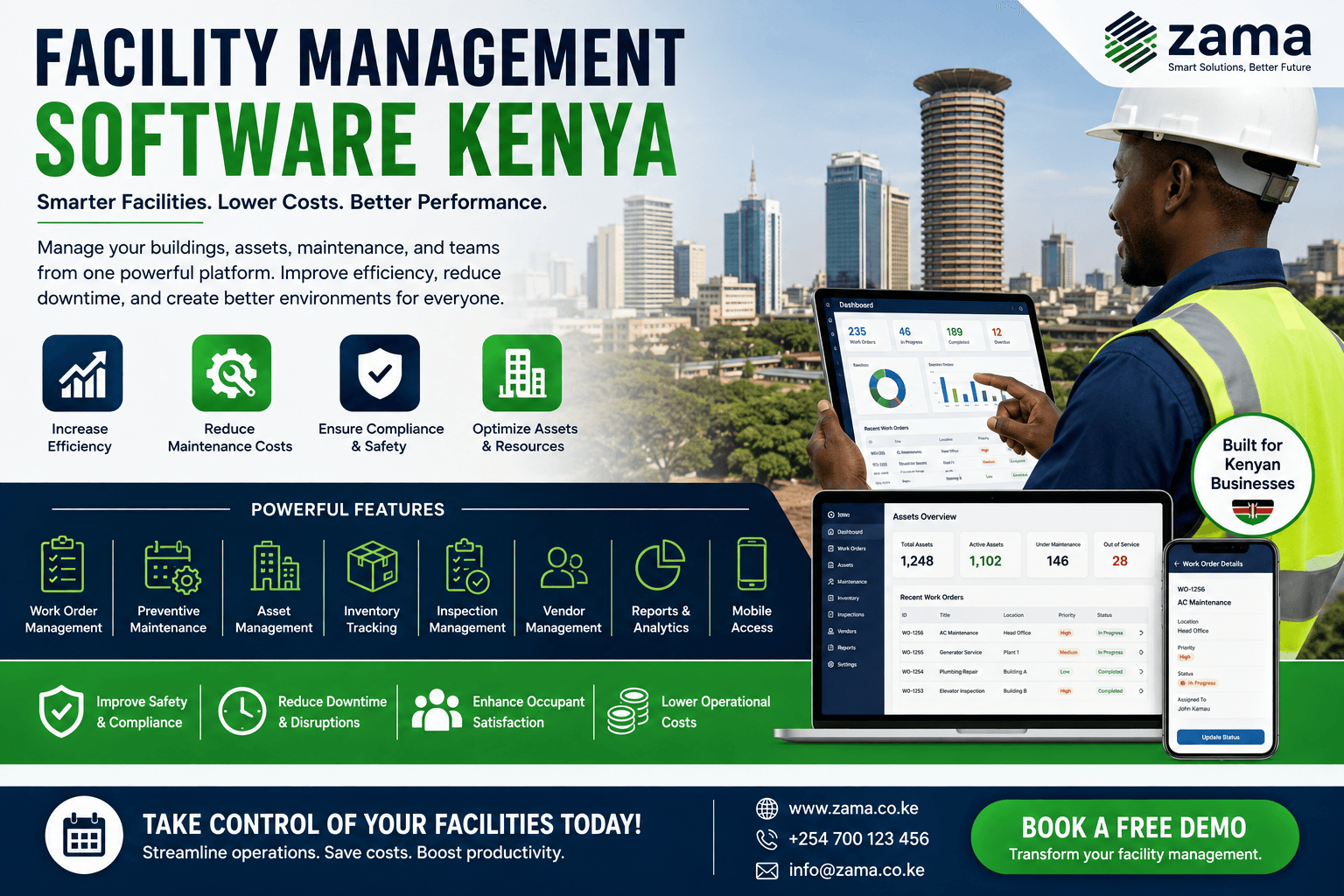

Managing facilities efficiently has become a top priority for businesses, institutions, hospitals, schools, commercial buildings, and industrial organizations across Kenya. From maintenance scheduling and asset tracking to space management and compliance reporting, facility managers are expected to handle increasingly complex operations while keeping costs under control.
Traditional methods such as paper records, spreadsheets, and manual inspections are no longer sufficient for modern facilities. Organizations now require digital solutions that improve visibility, automate routine tasks, and provide real-time insights into facility performance. This is where Facility Management Software Kenya becomes an essential investment.
Whether you manage an office building in Nairobi, a manufacturing plant in Mombasa, a university in Eldoret, or a hospital in Kisumu, the right facility management software can help you streamline operations, reduce maintenance costs, and enhance occupant satisfaction.
In this comprehensive guide, you’ll learn everything about Facility Management Software Kenya, including its features, benefits, applications, and why more Kenyan organizations are embracing digital facility management.
What Is Facility Management Software?
Facility Management Software is a centralized digital platform designed to help organizations efficiently manage buildings, assets, maintenance activities, work orders, inspections, inventory, and facility operations.
Instead of relying on manual records, multiple spreadsheets, or disconnected systems, facility managers can manage everything from one dashboard.
Typical functions include:
- Asset management
- Preventive maintenance
- Work order management
- Space management
- Vendor management
- Inventory tracking
- Compliance management
- Inspection scheduling
- Maintenance reporting
- Staff management
- Equipment monitoring
Unlike manual processes, Facility Management Software Kenya automates repetitive tasks and provides real-time visibility into facility operations.
Why Facility Management Is Becoming More Important in Kenya
Kenya’s rapid urbanization and infrastructure development have increased the need for professional facility management.
Organizations now manage:
- Commercial buildings
- Shopping malls
- Hospitals
- Universities
- Hotels
- Factories
- Warehouses
- Government offices
- Residential estates
- Corporate headquarters
Managing these facilities manually often leads to inefficiencies, delayed maintenance, and higher operational costs.
This explains why demand for Facility Management Software Kenya continues to grow.
Challenges of Manual Facility Management
Many organizations still depend on paper files and spreadsheets.
Although these methods may work for small facilities, they create significant challenges as operations expand.
Missed Maintenance Schedules
Without automated reminders, maintenance tasks are easily forgotten.
This can result in:
- Equipment breakdowns
- Expensive repairs
- Unexpected downtime
- Reduced equipment lifespan
Poor Asset Tracking
Many organizations struggle to know:
- Where equipment is located
- Current asset condition
- Maintenance history
- Replacement schedules
Manual tracking increases the risk of asset loss and inaccurate records.
Slow Work Order Processing
Employees often report maintenance issues through:
- Phone calls
- Emails
- Paper forms
- WhatsApp messages
Without a centralized system, requests can be delayed or overlooked.
Limited Reporting
Manual systems make it difficult to generate reports on:
- Maintenance costs
- Equipment performance
- Staff productivity
- Asset utilization
- Facility expenses
Decision-makers often lack accurate data.
These challenges highlight the value of Facility Management Software Kenya in improving operational efficiency.
Key Features of Facility Management Software
Modern facility management systems provide powerful tools for managing daily operations.
Work Order Management
Users can:
- Create work orders
- Assign technicians
- Set priorities
- Track progress
- Monitor completion times
- Record maintenance costs
This eliminates confusion and improves accountability.
Preventive Maintenance
Preventive maintenance helps organizations avoid costly equipment failures.
The software automatically schedules:
- HVAC servicing
- Electrical inspections
- Plumbing maintenance
- Fire safety inspections
- Generator servicing
- Elevator maintenance
Instead of waiting for equipment to fail, maintenance becomes proactive.
One of the greatest strengths of Facility Management Software Kenya is its ability to automate preventive maintenance schedules.
Asset Management
Every asset can be tracked from purchase to disposal.
Examples include:
- Air conditioners
- Computers
- Vehicles
- Generators
- Office furniture
- Medical equipment
- Security systems
Each asset record may include:
- Purchase date
- Warranty information
- Maintenance history
- Service schedules
- Assigned location
- Responsible department
Inventory Management
Maintenance teams rely on spare parts and consumables.
Facility management software tracks:
- Stock levels
- Purchase requests
- Supplier information
- Parts usage
- Reorder alerts
This prevents maintenance delays caused by unavailable inventory.
Inspection Management
Routine inspections become easier using digital checklists.
Organizations can schedule inspections for:
- Fire extinguishers
- Electrical systems
- Elevators
- Building safety
- Water systems
- HVAC equipment
Inspection reports are stored digitally for future reference.
Benefits of Facility Management Software
Organizations implementing facility management software experience significant operational improvements.
Increased Efficiency
Automation reduces repetitive administrative work.
Tasks that previously required hours can now be completed in minutes.
Reduced Maintenance Costs
Preventive maintenance helps identify problems before they become expensive repairs.
Organizations spend less on emergency maintenance.
Improved Asset Lifespan
Regular servicing extends the useful life of expensive equipment.
This delays replacement costs and improves return on investment.
Better Decision-Making
Managers gain access to real-time dashboards showing:
- Maintenance status
- Asset performance
- Operational costs
- Technician productivity
- Equipment downtime
Data-driven decisions become easier.
Enhanced Compliance
Many industries must comply with health, safety, and regulatory standards.
Facility management software stores inspection records and maintenance logs, making compliance audits faster and more accurate.
This is another reason why organizations are investing in Facility Management Software Kenya.
Industries That Benefit from Facility Management Software
Almost every industry with physical infrastructure can benefit from facility management software.
Healthcare
Hospitals use facility management software to manage:
- Medical equipment
- Oxygen systems
- Air conditioning
- Emergency generators
- Maintenance requests
- Compliance inspections
Education
Schools and universities manage:
- Classrooms
- Laboratories
- Dormitories
- Libraries
- Sports facilities
- Campus infrastructure
Digital maintenance scheduling improves operational efficiency.
Manufacturing
Factories depend on reliable equipment.
Facility management software helps manufacturers:
- Schedule preventive maintenance
- Reduce downtime
- Track machinery
- Monitor maintenance costs
- Improve production reliability
Commercial Real Estate
Shopping malls, office buildings, and mixed-use developments use software to:
- Manage maintenance teams
- Track tenant requests
- Monitor building assets
- Schedule inspections
- Improve service delivery
Hospitality
Hotels rely on efficient facility management to maintain:
- Guest rooms
- Air conditioning systems
- Elevators
- Swimming pools
- Security equipment
- Kitchen facilities
Efficient maintenance contributes to a better guest experience.
These industry applications demonstrate why Facility Management Software Kenya has become a valuable tool for organizations seeking to improve operational performance and reduce maintenance costs.
Why Businesses Are Moving to Digital Facility Management
Organizations across Kenya are embracing digital transformation to improve efficiency and competitiveness.
By replacing manual processes with modern software, businesses can:
- Improve maintenance planning
- Reduce equipment downtime
- Enhance employee productivity
- Extend asset life
- Improve reporting accuracy
- Lower operational costs
- Deliver better service to occupants
As facilities become larger and more complex, adopting Facility Management Software Kenya is no longer just an option—it is a strategic investment for sustainable growth and operational excellence.
Facility Management Software Kenya: Comparing Manual Processes and Digital Solutions
Many organizations hesitate to invest in facility management software because manual methods seem familiar and inexpensive. However, as facilities become larger and operations become more demanding, the hidden costs of manual management begin to outweigh the initial savings. This is why Facility Management Software Kenya is becoming the preferred choice for organizations seeking efficiency and long-term value.
Manual Facility Management vs Facility Management Software
| Feature | Manual Management | Facility Management Software |
|---|---|---|
| Maintenance Scheduling | Manual calendars | Automated scheduling |
| Work Orders | Paper or email | Digital work orders |
| Asset Tracking | Spreadsheets | Centralized asset database |
| Reporting | Time-consuming | Real-time dashboards |
| Inventory Management | Manual records | Automated stock tracking |
| Compliance Records | Paper files | Digital documentation |
| Team Collaboration | Limited | Real-time collaboration |
| Mobile Access | No | Yes |
| Analytics | Limited | Advanced reporting |
The comparison clearly demonstrates why organizations are moving toward Facility Management Software Kenya to modernize their operations.
Preventive Maintenance vs Reactive Maintenance
One of the greatest advantages of facility management software is the shift from reactive maintenance to preventive maintenance.
Reactive Maintenance
This approach involves fixing equipment only after it breaks down.
Common disadvantages include:
- Unexpected downtime
- High repair costs
- Emergency maintenance
- Reduced equipment lifespan
- Business disruptions
Preventive Maintenance
Facility management software schedules maintenance before problems occur.
Benefits include:
- Fewer equipment failures
- Lower maintenance costs
- Longer asset life
- Better operational reliability
- Improved workplace safety
This proactive approach is one of the strongest reasons businesses invest in Facility Management Software Kenya.
Work Order Automation
Managing maintenance requests manually often results in delays and poor communication.
With facility management software, employees can submit work requests digitally.
A typical workflow includes:
- Employee reports an issue.
- The system creates a work order.
- The work order is assigned to a technician.
- The technician receives a notification.
- Repairs are completed.
- The system records labor and materials used.
- Managers review completion reports.
This streamlined process reduces delays and improves accountability.
Mobile Access for Field Teams
Facility managers and technicians are rarely at their desks.
Modern software provides mobile access, allowing technicians to:
- Receive work orders instantly
- Update task status
- Upload photos
- Record completed work
- Capture digital signatures
- Access maintenance history
Mobile functionality improves productivity and reduces paperwork.
When evaluating Facility Management Software Kenya, mobile accessibility is an important advantage.
Space Management
Organizations often struggle to optimize the use of office space.
Facility management software helps track:
- Office occupancy
- Meeting rooms
- Parking spaces
- Workstations
- Conference facilities
- Shared resources
Managers can identify underutilized spaces and make better planning decisions.
Vendor and Contractor Management
Many facilities rely on external contractors for specialized services such as:
- Electrical work
- Plumbing
- Cleaning
- Security
- Landscaping
- Elevator servicing
Facility management software stores contractor information, including:
- Contact details
- Service agreements
- Performance records
- Payment history
- Expiry dates for contracts
This simplifies vendor management and improves service quality.
Compliance and Safety Management
Organizations must comply with health, safety, and environmental regulations.
Facility management software helps track:
- Fire safety inspections
- Occupational safety checks
- Equipment certifications
- Environmental compliance
- Building inspections
- Maintenance logs
Digital records make audits easier and reduce the risk of non-compliance.
This is another compelling reason organizations choose Facility Management Software Kenya.
Real-World Case Study
Manufacturing Company Reduces Downtime
A manufacturing company in Nairobi managed maintenance activities using spreadsheets and paper-based work orders.
Challenges
- Frequent machine breakdowns
- Delayed maintenance requests
- Poor visibility into asset performance
- High repair costs
- Difficulty tracking spare parts
The company implemented a modern facility management software solution.
Results After Eight Months
- Equipment downtime reduced by 45%.
- Preventive maintenance compliance increased significantly.
- Maintenance costs decreased.
- Work order completion became faster.
- Spare parts inventory became more accurate.
- Managers gained real-time operational insights.
The organization experienced measurable improvements by replacing manual processes with digital facility management.
Customer Testimonial
“Before implementing facility management software, we struggled to coordinate maintenance activities across multiple buildings. Today, our technicians receive work orders instantly, preventive maintenance is always on schedule, and management has complete visibility into facility operations. The software has transformed how we manage our assets.”
— Facilities Manager, Commercial Property Company, Kenya
Why Choose Zama for Facility Management Software?
At Zama, we develop intelligent software solutions that help Kenyan organizations simplify facility management through automation, real-time reporting, and centralized control.
Our Facility Management Software Kenya solution includes:
- Asset management
- Preventive maintenance scheduling
- Digital work orders
- Inventory management
- Inspection tracking
- Vendor management
- Compliance monitoring
- Mobile access
- Real-time dashboards
- Advanced analytics
Whether you manage a corporate office, hospital, university, factory, hotel, or commercial building, Zama provides the tools needed to improve operational efficiency and reduce maintenance costs.
Measuring Return on Investment (ROI)
Investing in facility management software delivers measurable benefits over time.
Organizations commonly achieve:
- Lower emergency repair costs
- Reduced equipment downtime
- Better utilization of maintenance teams
- Improved asset lifespan
- Faster work order completion
- Increased compliance
- More accurate budgeting
- Better decision-making
When comparing these benefits with the costs of manual management, Facility Management Software Kenya offers a strong return on investment through improved productivity and reduced operational expenses.
Future Trends in Facility Management in Kenya
Facility management is rapidly evolving as organizations adopt digital technologies to improve efficiency, sustainability, and operational performance. The future of Facility Management Software Kenya is being shaped by automation, artificial intelligence (AI), the Internet of Things (IoT), cloud computing, and predictive analytics.
Organizations that embrace these technologies will be better positioned to reduce costs, improve service delivery, and extend the lifespan of their assets.
Artificial Intelligence in Facility Management
Artificial Intelligence (AI) is transforming how facilities are managed by helping organizations make smarter decisions.
AI-powered Facility Management Software Kenya can:
- Predict equipment failures before they occur.
- Recommend preventive maintenance schedules.
- Analyze maintenance trends.
- Optimize technician assignments.
- Improve energy consumption.
- Detect operational inefficiencies.
Instead of reacting to problems, facility managers can proactively prevent them.
Internet of Things (IoT)
IoT devices allow buildings and equipment to communicate with facility management software in real time.
Examples include:
- Smart electricity meters
- Temperature sensors
- Water leak detectors
- Motion sensors
- Smart lighting systems
- HVAC monitoring devices
These sensors continuously collect operational data and send alerts whenever abnormal conditions are detected.
By integrating IoT with Facility Management Software Kenya, organizations can significantly reduce downtime and maintenance costs.
Cloud-Based Facility Management
Cloud technology has become the preferred deployment model for modern facility management systems.
Benefits include:
- Access from anywhere
- Automatic software updates
- Secure cloud backups
- Lower IT infrastructure costs
- Easy scalability
- Multi-location management
Whether managing one office or multiple branches across Kenya, cloud-based software provides centralized access to facility information.
Sustainability and Green Building Management
Sustainability has become an important goal for businesses and institutions.
Facility management software supports environmental initiatives by helping organizations:
- Monitor energy usage
- Track water consumption
- Reduce paper-based processes
- Improve waste management
- Optimize resource utilization
Organizations using Facility Management Software Kenya can also generate sustainability reports that support environmental compliance and corporate responsibility initiatives.
Integration with Other Business Systems
Modern organizations use multiple software platforms to manage their operations.
Facility management software can integrate with:
- ERP systems
- HR software
- Accounting software
- Procurement systems
- Inventory management systems
- Access control systems
- Building Management Systems (BMS)
Integration eliminates duplicate data entry and improves operational efficiency.
Common Mistakes Organizations Make
Many organizations delay adopting modern facility management solutions.
Some common mistakes include:
Waiting Until Equipment Fails
Reactive maintenance often results in higher repair costs and operational disruptions.
Using Multiple Disconnected Systems
Managing maintenance, inventory, and assets in separate spreadsheets creates inefficiencies and increases the risk of errors.
Ignoring Preventive Maintenance
Skipping scheduled maintenance shortens equipment lifespan and increases unexpected breakdowns.
Poor Documentation
Without digital records, organizations struggle to track maintenance history, warranties, and compliance requirements.
Avoiding these mistakes is one of the key benefits of implementing Facility Management Software Kenya.
How to Choose the Best Facility Management Software
When selecting a facility management solution, consider the following features:
Ease of Use
Choose software with an intuitive interface that requires minimal training.
Mobile Accessibility
Technicians should be able to receive and update work orders using smartphones or tablets.
Scalability
The software should support organizational growth without requiring major changes.
Reporting and Analytics
Look for customizable dashboards and detailed reports to monitor maintenance performance and operational costs.
Integration Capabilities
Ensure the system can integrate with your existing business applications.
Customer Support
Reliable technical support and regular software updates are essential for long-term success.
Evaluating these factors will help you choose the right Facility Management Software Kenya for your organization.
Frequently Asked Questions
What is Facility Management Software?
Facility management software is a digital platform that helps organizations manage assets, maintenance, work orders, inspections, inventory, vendors, and facility operations from one centralized system.
Who needs Facility Management Software?
It is suitable for:
- Commercial buildings
- Hospitals
- Hotels
- Schools
- Universities
- Manufacturing companies
- Government institutions
- Property management companies
- Shopping malls
- Industrial facilities
Can small businesses use Facility Management Software Kenya?
Yes. Even organizations managing a single facility can benefit from improved maintenance planning, better asset tracking, and automated reporting.
Is Facility Management Software Kenya secure?
Yes. Modern cloud-based systems use encryption, secure authentication, automatic backups, and user access controls to protect organizational data.
Can Facility Management Software Kenya reduce maintenance costs?
Yes. By automating preventive maintenance, improving asset management, and reducing emergency repairs, organizations often achieve significant cost savings.
Call to Action
Managing facilities manually is no longer sustainable in today’s fast-paced business environment. If your organization still relies on paper records, spreadsheets, or disconnected systems, now is the perfect time to modernize your operations.
With Zama’s Facility Management Software Kenya, you can:
- Automate maintenance scheduling
- Manage assets from one platform
- Track work orders in real time
- Improve compliance and reporting
- Reduce equipment downtime
- Optimize inventory management
- Increase technician productivity
- Make data-driven decisions
Whether you operate a hospital, school, factory, hotel, office complex, shopping mall, or government facility, Zama provides a powerful and scalable solution to help you improve operational efficiency and reduce maintenance costs.
Transform the way you manage your facilities with Facility Management Software Kenya from Zama and position your organization for long-term success through smarter, technology-driven facility management.