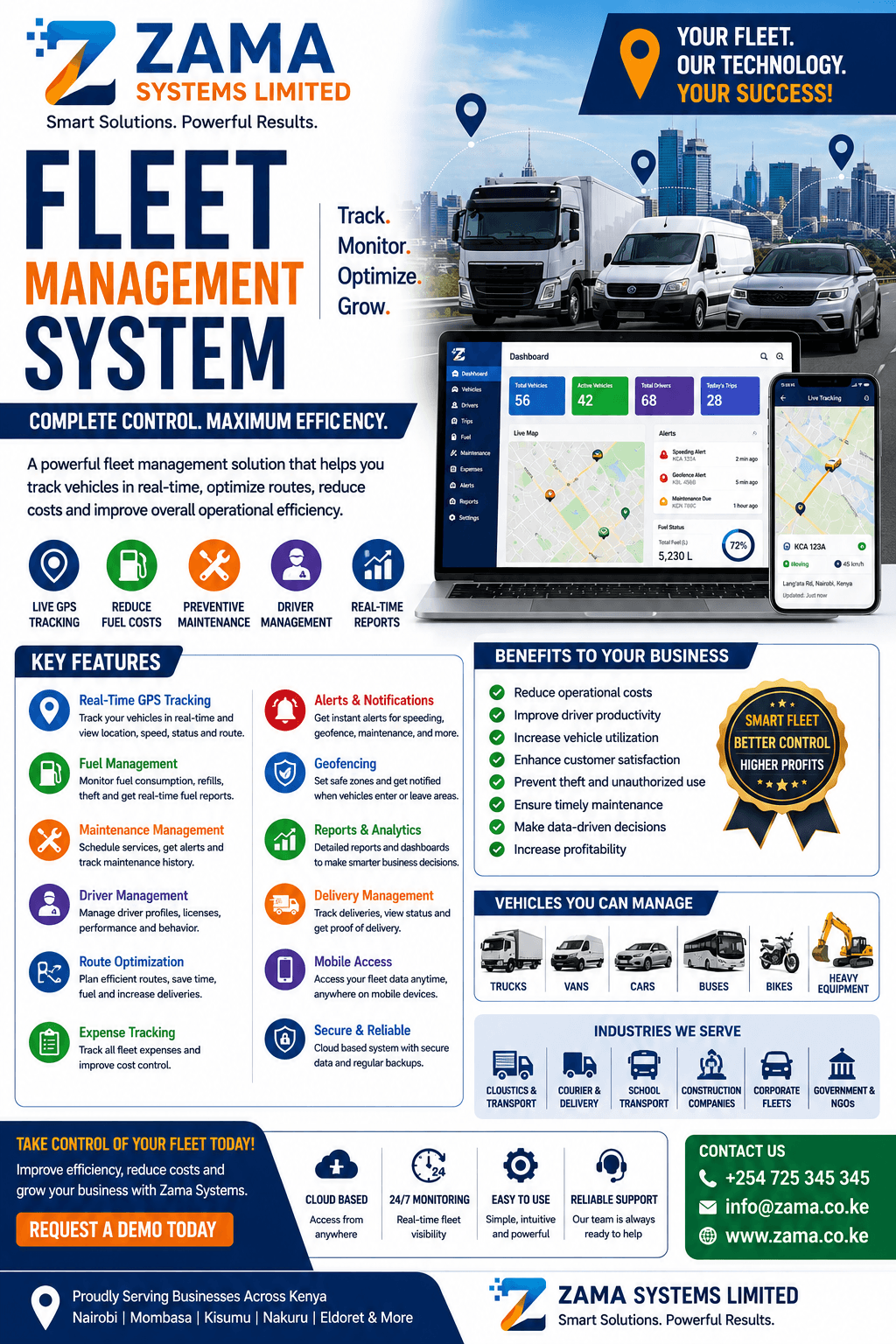
Fleet Management System – Complete Guide for Modern Transport and Logistics Businesses in Kenya

Fleet Management System
Transportation and logistics businesses are rapidly adopting digital systems to improve efficiency, reduce operational costs, and manage vehicles effectively. A modern Fleet Management System helps businesses monitor vehicles, drivers, fuel usage, maintenance schedules, deliveries, and operational performance from one centralized platform.

Whether you operate a logistics company, transport business, courier service, school transport service, construction fleet, delivery company, or corporate vehicle fleet, a Fleet Management System is essential for improving operations and profitability.

At Zama Systems Limited, we provide reliable and scalable fleet management solutions designed for businesses across Kenya. Our systems help companies automate fleet operations, reduce costs, and improve efficiency using smart technology.

Table of Contents

What Is a Fleet Management System?

A Fleet Management System is software designed to help businesses manage vehicles, drivers, transportation operations, and logistics activities digitally.

The system centralizes operations such as:

  • Vehicle tracking
  • Driver management
  • Fuel monitoring
  • Maintenance scheduling
  • Route management
  • Expense tracking
  • GPS tracking
  • Delivery monitoring
  • Reporting and analytics

This improves operational visibility and control.

Why Businesses Need a Fleet Management System

Managing vehicles manually can be difficult and inefficient.

Businesses often face challenges such as:

  • Fuel theft
  • Poor vehicle maintenance
  • Driver misuse
  • Delayed deliveries
  • High operational costs
  • Poor route planning

A Fleet Management System helps solve these problems through automation and real-time monitoring.

Core Features of a Fleet Management System

GPS Vehicle Tracking

GPS tracking allows businesses to monitor vehicle locations in real time.

Benefits include:

  • Improved security
  • Better route planning
  • Delivery monitoring
  • Reduced unauthorized usage

This improves fleet visibility.

Driver Management

The system helps businesses manage drivers effectively.

Features include:

  • Driver profiles
  • License tracking
  • Attendance monitoring
  • Driver performance analysis
  • Driver assignments

This improves accountability.

Fuel Management

Fuel is one of the biggest operational costs in transport businesses.

The system tracks:

  • Fuel consumption
  • Fuel purchases
  • Fuel efficiency
  • Fuel theft

This helps reduce operational losses.

Vehicle Maintenance Management

Regular maintenance improves vehicle lifespan and reliability.

The system tracks:

  • Service schedules
  • Repair history
  • Spare part replacements
  • Maintenance costs

This reduces breakdowns and downtime.

Route Management

Efficient routing improves delivery speed and reduces fuel costs.

The system helps optimize:

  • Delivery routes
  • Driver schedules
  • Trip planning

This improves operational efficiency.

Trip Management

The system records trip details such as:

  • Trip start and end times
  • Distance traveled
  • Fuel consumption
  • Delivery status

This improves transportation monitoring.

Delivery Management

Businesses handling deliveries benefit from:

  • Delivery scheduling
  • Delivery tracking
  • Customer notifications
  • Proof of delivery

This improves customer satisfaction.

Expense Tracking

Fleet businesses incur many operational expenses.

The system tracks:

  • Fuel expenses
  • Maintenance costs
  • Insurance payments
  • Driver salaries
  • Road tolls

This improves financial management.

Fleet Reporting and Analytics

Reports help businesses monitor performance.

The system generates reports such as:

  • Fuel reports
  • Vehicle usage reports
  • Maintenance reports
  • Driver performance reports
  • Expense reports

These insights support better decisions.

Multi-Branch Fleet Management

Businesses operating in multiple regions require centralized monitoring.

The system allows:

  • Multi-branch tracking
  • Centralized reporting
  • Shared fleet visibility
  • Unified operational management

This improves coordination.

Benefits of a Fleet Management System

Reduced Fuel Costs

Monitoring fuel consumption reduces wastage and theft.

Improved Vehicle Utilization

Businesses can maximize vehicle productivity.

Better Driver Accountability

Driver monitoring improves operational discipline.

Improved Delivery Efficiency

Optimized routing reduces delays.

Reduced Vehicle Downtime

Maintenance scheduling improves vehicle reliability.

Improved Customer Satisfaction

Real-time tracking improves delivery transparency.

Better Financial Control

Expense tracking improves budgeting and profitability.

Fleet Management System for Logistics Companies

Logistics businesses require advanced fleet monitoring.

The system helps manage:

  • Delivery vehicles
  • Driver schedules
  • Shipment tracking
  • Fuel efficiency

This improves logistics operations.

Fleet Management System for Courier Services

Courier businesses benefit from:

  • Real-time delivery tracking
  • Route optimization
  • Customer notifications
  • Driver management

This improves service quality.

Fleet Management System for Construction Companies

Construction companies manage heavy equipment and vehicles.

The system tracks:

  • Construction trucks
  • Equipment usage
  • Fuel consumption
  • Maintenance schedules

This improves operational control.

Fleet Management System for School Transport

Schools require safe and efficient transport systems.

The system helps manage:

  • School buses
  • Driver assignments
  • Route planning
  • Vehicle maintenance

This improves student safety.

Fleet Management System for Corporate Vehicles

Companies with corporate fleets can monitor:

  • Vehicle usage
  • Fuel expenses
  • Driver activity
  • Service schedules

This improves accountability.

GPS Tracking Benefits for Fleet Businesses

GPS tracking improves operational visibility through:

  • Live vehicle locations
  • Geofencing
  • Speed monitoring
  • Route history

This improves security and efficiency.

Geofencing Features

Geofencing creates virtual boundaries for vehicles.

The system sends alerts when vehicles:

  • Enter restricted zones
  • Leave designated areas
  • Deviate from approved routes

This improves operational control.

Speed Monitoring

Speed monitoring improves driver discipline and road safety.

The system tracks:

  • Over-speeding
  • Driver behavior
  • Route compliance

This reduces accidents and fuel wastage.

Fleet Maintenance Scheduling

Vehicle maintenance is critical for operational continuity.

The system provides reminders for:

  • Oil changes
  • Tire replacement
  • Brake servicing
  • Insurance renewals

This reduces unexpected breakdowns.

Insurance and Compliance Management

The system tracks important documents such as:

  • Insurance policies
  • Vehicle inspection certificates
  • Driving licenses
  • Road permits

This improves compliance.

Fleet Management and Fuel Theft Prevention

Fuel theft affects profitability significantly.

The system helps detect:

  • Unusual fuel usage
  • Fuel discrepancies
  • Unauthorized fueling

This improves operational transparency.

Cloud-Based Fleet Management System

Cloud systems provide remote accessibility.

Benefits include:

  • Access from anywhere
  • Automatic backups
  • Real-time synchronization
  • Improved scalability

This improves operational flexibility.

Mobile Fleet Management

Managers can access fleet information using smartphones.

Features include:

  • Vehicle tracking
  • Driver monitoring
  • Report viewing
  • Maintenance alerts

This improves convenience.

Fleet Management System Security Features

Security is critical for transport businesses.

The system includes:

  • User permissions
  • Activity logs
  • GPS security
  • Secure cloud backups

This protects business data.

Fleet Analytics and Business Intelligence

Analytics help businesses improve operations.

The system provides insights into:

  • Fuel efficiency
  • Driver performance
  • Vehicle utilization
  • Delivery efficiency

This supports better planning.

Fleet Management and Customer Satisfaction

Customers expect timely deliveries and transparency.

The system improves customer experience through:

  • Real-time delivery updates
  • Faster deliveries
  • Better communication

This improves customer trust.

Fleet Management System and Financial Management

Integrated financial tools help businesses monitor:

  • Revenue
  • Operational costs
  • Maintenance expenses
  • Profitability

This improves budgeting.

Fleet Management for Transport Companies in Kenya

Transport businesses in Kenya are adopting automation because of:

  • Rising fuel costs
  • Increasing competition
  • Customer expectations
  • Need for efficiency

Fleet management systems improve competitiveness.

Why Choose Zama Systems Limited

Zama Systems Limited provides modern Fleet Management Systems designed for Kenyan businesses.

Our systems include:

  • GPS tracking
  • Fuel management
  • Vehicle maintenance tracking
  • Driver management
  • Reporting and analytics
  • Cloud access

We help businesses improve transportation efficiency and reduce operational costs.

Industries We Serve

Our Fleet Management Systems are suitable for:

  • Logistics companies
  • Courier services
  • Construction firms
  • School transport providers
  • Corporate fleets
  • Delivery businesses

We customize solutions based on operational needs.

Affordable Fleet Management Systems in Kenya

We provide scalable solutions suitable for:

  • Small transport businesses
  • Medium logistics companies
  • Large fleet operators

Our systems are designed for long-term operational efficiency.

Future of Fleet Management Technology

Fleet management technology continues evolving rapidly.

Future innovations include:

  • AI-powered route optimization
  • Predictive maintenance
  • Smart fuel analytics
  • IoT vehicle monitoring
  • Autonomous fleet technologies

Businesses adopting modern systems gain competitive advantages.

Final Thoughts

A Fleet Management System is essential for modern transportation and logistics businesses. From vehicle tracking to fuel management, maintenance scheduling, and analytics, automation improves every aspect of fleet operations.

Businesses using fleet management systems benefit from:

  • Reduced operational costs
  • Improved vehicle efficiency
  • Better driver accountability
  • Faster deliveries
  • Reduced downtime
  • Improved customer satisfaction

At Zama Systems Limited, we provide reliable and scalable fleet management solutions designed to help businesses across Kenya automate transportation operations and achieve sustainable growth.

Whether you operate a logistics company, delivery service, school transport fleet, or construction transport business, our Fleet Management System can help transform your operations with smart technology.

Advanced Features of a Fleet Management System

Modern transport businesses require more than simple vehicle tracking. A powerful Fleet Management System integrates intelligent automation, analytics, security, and operational monitoring tools to improve efficiency and profitability.

Advanced features help businesses manage large fleets effectively while reducing operational risks and costs.

Real-Time Fleet Monitoring

Real-time monitoring provides complete visibility of fleet operations.

Managers can track:

  • Vehicle locations
  • Driver activity
  • Delivery progress
  • Fuel usage
  • Vehicle performance

This improves operational control.

Live GPS Tracking Dashboard

The GPS dashboard displays all vehicles on a centralized map.

Features include:

  • Vehicle status monitoring
  • Route visualization
  • Traffic analysis
  • Trip history

This helps businesses manage fleets efficiently.

Driver Behavior Monitoring

Driver behavior affects fuel efficiency, vehicle wear, and road safety.

The system tracks:

  • Harsh braking
  • Rapid acceleration
  • Over-speeding
  • Excessive idling

This improves driver discipline and reduces operational risks.

Fuel Consumption Analytics

Fuel analytics help businesses reduce wastage.

The system analyzes:

  • Fuel efficiency per vehicle
  • Fuel consumption trends
  • Fuel theft patterns
  • Mileage performance

This improves cost management.

Fleet Maintenance Automation

Automated maintenance scheduling improves vehicle reliability.

The system generates alerts for:

  • Oil changes
  • Tire servicing
  • Brake inspections
  • Insurance renewals
  • Vehicle inspections

This reduces unexpected breakdowns.

Preventive Maintenance Management

Preventive maintenance reduces repair costs and downtime.

The system helps businesses:

  • Schedule regular servicing
  • Monitor maintenance history
  • Track repair expenses

This improves vehicle lifespan.

Breakdown Management

The system records vehicle breakdowns and repair activities.

Managers can track:

  • Repair timelines
  • Repair costs
  • Spare part replacements
  • Workshop performance

This improves maintenance accountability.

Spare Parts Inventory Management

Fleet businesses managing workshops require spare parts tracking.

The system monitors:

  • Spare parts inventory
  • Parts usage
  • Reorder levels
  • Supplier records

This improves workshop operations.

Fleet Expense Management

Fleet businesses incur many operational expenses.

The system tracks:

  • Fuel expenses
  • Vehicle servicing
  • Insurance costs
  • Driver allowances
  • Road tolls

This improves financial planning.

Fleet Profitability Analysis

Businesses can evaluate fleet profitability through detailed analytics.

The system helps analyze:

  • Revenue per vehicle
  • Operational costs
  • Fuel efficiency
  • Maintenance expenses

This improves profitability management.

Route Optimization Technology

Efficient route planning improves transportation efficiency.

Benefits include:

  • Reduced fuel usage
  • Faster deliveries
  • Reduced travel time
  • Improved customer satisfaction

This improves operational productivity.

Traffic Monitoring Integration

The system can analyze traffic conditions to optimize routes.

Benefits include:

  • Avoiding congestion
  • Faster deliveries
  • Reduced fuel wastage

This improves operational efficiency.

Delivery Tracking and Logistics Management

Businesses handling deliveries require real-time shipment monitoring.

The system tracks:

  • Delivery status
  • Driver locations
  • Delivery timelines
  • Customer confirmations

This improves logistics visibility.

Electronic Proof of Delivery (ePOD)

Electronic proof of delivery improves accountability.

Drivers can capture:

  • Customer signatures
  • Delivery photos
  • Delivery timestamps

This improves delivery verification.

Customer Notification System

Customers receive updates such as:

  • Delivery confirmations
  • Arrival notifications
  • Shipment status updates

This improves customer communication.

Geofencing and Security Alerts

Geofencing improves operational security.

The system sends alerts when vehicles:

  • Leave authorized areas
  • Enter restricted zones
  • Deviate from approved routes

This improves fleet security.

Vehicle Immobilization Features

Advanced systems can remotely disable vehicles during emergencies.

This improves:

  • Vehicle recovery
  • Anti-theft protection

This enhances fleet security.

Fleet Management and Compliance Tracking

Businesses must comply with transport regulations.

The system tracks:

  • Vehicle licenses
  • Insurance policies
  • Inspection certificates
  • Driver license expiry dates

This improves compliance management.

Fleet Management and Payroll Integration

Businesses can integrate fleet systems with payroll management.

The system tracks:

  • Driver attendance
  • Overtime hours
  • Trip allowances
  • Salary calculations

This improves payroll accuracy.

Driver Mobile Application

Drivers can access mobile apps for:

  • Trip assignments
  • Route navigation
  • Delivery confirmations
  • Communication with dispatch teams

This improves operational coordination.

Dispatch Management System

Dispatch management improves fleet coordination.

Features include:

  • Vehicle assignment
  • Driver scheduling
  • Trip planning
  • Delivery allocation

This improves logistics efficiency.

Multi-Fleet and Multi-Branch Management

Large businesses operating across multiple regions require centralized monitoring.

The system supports:

  • Multiple fleet groups
  • Regional operations
  • Centralized reporting
  • Shared operational data

This improves scalability.

Fleet Data Analytics and Reporting

Analytics help businesses improve operations.

Reports include:

  • Vehicle utilization reports
  • Driver performance reports
  • Fuel efficiency reports
  • Maintenance reports
  • Delivery performance reports

This supports better decisions.

Cloud-Based Fleet Management Systems

Cloud systems provide additional flexibility.

Benefits include:

  • Access from anywhere
  • Automatic backups
  • Real-time synchronization
  • Reduced infrastructure costs

This improves operational continuity.

Mobile Fleet Monitoring

Business owners can manage fleets remotely using smartphones.

Features include:

  • Vehicle tracking
  • Viewing reports
  • Monitoring fuel usage
  • Receiving alerts

This improves convenience.

Fleet Management System Security Features

Security is essential for transportation businesses.

The system includes:

  • User access control
  • Secure cloud backups
  • GPS security
  • Audit logs

This protects business information.

Fleet Management System for Public Transport

Public transport operators can manage:

  • Bus schedules
  • Passenger transport routes
  • Driver assignments
  • Fuel usage

This improves service reliability.

Fleet Management for Taxi and Ride-Hailing Businesses

Taxi companies benefit from:

  • Driver monitoring
  • Route optimization
  • Vehicle tracking
  • Trip management

This improves operational efficiency.

Fleet Management for Delivery Companies

Delivery businesses require:

  • Real-time shipment tracking
  • Route optimization
  • Delivery scheduling
  • Customer notifications

This improves logistics operations.

Fleet Management for Agricultural Businesses

Agricultural companies manage vehicles such as:

  • Tractors
  • Delivery trucks
  • Farm equipment

The system improves equipment monitoring and fuel management.

Fleet Management for NGOs and Government Organizations

Organizations with vehicle fleets benefit from:

  • Vehicle accountability
  • Fuel monitoring
  • Driver tracking
  • Expense reporting

This improves operational transparency.

Artificial Intelligence in Fleet Management

AI technologies improve transportation operations.

AI-powered systems help businesses:

  • Predict vehicle maintenance
  • Optimize delivery routes
  • Analyze driver behavior
  • Reduce fuel consumption

This improves operational efficiency.

Predictive Maintenance Technology

Predictive maintenance analyzes vehicle conditions to prevent breakdowns.

Benefits include:

  • Reduced downtime
  • Lower repair costs
  • Improved vehicle reliability

This improves fleet performance.

IoT Integration in Fleet Management

IoT devices provide real-time vehicle data such as:

  • Engine performance
  • Fuel levels
  • Tire pressure
  • Temperature monitoring

This improves operational visibility.

Fleet Management and Sustainability

Modern businesses focus on reducing environmental impact.

Fleet systems help improve:

  • Fuel efficiency
  • Route optimization
  • Reduced emissions

This supports sustainable transportation.

Why Kenyan Businesses Are Adopting Fleet Management Systems

Transport and logistics businesses in Kenya are embracing automation because of:

  • Rising fuel costs
  • Increased competition
  • Demand for faster deliveries
  • Need for operational efficiency

Fleet systems improve competitiveness.

Why Choose Zama Systems Limited

Zama Systems Limited provides advanced Fleet Management Systems tailored for businesses in Kenya.

Our systems include:

  • GPS tracking
  • Fuel management
  • Maintenance scheduling
  • Driver monitoring
  • Delivery tracking
  • Real-time reporting

We help businesses optimize fleet operations and reduce costs.

Fleet Management System Implementation Services

We provide complete implementation services including:

  • System setup
  • GPS installation
  • Driver training
  • Technical support

This ensures successful deployment.

Fleet Management Technical Support

Our support services include:

  • System maintenance
  • GPS troubleshooting
  • Software updates
  • Fleet optimization support

This ensures operational reliability.

Future of Smart Fleet Management

Fleet technology continues evolving rapidly.

Future innovations include:

  • Autonomous vehicles
  • AI-powered dispatching
  • Smart route analytics
  • Predictive fleet optimization

Businesses adopting smart fleet technologies gain significant advantages.

Final Summary

A Fleet Management System is essential for modern transport and logistics businesses. From GPS tracking to fuel management, maintenance automation, route optimization, and delivery monitoring, fleet automation improves every aspect of transportation operations.

Businesses using fleet management systems benefit from:

  • Reduced operational costs
  • Better fuel management
  • Improved driver accountability
  • Reduced vehicle downtime
  • Faster deliveries
  • Better customer satisfaction

At Zama Systems Limited, we provide reliable and scalable fleet management solutions designed to help businesses across Kenya modernize transportation operations and achieve long-term growth.

Whether you operate a logistics company, delivery service, construction fleet, school transport system, or corporate vehicle fleet, our Fleet Management System can help transform your operations with smart technology.

Fleet Management System Integration Capabilities

Modern businesses rely on multiple systems and technologies. A powerful Fleet Management System integrates seamlessly with other business platforms to improve operational efficiency and data synchronization.

Integration helps businesses centralize operations and reduce manual work.

Fleet Management and ERP Integration

Businesses operating large fleets often use ERP systems.

Fleet management integration with ERP systems helps synchronize:

  • Vehicle expenses
  • Fuel usage
  • Procurement
  • Payroll
  • Financial reporting

This improves operational coordination.

Fleet Management and Accounting Software Integration

Accounting integration improves financial management.

The system can automate:

  • Expense recording
  • Invoice management
  • Fuel expense tracking
  • Maintenance costs

This improves accounting accuracy.

Fleet Management and HR Systems

Integration with HR systems helps businesses manage drivers effectively.

The system synchronizes:

  • Employee attendance
  • Payroll calculations
  • Driver assignments
  • Leave management

This improves workforce management.

Fleet Management and Delivery Systems

Delivery businesses require real-time logistics coordination.

The system integrates with delivery management platforms to support:

  • Shipment tracking
  • Route optimization
  • Delivery confirmation
  • Customer communication

This improves delivery operations.

Fleet Management and Mobile Applications

Mobile technology improves operational flexibility.

Managers and drivers can use mobile apps for:

  • GPS tracking
  • Delivery updates
  • Route navigation
  • Trip reporting

This improves communication and efficiency.

Fleet Management and Fuel Card Integration

Fuel card integration improves fuel monitoring.

The system tracks:

  • Fuel purchases
  • Fuel station transactions
  • Fuel consumption

This improves transparency and reduces fraud.

Fleet Management and IoT Devices

IoT devices provide real-time vehicle information.

The system can monitor:

  • Engine performance
  • Tire pressure
  • Fuel levels
  • Vehicle temperature

This improves operational visibility.

Fleet Management and AI Analytics

Artificial intelligence improves transportation efficiency.

AI-powered systems help businesses:

  • Predict maintenance needs
  • Analyze driving patterns
  • Optimize delivery routes
  • Forecast fuel consumption

This improves decision making.

Smart Dispatching Systems

Smart dispatching improves delivery coordination.

The system automatically assigns:

  • Vehicles
  • Drivers
  • Delivery routes

Based on:

  • Availability
  • Location
  • Workload

This improves operational efficiency.

Fleet Management and Real-Time Communication

Communication is essential in logistics operations.

The system enables:

  • Driver communication
  • Delivery coordination
  • Emergency alerts
  • Route updates

This improves responsiveness.

Managing Fleet Utilization

Fleet utilization measures vehicle productivity.

The system tracks:

  • Vehicle usage rates
  • Idle time
  • Delivery efficiency
  • Trip frequency

This improves resource optimization.

Fleet Management and Asset Tracking

Businesses can track additional assets such as:

  • Trailers
  • Containers
  • Construction equipment
  • Portable machinery

This improves operational control.

Fleet Management for Refrigerated Transport

Cold-chain logistics businesses require temperature monitoring.

The system tracks:

  • Refrigeration temperatures
  • Delivery conditions
  • Vehicle performance

This improves product safety.

Fleet Management for Oil and Gas Companies

Oil and gas companies manage specialized transport operations.

The system helps monitor:

  • Fuel tankers
  • Hazardous material transport
  • Driver compliance
  • Route security

This improves operational safety.

Fleet Management for Healthcare Logistics

Healthcare logistics require secure and timely deliveries.

The system tracks:

  • Medical supply deliveries
  • Ambulance fleets
  • Pharmaceutical transport

This improves healthcare logistics efficiency.

Fleet Management for E-Commerce Businesses

E-commerce businesses depend heavily on delivery efficiency.

Fleet systems help manage:

  • Last-mile delivery
  • Delivery tracking
  • Route optimization
  • Driver coordination

This improves customer satisfaction.

Fleet Management and Customer Experience

Modern customers expect delivery transparency.

Fleet systems improve customer experience through:

  • Real-time tracking
  • Delivery notifications
  • Accurate delivery estimates

This improves customer trust.

Route Optimization and Fuel Savings

Route optimization reduces operational costs.

Benefits include:

  • Reduced fuel consumption
  • Faster deliveries
  • Lower vehicle wear

This improves profitability.

Fleet Management and Carbon Emission Reduction

Businesses are increasingly focusing on sustainability.

Fleet systems help reduce:

  • Fuel wastage
  • Carbon emissions
  • Unnecessary travel

This supports environmentally responsible operations.

Driver Safety Monitoring

Driver safety improves operational reliability.

The system monitors:

  • Harsh braking
  • Fatigue indicators
  • Speed violations
  • Unsafe driving behavior

This reduces accident risks.

Fleet Accident Management

The system records:

  • Accident reports
  • Repair costs
  • Insurance claims
  • Driver incident history

This improves accountability.

Fleet Management and Insurance Optimization

Insurance providers may offer better rates for monitored fleets.

The system helps businesses:

  • Reduce risk
  • Improve compliance
  • Track driver behavior

This may lower insurance costs.

Fleet Management for Public Sector Organizations

Government organizations managing fleets require:

  • Vehicle accountability
  • Fuel monitoring
  • Driver tracking
  • Maintenance management

This improves operational transparency.

Fleet Management for NGOs

NGOs operating transport fleets require:

  • Vehicle tracking
  • Fuel accountability
  • Donor reporting
  • Operational transparency

This improves efficiency.

Fleet Management and Data Centralization

Centralized systems improve operational visibility.

All departments can access:

  • Vehicle data
  • Driver records
  • Expense reports
  • Delivery status

This improves collaboration.

Cloud Fleet Management Security

Cloud systems provide advanced security features such as:

  • Secure backups
  • Data encryption
  • User authentication
  • Activity monitoring

This protects business information.

Fleet Management System Scalability

As businesses grow, the system supports:

  • Additional vehicles
  • More drivers
  • New branches
  • Expanded operations

This supports long-term growth.

Fleet Reporting and Business Intelligence

Advanced reporting tools provide insights into:

  • Vehicle profitability
  • Delivery performance
  • Fuel efficiency
  • Operational costs

This improves strategic planning.

Real-Time Dashboards

Dashboards provide instant operational visibility.

Managers can monitor:

  • Vehicle locations
  • Delivery progress
  • Fuel usage
  • Driver performance

This improves decision making.

Fleet Management System Implementation Process

Successful implementation includes:

  • Business analysis
  • GPS installation
  • Software configuration
  • Driver training
  • Technical support

This ensures successful deployment.

Driver and Staff Training

Proper training improves system adoption.

Training includes:

  • GPS usage
  • Mobile applications
  • Delivery reporting
  • System navigation

This improves operational efficiency.

Fleet System Technical Support

Reliable support ensures continuous operations.

Businesses require assistance with:

  • GPS troubleshooting
  • Software updates
  • System optimization
  • Maintenance support

This improves reliability.

Why Businesses Trust Zama Systems Limited

Zama Systems Limited provides advanced Fleet Management Systems designed for Kenyan businesses.

Our solutions are:

  • Cloud-based
  • Secure
  • Scalable
  • User-friendly
  • Fully customizable

We help businesses modernize transport operations efficiently.

Fleet Solutions for Different Industries

Our systems are suitable for:

  • Logistics companies
  • Courier businesses
  • Delivery services
  • Construction companies
  • School transport providers
  • Corporate fleets

We customize solutions based on operational needs.

Affordable Fleet Management Solutions in Kenya

We provide scalable solutions suitable for:

  • Small fleet operators
  • Medium logistics businesses
  • Large transport companies

Our systems are designed for long-term operational efficiency.

Future of Smart Fleet Technology

Fleet technology continues evolving rapidly.

Future innovations include:

  • AI-powered logistics
  • Autonomous vehicle monitoring
  • Smart route optimization
  • IoT-enabled fleet systems

Businesses adopting smart fleet technologies gain significant advantages.

Final Conclusion

A Fleet Management System is a powerful solution that transforms transportation operations through automation, GPS tracking, analytics, and operational visibility.

Businesses using fleet systems benefit from:

  • Reduced fuel costs
  • Improved delivery efficiency
  • Better driver accountability
  • Reduced operational risks
  • Faster decision making
  • Increased profitability

At Zama Systems Limited, we provide reliable and scalable fleet management solutions designed to help businesses across Kenya modernize operations and achieve sustainable growth.

Whether you operate a logistics company, delivery service, construction fleet, public transport business, or corporate vehicle fleet, our Fleet Management System can help automate operations and improve efficiency through smart technology.

Leave a Reply