
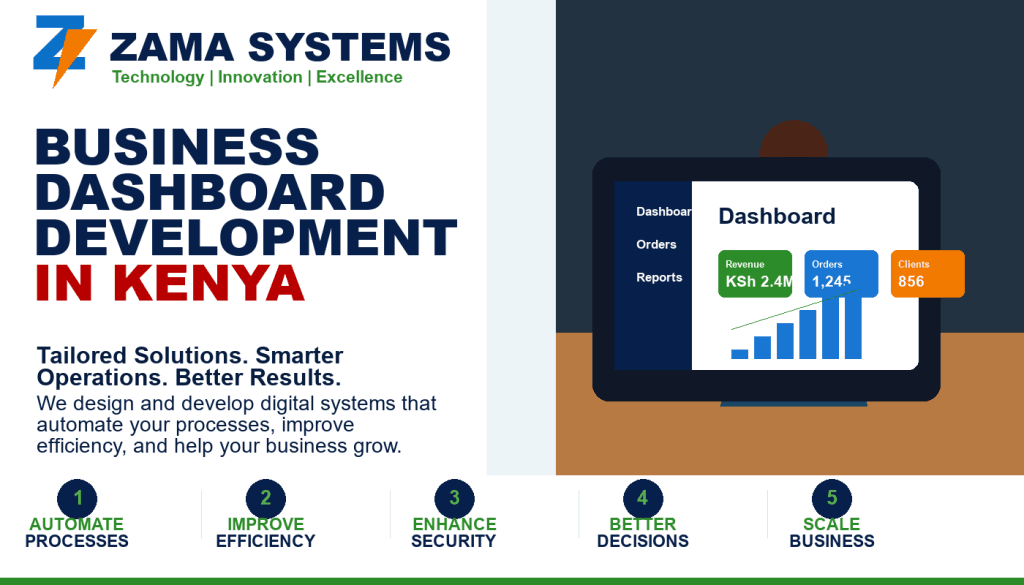
Internal Business Portal Development Kenya: The Future of Efficient Business Operations
Many businesses invest heavily in customer-facing systems but overlook one of the most important tools for growth: internal business portals.
Behind every successful organization are employees, managers, departments, approvals, reports, documents, and operational workflows that must function efficiently every day.
When these processes are managed through spreadsheets, email chains, WhatsApp groups, and paper forms, productivity suffers.
This is why organizations are increasingly investing in Internal Business Portal Development in Kenya.
An internal business portal provides employees and management with a centralized platform for managing workflows, accessing information, approving requests, tracking performance, and collaborating effectively.
, we develop secure internal business portals that help organizations improve efficiency, accountability, and operational visibility.
For consultation, contact +254725345345.
What Is an Internal Business Portal?
An internal business portal is a secure web-based platform designed for employees, managers, and stakeholders within an organization.
Unlike public websites, internal portals are accessible only to authorized users.
They allow staff to:
- Access company resources
- Submit requests
- Manage workflows
- View reports
- Share documents
- Track tasks
- Monitor performance
- Collaborate with teams
The portal becomes the digital headquarters of the organization.
Why Businesses Need Internal Portals
As companies grow, managing operations manually becomes difficult.
Common challenges include:
Fragmented Communication
Information is scattered across:
- Emails
- WhatsApp groups
- Spreadsheets
- Paper records
This leads to confusion and inefficiency.
Delayed Approvals
Managers often struggle to track and approve requests quickly.
A portal automates approval workflows.
Limited Visibility
Leadership teams lack real-time insight into operations.
Portals provide centralized reporting.
Document Management Issues
Finding important documents becomes difficult when files are stored in multiple locations.
A portal centralizes information.
Benefits of Internal Business Portals
Improved Productivity
Employees spend less time searching for information.
Workflows become faster and more efficient.
Better Collaboration
Departments work within a shared environment.
Communication improves significantly.
Centralized Operations
All important processes are managed from one platform.
Stronger Accountability
Every action is tracked through audit logs and workflow histories.
Enhanced Security
Role-based permissions ensure information is only accessible to authorized users.
Features of a Modern Internal Business Portal
Employee Dashboard
Each user receives a personalized dashboard showing:
- Tasks
- Notifications
- Reports
- Pending approvals
This improves efficiency.
Leave Management System
Employees can:
- Apply for leave
- Track requests
- View leave balances
Managers can approve requests digitally.
Document Management
Organizations can manage:
- Policies
- Contracts
- HR documents
- Reports
Everything remains accessible and secure.
Internal Approvals
Businesses automate approvals for:
- Expenses
- Procurement
- Leave requests
- Operational decisions
This eliminates bottlenecks.
Reporting Dashboards
Management gains visibility into:
- Employee activity
- Department performance
- Operational metrics
- Business KPIs
Departments That Benefit from Internal Portals
Human Resources
HR teams manage:
- Employee records
- Leave requests
- Performance reviews
- Onboarding processes
Finance
Finance departments automate:
- Expense approvals
- Budget requests
- Reporting
- Financial workflows
Operations
Operations teams manage:
- Daily workflows
- Task assignments
- Reporting
- Compliance tracking
Management
Executives gain access to:
- Dashboards
- Performance reports
- Approval workflows
- Strategic insights
Internal Portal vs Traditional Intranet
Many businesses assume portals and intranets are the same.
However, they serve different purposes.
Traditional Intranet
Primarily used for sharing information.
Examples:
- Announcements
- Policies
- News
Internal Business Portal
Designed for operational activities.
Examples:
- Approvals
- Workflows
- Reporting
- Document management
- Task tracking
A portal actively supports business operations.
Business Processes That Can Be Automated
Internal portals automate:
Employee Onboarding
New hires complete onboarding digitally.
Expense Approvals
Requests move through approval chains automatically.
Procurement Requests
Purchasing processes become more efficient.
Task Management
Work assignments are tracked digitally.
Internal Communication
Notifications are delivered automatically.
Automation improves efficiency across departments.
Role-Based Access Control
Security is a critical component of internal portals.
Different users receive different permissions.
Examples include:
Employees
Access personal records and tasks.
Managers
Approve requests and review reports.
Executives
View organization-wide dashboards.
Administrators
Manage system settings and users.
This structure protects sensitive information.
Integration with Existing Business Systems
Modern portals can connect with:
- ERP systems
- CRM platforms
- Accounting software
- M-Pesa services
- HR systems
- Email platforms
Integration creates a unified digital ecosystem.
M-Pesa Integration for Internal Operations
Many Kenyan organizations integrate M-Pesa into internal systems.
Benefits include:
Payment Tracking
Monitor organizational transactions.
Reconciliation
Automate financial matching processes.
Reporting
Gain real-time visibility into collections.
Notifications
Receive instant payment alerts.
Industries Using Internal Business Portals
Real Estate
Manage tenants, maintenance, and internal operations.
Healthcare
Coordinate departments and administrative workflows.
Education
Support academic and administrative processes.
Logistics
Track operations and delivery workflows.
Financial Services
Manage approvals, compliance, and reporting.
Retail
Coordinate branch operations and inventory workflows.
Technologies Used for Internal Portal Development
At Zama Web Experts, we build portals using:
- Laravel
- React
- Vue.js
- Node.js
- PostgreSQL
- MySQL
- Cloud Infrastructure
- REST APIs
- M-Pesa APIs
These technologies provide scalability and security.
Future of Internal Business Portals
Organizations are increasingly adopting:
Artificial Intelligence
Automated recommendations and insights.
Workflow Intelligence
Smart process optimization.
Advanced Reporting
Real-time analytics and forecasting.
Mobile Access
Anywhere, anytime operational management.
Hyperautomation
Complete process automation across departments.
Businesses investing in these technologies gain long-term advantages.
Why Choose Zama Web Experts?
, we specialize in building operational systems that help organizations improve efficiency and scale effectively.
Our expertise includes:
- Internal Business Portals
- Enterprise Software Development
- SaaS Platforms
- Workflow Automation Systems
- Web Portal Development
- Mobile Applications
- M-Pesa Integrations
- API Development
- Long-Term Technical Support
We focus on creating software that teams use every day to manage critical operations.
Conclusion
Internal business portals have become essential tools for organizations seeking operational excellence.
By centralizing workflows, automating approvals, improving reporting, and enhancing collaboration, these systems help businesses operate more efficiently and make better decisions.
If your organization wants to move beyond spreadsheets, email chains, and manual workflows, investing in an internal business portal is a smart step toward digital transformation.
Partner with Zama Web Experts
to build a secure, scalable, and future-ready internal business portal.
Contact Zama Web Experts
Phone: +254725345345
Website: Zama.co.ke