
Property Management Software Development: The Complete 2026 Guide to Building Smart Real Estate Management Solutions
Introduction
The real estate industry is rapidly embracing digital transformation, making Property Management Software Development one of the most sought-after technology investments for property owners, landlords, real estate companies, gated communities, and property managers. Traditional methods of managing properties using spreadsheets, paperwork, and manual processes are becoming inefficient, time-consuming, and prone to errors.
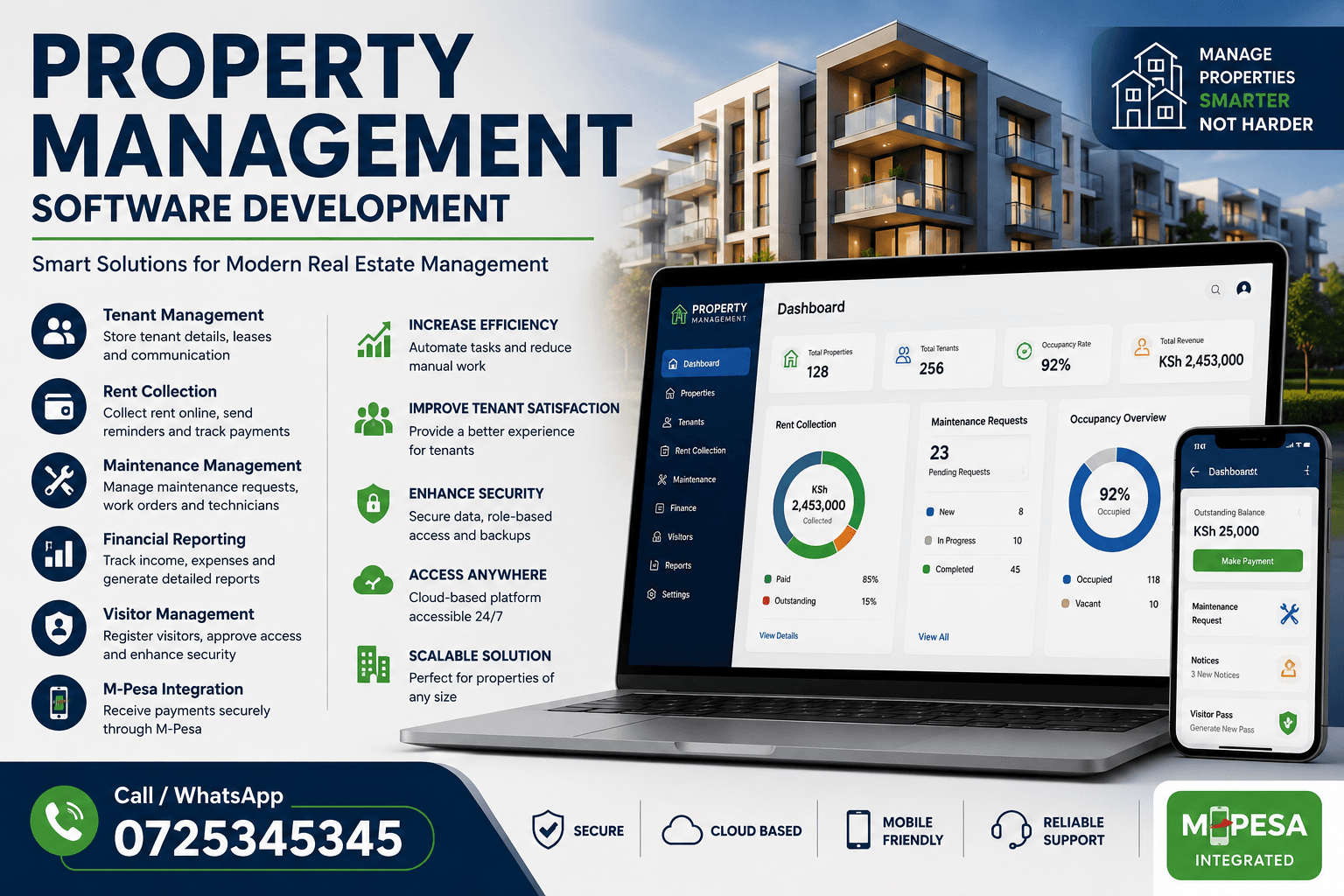
Modern property managers require automated systems that streamline rent collection, tenant communication, maintenance requests, financial reporting, visitor management, security monitoring, and property administration. This growing demand has fueled the rise of Property Management Software Development, enabling businesses to create customized solutions tailored to their operational needs.
Whether managing residential apartments, commercial buildings, mixed-use developments, gated communities, or real estate portfolios, a well-designed property management platform can significantly improve efficiency, transparency, and profitability.
In this comprehensive guide, we explore everything you need to know about Property Management Software Development, including features, benefits, technologies, development processes, costs, challenges, and future trends.
What is Property Management Software Development?
Property Management Software Development refers to the process of designing, building, testing, and deploying digital platforms that help property owners and managers automate real estate operations.
These software solutions centralize all property-related activities into a single platform, enabling users to:
- Manage tenants
- Collect rent online
- Track maintenance requests
- Generate financial reports
- Monitor occupancy rates
- Manage leases
- Handle visitor access
- Communicate with residents
- Process payments
- Manage property portfolios
The primary goal of Property Management Software Development is to simplify complex property management tasks while improving operational efficiency and tenant satisfaction.
Why Property Management Software Development is Important in 2026
The property market is becoming increasingly competitive. Property managers must provide better services while reducing administrative costs.
Key reasons why organizations are investing in Property Management Software Development include:
Increased Automation
Routine tasks such as rent reminders, invoice generation, payment tracking, and maintenance scheduling can be automated.
Improved Tenant Experience
Tenants can:
- Pay rent online
- Submit maintenance requests
- Receive announcements
- Access documents
- Communicate with management
through a dedicated portal or mobile application.
Better Financial Control
Property managers gain access to:
- Income reports
- Expense tracking
- Budget analysis
- Tax reporting
- Profitability metrics
Enhanced Data Security
Modern property management platforms provide secure cloud storage and role-based access controls.
Scalability
As property portfolios grow, software systems can easily accommodate additional units, buildings, and tenants.
Key Features of Property Management Software
Successful Property Management Software Development focuses on delivering powerful features that simplify property operations.
Tenant Management
Tenant management modules help administrators:
- Store tenant records
- Manage lease agreements
- Track occupancy
- Maintain communication history
- Upload documents
Benefits
- Faster tenant onboarding
- Improved record keeping
- Better communication
Rent Collection System
Online rent collection is one of the most important features.
Capabilities include:
- Automated rent reminders
- Payment tracking
- Receipt generation
- Late fee calculations
- Payment history reports
Payment Integrations
Popular payment methods include:
- M-Pesa
- Credit cards
- Debit cards
- Mobile banking
- Bank transfers
Maintenance Management
Property maintenance can be streamlined through digital workflows.
Features include:
- Work order creation
- Issue tracking
- Technician assignment
- Maintenance scheduling
- Completion reports
Benefits:
- Faster issue resolution
- Increased tenant satisfaction
- Reduced maintenance costs
Lease Management
Lease management functionality helps users:
- Create agreements
- Track expiration dates
- Schedule renewals
- Generate notifications
- Store lease documents
This eliminates manual paperwork and reduces administrative burden.
Financial Management
Financial tools provide visibility into property performance.
Features:
- Income tracking
- Expense monitoring
- Accounting integration
- Tax reporting
- Budget planning
- Profit and loss statements
Visitor Management
Visitor management systems are particularly useful for gated communities and residential estates.
Capabilities include:
- Visitor registration
- QR code passes
- Security approvals
- Entry logs
- Resident notifications
Communication Portal
Communication modules allow:
- Announcements
- Community updates
- Emergency alerts
- Resident messaging
- Feedback collection
This improves transparency and resident engagement.
Document Management
Property managers often deal with large volumes of documentation.
A document management module enables:
- Digital storage
- Secure access
- Document sharing
- Lease archives
- Financial record management
Reporting and Analytics
Advanced reporting tools provide insights into:
- Occupancy rates
- Rental income
- Maintenance costs
- Tenant retention
- Property performance
These insights support informed business decisions.
Types of Property Management Software
Residential Property Management Software
Designed for:
- Apartments
- Housing estates
- Rental units
- Condominiums
Features focus on tenant management and rent collection.
Commercial Property Management Software
Suitable for:
- Office buildings
- Retail spaces
- Business parks
Additional features may include:
- Commercial lease management
- Utility billing
- Vendor management
Mixed-Use Property Software
Supports both residential and commercial units within the same platform.
Gated Community Management Software
Provides:
- Visitor management
- Security integration
- Resident communication
- Service charge management
Technologies Used in Property Management Software Development
Modern solutions are built using advanced technologies.
Frontend Technologies
- React
- Angular
- Vue.js
- Flutter
Backend Technologies
- Node.js
- Laravel
- Django
- ASP.NET
Databases
- MySQL
- PostgreSQL
- MongoDB
Cloud Platforms
- AWS
- Microsoft Azure
- Google Cloud
Mobile Development
- Flutter
- React Native
- Kotlin
- Swift
Property Management Software Development Process
1. Requirements Analysis
The project begins by identifying:
- Business goals
- User requirements
- Workflow needs
- Compliance requirements
2. System Design
Developers create:
- Wireframes
- Database architecture
- User interface designs
- Technical specifications
3. Software Development
Core features are coded and integrated.
This stage includes:
- Backend development
- Frontend development
- API integration
- Database setup
4. Testing
Testing ensures:
- Security
- Performance
- Reliability
- Compatibility
Common testing methods include:
- Functional testing
- Security testing
- User acceptance testing
5. Deployment
The application is deployed to:
- Cloud servers
- Web hosting platforms
- Mobile app stores
6. Maintenance and Support
Ongoing maintenance includes:
- Security updates
- Feature enhancements
- Bug fixes
- Performance optimization
Benefits of Custom Property Management Software Development
Many businesses choose custom development over off-the-shelf solutions.
Advantages include:
Tailored Functionality
Features are designed specifically for your operations.
Better Scalability
The system grows with your business.
Competitive Advantage
Custom software offers unique capabilities unavailable in generic platforms.
Enhanced Security
Organizations maintain greater control over data protection.
Integration Flexibility
The software can integrate with:
- Accounting systems
- Payment gateways
- CRM platforms
- Security systems
Property Management Software Development in Kenya
Kenya’s real estate market is experiencing rapid growth, particularly in:
- Nairobi
- Mombasa
- Kisumu
- Nakuru
- Kiambu
- Eldoret
Property developers and management companies are increasingly investing in digital solutions to improve efficiency.
Popular requirements in Kenya include:
- M-Pesa integration
- Automated rent collection
- Visitor management
- Service charge tracking
- Maintenance management
- Resident communication portals
As smart estates and gated communities continue expanding, demand for property management systems is expected to rise significantly.
Challenges in Property Management Software Development
Despite the benefits, developers may face challenges such as:
Data Security
Sensitive tenant and financial data must be protected.
User Adoption
Staff and residents may require training.
Integration Complexity
Connecting with multiple third-party systems can be challenging.
Scalability Requirements
Large property portfolios require robust infrastructure.
Future Trends in Property Management Software Development
The future of property management technology is exciting.
Artificial Intelligence
AI can automate:
- Tenant screening
- Maintenance predictions
- Customer support
Internet of Things (IoT)
Smart devices can monitor:
- Security systems
- Energy usage
- Water consumption
Predictive Analytics
Property managers can forecast:
- Maintenance needs
- Revenue trends
- Occupancy rates
Mobile-First Platforms
Mobile apps will become the primary method of property management.
Smart Estate Integration
Future platforms will connect with:
- Smart gates
- CCTV systems
- Smart meters
- Access control systems
How to Choose the Right Property Management Software Development Partner
Consider the following:
Industry Experience
Choose a company with real estate software expertise.
Technical Skills
Ensure they understand modern technologies.
Support Services
Look for long-term maintenance and support.
Customization Capabilities
The developer should adapt the system to your specific needs.
Security Standards
Verify compliance with industry security practices.
Advanced Features in Modern Property Management Software Development
As the property industry evolves, modern Property Management Software Development goes beyond basic rent collection and tenant management. Today’s platforms incorporate advanced technologies that improve efficiency, security, and resident satisfaction.
Online Service Charge Management
For gated communities, apartments, and mixed-use developments, service charge collection can be a complex process.
A modern property management system enables:
- Automated service charge billing
- Monthly invoice generation
- Payment reminders
- Real-time balance tracking
- Penalty calculations for late payments
- Financial reconciliation
This ensures predictable cash flow while reducing administrative workload.
M-Pesa Integration
In Kenya, mobile money has revolutionized payments. One of the most valuable features in Property Management Software Development is M-Pesa integration.
Benefits include:
- Instant rent payments
- Automated payment confirmation
- Real-time account updates
- Reduced cash handling
- Improved financial transparency
- Faster reconciliation
Property managers can automatically receive notifications whenever tenants make payments through M-Pesa.
Owner Portal
Property owners require visibility into the performance of their investments.
An owner portal provides:
- Occupancy reports
- Financial statements
- Maintenance records
- Revenue summaries
- Expense tracking
- Property performance analytics
Owners can access information anytime without contacting management offices.
Vendor Management
Managing contractors and service providers becomes easier through vendor management modules.
Features include:
- Vendor registration
- Contract management
- Work order assignment
- Performance monitoring
- Invoice processing
- Payment tracking
This improves accountability and service delivery.
Utility Billing Management
Utility management helps automate billing for:
- Water
- Electricity
- Internet
- Garbage collection
- Security services
The system can generate accurate bills based on consumption data and predefined rates.
Inventory and Asset Management
Property managers often oversee assets such as:
- Generators
- Pumps
- Security equipment
- Office equipment
- Maintenance tools
Asset management modules help track:
- Asset value
- Maintenance schedules
- Warranty periods
- Replacement timelines
This extends asset lifespan and reduces operational costs.
Mobile Applications in Property Management Software Development
Mobile applications have become a critical component of modern property management systems.
Tenant Mobile App Features
Residents can:
- Pay rent
- View invoices
- Submit maintenance requests
- Receive notifications
- Download statements
- Access community announcements
- Track visitor approvals
This convenience significantly improves tenant satisfaction.
Property Manager Mobile App Features
Property managers can:
- Monitor payments
- Approve maintenance requests
- Generate reports
- Communicate with tenants
- Track occupancy
- Manage staff activities
The ability to work remotely improves responsiveness and operational efficiency.
Security Features in Property Management Software Development
Security should always be a top priority.
User Authentication
Modern systems include:
- Multi-factor authentication
- Secure login systems
- Password encryption
- Session management
These measures reduce unauthorized access.
Role-Based Access Control
Different users require different levels of access.
Examples include:
Property Owners
Can view financial and occupancy reports.
Property Managers
Can manage tenants, payments, and maintenance.
Tenants
Can access personal accounts and payment history.
Security Personnel
Can manage visitor access and entry records.
Role-based access ensures data privacy and operational control.
Data Encryption
Sensitive information such as:
- Financial records
- Tenant details
- Lease agreements
should be encrypted both during storage and transmission.
Automated Backups
Data loss can be catastrophic.
Reliable property management systems provide:
- Daily backups
- Cloud storage
- Disaster recovery plans
- Data restoration capabilities
This ensures business continuity.
Cloud-Based Property Management Software Development
Cloud computing has transformed how property management software is deployed.
Benefits of Cloud-Based Systems
Anywhere Access
Users can access the platform from:
- Offices
- Homes
- Mobile devices
- Multiple branches
Reduced Infrastructure Costs
Organizations avoid expensive servers and maintenance costs.
Automatic Updates
Software updates can be deployed instantly without disrupting operations.
Improved Scalability
As the business grows, resources can be expanded without rebuilding the system.
Reporting Capabilities in Property Management Software Development
Accurate reporting helps management make informed decisions.
Financial Reports
Examples include:
- Income statements
- Expense reports
- Cash flow reports
- Profit and loss statements
Occupancy Reports
Managers can track:
- Vacant units
- Occupied units
- Lease expirations
- Occupancy trends
Maintenance Reports
Reports may include:
- Pending requests
- Completed work orders
- Maintenance costs
- Technician performance
Collection Reports
These reports help track:
- Rent payments
- Service charge payments
- Outstanding balances
- Delinquent accounts
Artificial Intelligence in Property Management Software Development
Artificial Intelligence is becoming a major trend in real estate technology.
AI-Powered Chatbots
Chatbots can:
- Answer tenant inquiries
- Handle maintenance requests
- Provide account information
- Schedule appointments
This reduces workload for support teams.
Predictive Maintenance
AI can analyze historical maintenance data and predict equipment failures before they occur.
Benefits include:
- Reduced downtime
- Lower repair costs
- Extended equipment lifespan
Smart Tenant Screening
AI tools can assist in evaluating rental applicants based on:
- Payment history
- Employment verification
- Risk indicators
This improves tenant selection processes.
Why Businesses Should Invest in Property Management Software Development Now
Organizations that delay digital transformation risk falling behind competitors.
The advantages of investing in Property Management Software Development include:
- Increased operational efficiency
- Better tenant experiences
- Improved revenue collection
- Reduced manual work
- Enhanced reporting
- Greater transparency
- Better compliance
- Stronger security
As property portfolios continue growing across Kenya and Africa, technology-driven management systems are becoming essential rather than optional.
Property Management Software Development Cost in Kenya
One of the most common questions businesses ask is: How much does Property Management Software Development cost in Kenya?
The answer depends on several factors, including system complexity, required features, integrations, user capacity, and customization requirements.
Factors Affecting Development Costs
Number of Features
Basic systems cost less than enterprise-level solutions.
Common features include:
- Tenant management
- Rent collection
- Maintenance management
- Financial reporting
- Visitor management
- Communication portals
- Mobile applications
The more features included, the higher the development cost.
Mobile App Development
Many organizations require Android and iOS applications alongside the web platform.
Additional mobile apps increase development time but provide greater convenience for:
- Tenants
- Property owners
- Security personnel
- Property managers
Third-Party Integrations
Integrations often include:
- M-Pesa APIs
- Accounting software
- SMS gateways
- Email systems
- Smart access control systems
- CCTV monitoring systems
These integrations increase functionality while adding to development costs.
Security Requirements
Enterprise-grade security features such as:
- Multi-factor authentication
- Data encryption
- Audit logs
- Secure cloud infrastructure
require additional development resources.
Customization Level
Every property management company operates differently.
Highly customized solutions often cost more than standard systems because they are built around unique workflows and business processes.
Essential Modules Every Property Management Software Should Have
Successful Property Management Software Development should include several core modules.
Tenant Management Module
Stores and manages:
- Tenant profiles
- Contact information
- Lease agreements
- Payment history
- Occupancy records
This module serves as the foundation of the entire system.
Rent Management Module
This module handles:
- Rent invoicing
- Payment tracking
- Late fee calculations
- Automated reminders
- Receipt generation
Automated rent management significantly improves cash flow.
Maintenance Module
Allows tenants and property managers to:
- Report issues
- Assign technicians
- Monitor repair progress
- Track maintenance expenses
The result is faster issue resolution and improved tenant satisfaction.
Accounting Module
The accounting section provides:
- Financial reports
- Expense tracking
- Budget monitoring
- Revenue analysis
- Tax preparation support
This helps property managers maintain financial transparency.
Communication Module
A communication hub improves interactions between residents and management.
Features may include:
- Announcements
- SMS notifications
- Email alerts
- Push notifications
- Community updates
Security Management Module
Ideal for gated communities and estates.
Functions include:
- Visitor approvals
- Gate pass generation
- Vehicle registration
- Security reporting
- Access monitoring
Industries That Benefit from Property Management Software Development
Property management technology is useful across multiple sectors.
Residential Apartments
Apartment owners can:
- Collect rent online
- Track vacancies
- Manage tenants
- Monitor maintenance
through a centralized platform.
Gated Communities
Gated communities benefit from:
- Visitor management
- Resident communication
- Service charge management
- Security integrations
Commercial Buildings
Commercial property managers can automate:
- Lease management
- Utility billing
- Tenant communication
- Financial reporting
Student Housing
Student accommodation facilities can use property management systems to:
- Manage room allocations
- Track payments
- Monitor occupancy
- Improve communication
Real Estate Agencies
Property agencies managing multiple properties can streamline operations using centralized dashboards and reporting tools.
Common Challenges Solved by Property Management Software Development
Traditional property management often faces several operational challenges.
Late Rent Payments
Automated reminders and online payment options encourage timely payments.
Poor Communication
Integrated communication tools ensure residents stay informed about important updates.
Inefficient Record Keeping
Digital records eliminate paperwork and simplify information retrieval.
Maintenance Delays
Automated workflows accelerate maintenance response times.
Financial Errors
Automated calculations reduce accounting mistakes and improve accuracy.
Limited Reporting
Real-time dashboards provide valuable operational insights.
Best Practices for Successful Property Management Software Development
Organizations should follow these best practices when developing software.
Focus on User Experience
A simple, intuitive interface improves adoption rates and user satisfaction.
Prioritize Security
Property management systems handle sensitive data and should implement strong cybersecurity measures.
Design for Scalability
The platform should support future growth without major redesigns.
Enable Mobile Access
Users increasingly expect mobile functionality.
Mobile-first development improves accessibility and convenience.
Automate Repetitive Tasks
Automation reduces manual work and increases productivity.
Examples include:
- Payment reminders
- Invoice generation
- Maintenance scheduling
- Reporting
Integrate Local Payment Methods
For Kenya and East Africa, M-Pesa integration is essential for maximizing user adoption and payment efficiency.
Future of Property Management Software Development in Kenya
Kenya’s property sector continues to experience rapid urbanization and digital transformation.
Future systems are expected to include:
Smart Estate Integration
Property platforms will connect directly with:
- Smart gates
- Smart locks
- CCTV systems
- Smart lighting
- Smart meters
Artificial Intelligence
AI will assist with:
- Tenant support
- Risk analysis
- Maintenance prediction
- Property valuation
Blockchain Technology
Blockchain may improve:
- Lease agreements
- Property records
- Transaction security
- Ownership verification
Internet of Things (IoT)
IoT devices will provide real-time monitoring of:
- Energy consumption
- Water usage
- Security systems
- Environmental conditions
Predictive Analytics
Managers will be able to forecast:
- Occupancy trends
- Revenue performance
- Maintenance requirements
- Tenant retention rates
using advanced data analytics.
Why Choose Professional Property Management Software Development Services?
Professional software developers provide expertise in:
- Real estate workflows
- Cloud architecture
- Mobile application development
- Cybersecurity
- API integrations
- Payment systems
This ensures the final product is secure, scalable, and aligned with business objectives.
Businesses that invest in professional Property Management Software Development gain long-term value through improved efficiency, higher tenant satisfaction, reduced operational costs, and increased profitability.
Conclusion
As the real estate industry continues to digitize, Property Management Software Development has become an essential investment for property owners, landlords, estate managers, and real estate companies. A well-developed property management platform simplifies daily operations, automates repetitive tasks, improves tenant satisfaction, enhances financial management, and supports business growth.
Organizations that invest in Property Management Software Development gain a competitive advantage by streamlining rent collection, maintenance management, lease administration, visitor control, and resident communication through a centralized digital platform. As technology evolves, Property Management Software Development will continue incorporating artificial intelligence, smart estate integrations, predictive analytics, and mobile-first experiences.
Whether managing a small apartment complex or a large real estate portfolio, adopting modern Property Management Software Development solutions can transform operational efficiency, reduce costs, increase transparency, and drive long-term success in today’s fast-changing property market.