
Table of Contents
ToggleVendor Management System Kenya: A Complete Guide for Modern Businesses
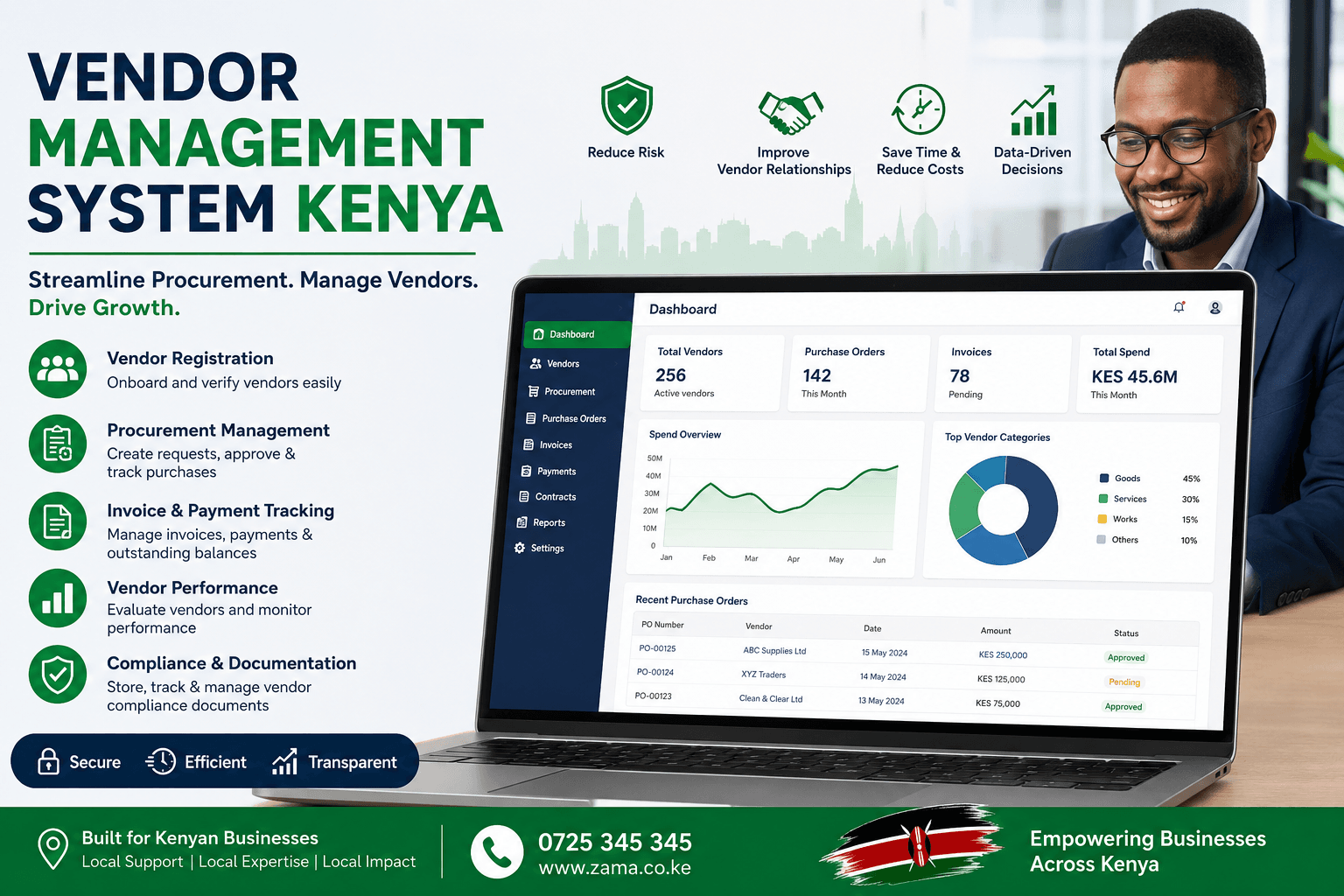
Managing vendors efficiently has become one of the biggest challenges for businesses in Kenya. Whether you operate a manufacturing company, retail chain, construction firm, SACCO, NGO, hospital, school, or government institution, dealing with multiple suppliers manually often leads to delays, duplicate payments, procurement fraud, and poor accountability.
A Vendor Management System Kenya helps organizations centralize supplier information, automate procurement workflows, monitor vendor performance, and improve transparency across purchasing processes.
As Kenyan businesses embrace digital transformation, investing in a Vendor Management System Kenya is no longer a luxury—it’s becoming an essential business tool that reduces operational costs while improving supplier relationships.
This comprehensive guide explains everything you need to know about implementing a Vendor Management System Kenya, including its features, benefits, implementation strategies, and why businesses across Kenya are rapidly adopting vendor management software.
What is a Vendor Management System?
A Vendor Management System (VMS) is software designed to help businesses manage suppliers from onboarding to payment.
Instead of maintaining vendor information in spreadsheets, emails, and paper files, a VMS stores everything in one centralized platform.
It helps businesses:
- Register suppliers
- Store vendor documents
- Track contracts
- Manage quotations
- Compare supplier prices
- Automate approvals
- Monitor deliveries
- Process invoices
- Evaluate vendor performance
- Improve procurement efficiency
A modern Vendor Management System Kenya provides complete visibility into supplier activities while minimizing procurement risks.
Why Kenyan Businesses Need a Vendor Management System
Many organizations still experience procurement challenges such as:
- Lost supplier records
- Fake vendors
- Duplicate payments
- Delayed approvals
- Manual paperwork
- Poor communication
- Procurement fraud
- Difficult audits
- Inaccurate reports
A Vendor Management System Kenya eliminates these problems by digitizing the entire vendor lifecycle.
Businesses gain:
- Faster procurement
- Better supplier accountability
- Transparent purchasing
- Improved compliance
- Reduced operational costs
Challenges of Manual Vendor Management
Without automation, organizations often struggle with:
Multiple Supplier Databases
Departments maintain separate vendor records leading to inconsistencies.
Missing Documentation
Supplier certificates expire unnoticed.
Slow Procurement
Approvals may take days or weeks.
Poor Vendor Performance Monitoring
Businesses cannot determine which vendors consistently deliver quality products.
Duplicate Suppliers
The same supplier may exist multiple times in procurement records.
Procurement Fraud
Lack of transparency creates opportunities for unauthorized purchases.
A Vendor Management System Kenya addresses each of these challenges through automation.
Key Features of a Vendor Management System Kenya
Vendor Registration
Suppliers can register online by submitting:
- Company profile
- Business registration
- PIN certificate
- Tax compliance certificate
- CR12
- Bank details
- Contact persons
Everything is stored digitally.
Vendor Database
The software creates a centralized supplier directory including:
- Vendor categories
- Products supplied
- Contact information
- Payment terms
- Performance history
- Contracts
- Documents
This makes vendor searches extremely fast.
Supplier Verification
Businesses can verify supplier documents before approval.
Verification includes:
- KRA compliance
- Business licenses
- Insurance certificates
- Industry certifications
Procurement Workflow Automation
Every procurement request follows predefined approval workflows.
For example:
Employee
↓
Department Manager
↓
Finance
↓
Procurement Officer
↓
Purchase Order
↓
Vendor
↓
Delivery
↓
Invoice
↓
Payment
Automation reduces delays significantly.
Purchase Order Management
Generate professional purchase orders automatically.
Features include:
- Approval tracking
- Digital signatures
- Vendor notifications
- Status monitoring
- Delivery schedules
Contract Management
Store supplier contracts securely.
Track:
- Renewal dates
- Expiry alerts
- Service agreements
- Contract values
- Amendments
No more forgotten contract renewals.
Invoice Management
Suppliers upload invoices directly into the system.
The software automatically matches:
- Purchase Orders
- Delivery Notes
- Goods Received Notes
- Invoices
This prevents duplicate payments.
Vendor Performance Evaluation
Monitor supplier KPIs including:
- Delivery speed
- Product quality
- Pricing
- Customer service
- Compliance
- Reliability
Businesses can identify their best-performing vendors.
Payment Tracking
Track:
- Pending invoices
- Paid invoices
- Outstanding balances
- Payment dates
- Payment approvals
Finance teams maintain complete visibility.
Vendor Portal
Suppliers log into their portal to:
- Submit quotations
- Update documents
- Track payments
- View purchase orders
- Upload invoices
This reduces emails and phone calls.
Industries That Need Vendor Management System Kenya
Manufacturing
Manufacturers manage:
- Raw material suppliers
- Packaging vendors
- Equipment suppliers
- Logistics partners
Automation improves production planning.
Construction
Construction companies manage:
- Cement suppliers
- Steel vendors
- Contractors
- Equipment hire companies
Vendor management prevents project delays.
Retail
Retailers coordinate hundreds of suppliers daily.
A Vendor Management System Kenya ensures inventory arrives on time.
Healthcare
Hospitals manage suppliers for:
- Medicines
- Medical equipment
- Laboratory supplies
- Cleaning services
Automation improves compliance.
NGOs
NGOs require transparent procurement.
Vendor management software supports donor compliance and audit readiness.
Schools and Universities
Educational institutions purchase:
- Books
- Furniture
- ICT equipment
- Food supplies
- Construction services
Digital procurement improves accountability.
Government Institutions
Public organizations require transparent procurement systems.
Vendor management software improves governance while reducing corruption opportunities.
Benefits of Vendor Management System Kenya
Better Procurement Control
Managers gain complete oversight of procurement activities.
Reduced Costs
Automation eliminates:
- Paperwork
- Duplicate payments
- Procurement errors
- Manual follow-ups
Improved Compliance
Businesses comply with:
- Procurement policies
- Audit requirements
- Supplier regulations
Faster Vendor Approvals
Instead of waiting weeks, approvals happen within hours.
Stronger Supplier Relationships
Suppliers receive faster responses and payment updates.
Better communication improves partnerships.
Enhanced Security
User permissions control who can:
- Approve purchases
- Add vendors
- Edit supplier records
- Release payments
Real-Time Reporting
Management dashboards display:
- Procurement spending
- Active vendors
- Purchase trends
- Vendor rankings
- Pending approvals
Vendor Lifecycle Management
A complete Vendor Management System Kenya manages every stage of supplier engagement.
Stage 1: Vendor Discovery
Businesses identify potential suppliers.
Stage 2: Registration
Suppliers submit company details.
Stage 3: Evaluation
Procurement teams review documentation.
Stage 4: Approval
Qualified vendors become approved suppliers.
Stage 5: Procurement
Purchase orders are issued.
Stage 6: Delivery
Goods or services are received.
Stage 7: Payment
Invoices are processed.
Stage 8: Performance Review
Suppliers are evaluated regularly.
Stage 9: Contract Renewal
Contracts are renewed or terminated.
How Vendor Management Software Improves Procurement
Traditional procurement often involves:
- Emails
- Excel sheets
- Paper approvals
- Manual signatures
A Vendor Management System Kenya replaces this with:
- Digital approvals
- Automated workflows
- Online quotations
- Electronic purchase orders
- Instant notifications
Procurement becomes significantly faster.
Integration with ERP Systems
Modern Vendor Management Systems integrate with:
- Accounting software
- ERP systems
- HR software
- Inventory management
- CRM platforms
- Finance systems
This eliminates duplicate data entry.
Mobile Vendor Management
Managers can approve requests from smartphones.
Suppliers can:
- Upload invoices
- Track payments
- Respond to RFQs
- Update company information
Mobile accessibility improves efficiency.
Vendor Risk Management
Businesses reduce supplier risks by monitoring:
- Financial stability
- Tax compliance
- Insurance validity
- Contract obligations
- Performance scores
The system sends automatic alerts when documents expire.
Vendor Performance Metrics
Track KPIs such as:
- On-time delivery rate
- Order accuracy
- Product quality
- Cost competitiveness
- Communication response time
- Service quality
These insights help businesses make better procurement decisions.
Reports Available in Vendor Management System Kenya
Examples include:
- Vendor spending report
- Purchase order report
- Supplier performance report
- Pending approvals
- Contract expiry report
- Invoice aging report
- Vendor category analysis
- Procurement savings report
These reports support informed decision-making.
Security Features
An enterprise-grade Vendor Management System Kenya includes:
- User roles
- Two-factor authentication
- Audit trails
- Data encryption
- Backup and recovery
- Access logs
- Permission management
Sensitive procurement data remains protected.
Cloud-Based Vendor Management
Cloud solutions provide:
- Anywhere access
- Automatic backups
- Lower infrastructure costs
- Easy software updates
- Remote collaboration
- High availability
This makes cloud deployment ideal for businesses with multiple branches across Kenya.
Choosing the Best Vendor Management System Kenya
Consider the following factors:
- Ease of use
- Scalability
- Custom workflows
- Mobile support
- Reporting capabilities
- Security
- Integration options
- Local customer support
- Affordable pricing
- Training availability
Selecting the right platform ensures long-term value.
Implementation Best Practices
To successfully deploy a Vendor Management System Kenya, organizations should:
- Define procurement goals.
- Clean existing vendor data.
- Standardize procurement workflows.
- Train procurement teams.
- Onboard suppliers gradually.
- Monitor user adoption.
- Review performance regularly.
- Continuously optimize workflows.
A phased implementation reduces disruption and encourages user adoption.
Future Trends in Vendor Management Kenya
Technology continues to reshape procurement. Emerging trends include:
- Artificial intelligence for supplier evaluation
- Predictive procurement analytics
- Automated vendor risk scoring
- Digital contract management
- E-signatures
- Blockchain for procurement transparency
- Robotic process automation (RPA)
- AI-powered procurement assistants
Businesses adopting these innovations will enjoy greater efficiency and competitiveness.
Case Study: How a Kenyan Company Improved Procurement Efficiency
A medium-sized construction company in Kenya managed over 300 suppliers using spreadsheets and email. Purchase approvals often took several days, duplicate vendor records caused confusion, and invoice verification delayed payments.
After implementing a Vendor Management System Kenya, the company transformed its procurement process.
Within six months, the business achieved:
- 65% faster purchase approval cycles.
- Elimination of duplicate vendor records through centralized supplier management.
- Automated invoice matching, reducing payment errors.
- Improved visibility into supplier performance and delivery timelines.
- Better compliance with procurement policies through digital approval workflows.
- Significant savings in administrative time by replacing manual paperwork with automated processes.
Management also gained access to real-time procurement reports, enabling more informed purchasing decisions and stronger supplier relationships. The company experienced improved project delivery timelines because materials arrived on schedule, demonstrating the value of investing in a Vendor Management System Kenya.
Why Choose Zama for Vendor Management System Kenya
Businesses looking for a reliable Vendor Management System Kenya need a solution that is scalable, secure, and tailored to local business requirements.
Zama offers vendor management software designed to help organizations:
- Digitize supplier registration and onboarding.
- Automate procurement approvals.
- Centralize vendor records.
- Monitor supplier performance.
- Manage contracts and compliance.
- Track purchase orders and invoices.
- Generate detailed procurement reports.
- Integrate with existing business systems.
- Improve transparency and accountability.
- Support business growth through efficient procurement management.
Whether you are a startup, SME, NGO, educational institution, or large enterprise, implementing a Vendor Management System Kenya can streamline operations, reduce costs, and strengthen supplier relationships.
Frequently Asked Questions (FAQs) About Vendor Management System Kenya
1. What is a Vendor Management System Kenya?
A Vendor Management System Kenya is software that helps businesses manage the complete supplier lifecycle. It centralizes vendor information, automates procurement processes, manages contracts, tracks invoices, monitors supplier performance, and improves compliance.
2. Which businesses need a Vendor Management System Kenya?
Almost every organization that works with suppliers can benefit, including:
- Manufacturing companies
- Construction firms
- Retail businesses
- Wholesalers
- Hospitals
- Schools and universities
- NGOs
- Government agencies
- Logistics companies
- Hotels
- Real estate companies
- Financial institutions
3. How does a Vendor Management System reduce procurement costs?
The system reduces costs by:
- Eliminating duplicate purchases
- Preventing duplicate supplier records
- Reducing paperwork
- Automating approvals
- Improving price comparisons
- Monitoring supplier performance
- Preventing procurement fraud
- Increasing purchasing efficiency
4. Can vendors register themselves?
Yes.
Modern vendor management software provides an online supplier portal where vendors can:
- Register online
- Upload compliance documents
- Update company information
- Submit quotations
- Upload invoices
- Track payments
- View purchase orders
This significantly reduces administrative work.
5. Is Vendor Management Software suitable for SMEs?
Absolutely.
Small and medium-sized businesses often experience supplier management challenges as they grow.
A Vendor Management System Kenya helps SMEs:
- Stay organized
- Improve procurement
- Save time
- Reduce operational costs
- Scale efficiently
6. Can the system integrate with accounting software?
Yes.
Most modern solutions integrate with:
- ERP software
- Accounting systems
- Inventory management software
- CRM systems
- Payroll software
- Banking systems
Integration eliminates duplicate data entry and improves reporting.
7. Is the system cloud-based?
Most modern Vendor Management Systems are cloud-based, allowing users to:
- Access the system anywhere
- Work remotely
- Receive automatic backups
- Enjoy enhanced security
- Scale as the business grows
8. Is Vendor Management Software secure?
Yes.
Enterprise-grade solutions include:
- User permissions
- Multi-factor authentication
- Audit logs
- Encrypted databases
- Automatic backups
- Activity tracking
- Secure cloud hosting
Common Mistakes Businesses Make Without Vendor Management Software
Many organizations unknowingly lose money because they continue using outdated procurement processes.
Some common mistakes include:
Keeping Supplier Information in Excel
Spreadsheets quickly become outdated.
Multiple employees may maintain different versions, causing confusion and costly mistakes.
Using Email for Procurement Approvals
Emails can easily get buried or overlooked.
Automated approval workflows ensure every request reaches the right approver without delays.
Poor Vendor Performance Tracking
Without data, businesses cannot identify:
- Reliable suppliers
- High-performing vendors
- Vendors with consistent delays
- Suppliers delivering poor-quality products
Performance dashboards solve this challenge.
Missing Contract Renewal Dates
Expired supplier contracts can disrupt operations.
Automated reminders help businesses renew contracts before they lapse.
Incomplete Vendor Compliance
Suppliers may continue working with expired:
- Tax compliance certificates
- Insurance policies
- Business licenses
- Industry certifications
A Vendor Management System Kenya automatically alerts procurement teams before documents expire.
Essential Features to Look for in a Vendor Management System Kenya
Before investing in software, ensure it includes:
- Online supplier registration
- Vendor self-service portal
- Procurement workflows
- Purchase order management
- RFQ management
- Invoice management
- Contract management
- Compliance monitoring
- Supplier evaluation
- Mobile accessibility
- Role-based permissions
- Real-time dashboards
- Audit trails
- Cloud deployment
- API integrations
- Custom reporting
- Automated notifications
- Document management
These features ensure your investment delivers long-term value.
Return on Investment (ROI) of a Vendor Management System Kenya
Organizations typically realize returns through:
Reduced Administrative Costs
Automation minimizes repetitive manual tasks, allowing procurement teams to focus on strategic supplier management.
Faster Procurement Cycles
Digital approvals reduce procurement timelines from days to hours.
Improved Cash Flow Management
Automated invoice matching helps finance teams process payments accurately and on time.
Better Supplier Negotiations
Historical purchasing data enables businesses to negotiate improved pricing and terms.
Reduced Procurement Risks
Compliance tracking and approval controls lower the risk of fraud and policy violations.
Increased Productivity
Employees spend less time searching for documents, following up on approvals, and resolving supplier issues.
Digital Transformation Through Vendor Management
Digital transformation is changing how businesses operate in Kenya.
A Vendor Management System Kenya plays a central role by replacing manual procurement processes with intelligent automation.
Organizations gain:
- Paperless procurement
- Real-time collaboration
- Automated compliance
- Centralized data management
- Better reporting
- Enhanced supplier engagement
This supports operational excellence and sustainable business growth.
Why Businesses Are Investing in Vendor Management Software
Forward-thinking organizations understand that procurement is more than buying goods and services.
Effective vendor management enables businesses to:
- Build stronger supplier partnerships
- Improve operational efficiency
- Reduce procurement risks
- Control spending
- Enhance transparency
- Support business expansion
As supplier networks grow, manual management becomes increasingly difficult. A Vendor Management System Kenya provides the scalability needed to manage hundreds or even thousands of vendors efficiently.
In today’s competitive business environment, organizations need procurement processes that are fast, transparent, and data-driven. A Vendor Management System Kenya helps businesses achieve these goals by automating supplier onboarding, streamlining approvals, improving compliance, and providing actionable insights into vendor performance.
Whether you are managing a small supplier base or a complex network of vendors across multiple locations, implementing a Vendor Management System Kenya can significantly improve efficiency, reduce costs, and strengthen supplier relationships.
Businesses that embrace digital procurement today will be better equipped to adapt to future market demands, maintain compliance, and achieve long-term success. Investing in a Vendor Management System Kenya is not just about software—it’s about creating a smarter, more resilient procurement strategy that drives sustainable growth and operational excellence.
Supplier management is no longer just an administrative function—it is a strategic business process that directly impacts profitability, efficiency, and customer satisfaction. Organizations that continue relying on manual procurement methods risk delays, compliance issues, inaccurate records, and unnecessary operational costs.
A modern Vendor Management System Kenya empowers businesses to automate procurement workflows, improve supplier collaboration, enhance transparency, and gain valuable insights through real-time reporting. From vendor onboarding and contract management to invoice processing and performance evaluation, every stage of the supplier lifecycle becomes more efficient and accountable.
As businesses across Kenya continue embracing digital transformation, investing in a Vendor Management System Kenya provides a competitive advantage that supports sustainable growth. Whether you manage ten suppliers or thousands, the right platform helps you save time, reduce risks, improve procurement decisions, and build long-term partnerships with trusted vendors.
If your goal is to modernize procurement, strengthen governance, and optimize supplier relationships, now is the ideal time to implement a Vendor Management System Kenya and position your organization for future success.