
Kenya’s public transport sector serves millions daily, with matatus dominating commuter traffic in Nairobi, Mombasa, Kisumu, and other major towns. However, cash-based fare collection has long caused problems—leakages, theft, disputes, and inefficiencies.
A Matatu POS System is the solution Kenya needs: a cashless, digital, and transparent way to collect fares, track revenue, and manage fleets.
At Zama Web Experts, we design custom Matatu POS Systems to help matatu owners, SACCOs, and fleet managers modernize their operations.
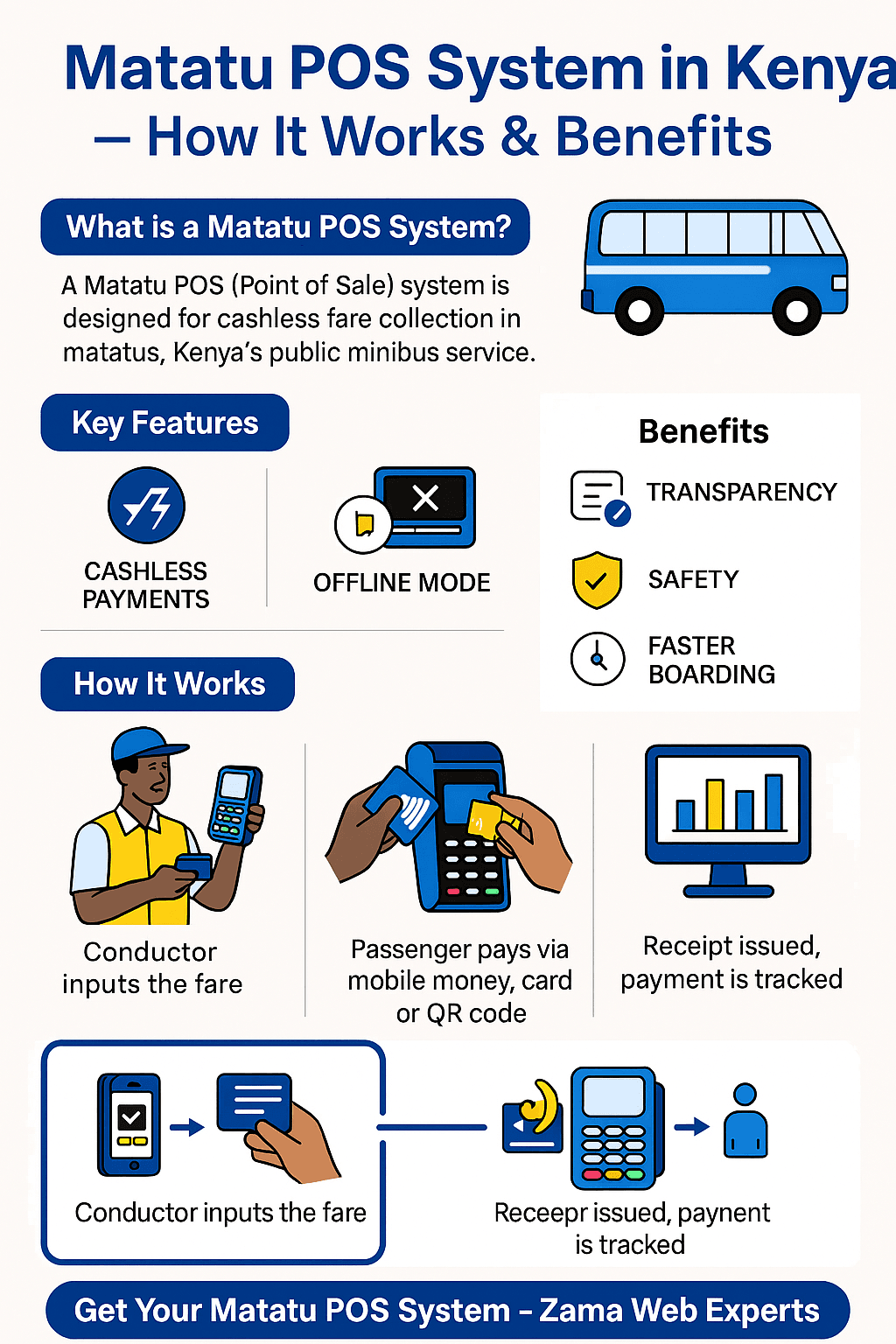
What is a Matatu POS System?
A Matatu POS System is a Point-of-Sale solution designed for public transport vehicles in Kenya. It allows:
Cashless fare collection via M-Pesa, cards, or QR codes
Real-time revenue tracking for SACCOs and matatu owners
Driver and conductor accountability using digital records
Data analytics for route optimization and passenger insights
Think of it as an advanced cash register for matatus—but fully digital, automated, and mobile money-enabled.
Why Matatu POS Systems Matter in Kenya’s Public Transport Sector
Kenya loses millions of shillings daily due to unaccounted matatu revenue. A Matatu POS System solves this problem by:
Reducing cash leakage through transparent fare records
Providing faster, safer payments for passengers
Helping SACCOs comply with NTSA digital records requirements
Enabling data-driven decisions for route planning and pricing
In countries like Uganda and Tanzania, similar systems have transformed public transport efficiency—Kenya is next.
Key Features of the Best Matatu POS Systems
Cashless Payments – Accept M-Pesa, Airtel Money, bank cards, and NFC smart cards
Passenger Receipts – SMS or printed receipts for passengers after every transaction
Offline Mode – Works even without internet, syncing later automatically
Driver Authentication – Each driver uses a secure login for accountability
Automated Reports – Daily, weekly, and monthly revenue summaries
Integration with SACCO Dashboards – Centralized control for fleet managers
Benefits of Matatu POS Systems
Increased Revenue Transparency – Every shilling accounted for
Operational Efficiency – Faster boarding and fare collection
Passenger Safety – Less cash means fewer robbery risks
Compliance with Digital Regulations – NTSA-ready data records
Customer Trust – Passengers see clear, transparent fare breakdowns
How Matatu POS Systems Work – Step by Step
Passenger boards the matatu
Conductor inputs the route and fare amount into the POS device
Passenger pays via mobile money, card, or QR code
System issues a digital receipt via SMS or mobile app
SACCO admin sees real-time revenue in the dashboard
Technology Behind Modern Matatu POS Systems
Cloud Computing – Stores data securely, accessible anywhere
Mobile Money APIs – Integrates with M-Pesa STK push for instant payments
GPS Tracking – Adds route and location tracking for performance insights
IoT Devices – Sensors for passenger counting and vehicle status
Matatu POS Systems & Mobile Money Integration
Kenya’s mobile money ecosystem makes M-Pesa integration essential.
Passengers pay using M-Pesa Paybill or Till Numbers
POS confirms payment instantly
Records sync automatically to SACCO dashboards
Smart Card and QR Code Payments for Matatus
NFC Smart Cards → Passengers preload cards for tap-to-pay convenience
QR Code Scanning → Displays codes in the matatu; passengers pay via phone apps
Both methods reduce transaction time and allow offline payment support.
Data Analytics and Reporting Features
Matatu POS Systems provide actionable insights:
Peak Hour Analysis – When passenger numbers surge
Revenue Per Route – See which routes are most profitable
Driver Performance Reports – Track speed, revenue, and punctuality
Driver & Conductor Accountability with POS Systems
Each conductor/driver gets a unique login. This means:
No revenue disappears untracked
Management sees per-vehicle earnings in real-time
Drivers are incentivized based on verified earnings
Case Studies: Successful Matatu POS System Implementations
Smart Matatu, Nairobi → 35% revenue increase in first 3 months
Kisumu SACCO Digitalization Project → 50% reduction in cash handling risks
Mombasa BRT Pilot → Faster boarding times with NFC smart card payments
Challenges in Deploying Matatu POS Systems
Initial Costs – Hardware and training expenses
Staff Training – Drivers/conductors need digital literacy
Network Connectivity – Rural areas require offline POS capabilities
Best Practices for Matatu Owners & SACCOs
Start with a pilot project before full rollout
Train all drivers, conductors, and SACCO admins
Integrate POS with existing accounting systems
Choose a locally supported vendor for easy maintenance
Cost of Matatu POS Systems in Kenya
| POS System Type | Price Range (KES) | Features |
|---|---|---|
| Basic Mobile App | 50,000 – 100,000 | M-Pesa only, basic reporting |
| Smart Card POS Terminals | 120,000 – 180,000 | NFC cards, offline mode, SACCO dashboard |
| Full Fleet Management | 200,000+ | GPS, IoT, predictive analytics |
Future Trends: AI & IoT in Public Transport POS
AI-based Fare Prediction – Adjust fares dynamically based on traffic
IoT Sensors – Track fuel usage, passenger numbers, and vehicle health
Blockchain Payments – Enhance transparency and prevent fraud
Comparison Table: Top Matatu POS Systems in Kenya
| Provider | Payment Methods | Reporting | Offline Mode | Integration |
|---|---|---|---|---|
| Zama POS | M-Pesa, Cards, QR | Advanced | Yes | SACCO Dashboard |
| SmartMatatu POS | M-Pesa, Smart Cards | Basic | Yes | Limited |
| FleetTrack POS | M-Pesa, NFC, QR, Cards | Advanced | Yes | GPS + Analytics |
FAQs About Matatu POS Systems
Q1: Can passengers still pay cash?
Yes, hybrid systems allow both cash and digital payments.
Q2: How long does installation take?
1–2 weeks depending on fleet size.
Q3: Does it work in rural areas?
Yes, offline mode ensures uninterrupted operations.
How to Get Started with a Matatu POS System
Contact Zama Web Experts for a free demo
Choose features based on your SACCO needs
Train staff and roll out a pilot project
Expand fleet-wide once tested successfully
1. Infographic Design Recommendations
To make the blog visually appealing and sharable on social media, here’s the infographic structure I recommend:
Infographic Title:
“Matatu POS System in Kenya – How It Works & Benefits”
Sections to Include:
What is a Matatu POS System? (Definition + Image Icon)
Key Features (Cashless Payments, Real-time Reporting, Offline Mode)
Benefits (Transparency, Safety, Faster Boarding)
How It Works (Step-by-Step Visual Flow)
Call to Action: “Get Your Matatu POS System – Zama Web Experts”
Design Colors:
Blue & White (Technology & Trust)
Green (Financial Growth)
Yellow Highlights (Public Transport Branding)
2. Internal Link Strategy
To keep readers exploring your website and improve SEO:
Link to Property Management System for transport companies with real estate investments.
Link to Mobile Money Integrations for SACCOs wanting M-Pesa automation.
Link to Transport Wallet Solutions if you offer digital wallet integration.
3. External Links (DoFollow)
These authoritative sites improve SEO credibility:
NTSA Kenya Digital Transport Regulations for compliance info.
M-Pesa API Developer Portal for mobile money integration details.
World Bank Urban Transport Studies for public transport modernization case studies.
4. Suggested Multimedia
Images to Include:
Matatu POS Device in Action (Alt: Matatu POS System Kenya)
Cashless Fare Payment with M-Pesa (Alt: Matatu Digital Payments)
SACCO Dashboard Screenshot (Alt: Matatu POS Dashboard Kenya)
Video Recommendations:
Explainer Video: “How Matatu POS Systems Work in Kenya” (Animated demo)
Case Study Video: SACCO owner testimonial after adopting POS
Conclusion & Call to Action
The Matatu POS System is Kenya’s future for cashless, transparent, and efficient public transport.
Contact Zama Web Experts today for custom Matatu POS solutions:
📞 +254 769 316 835
🌐 www.zama.co.ke