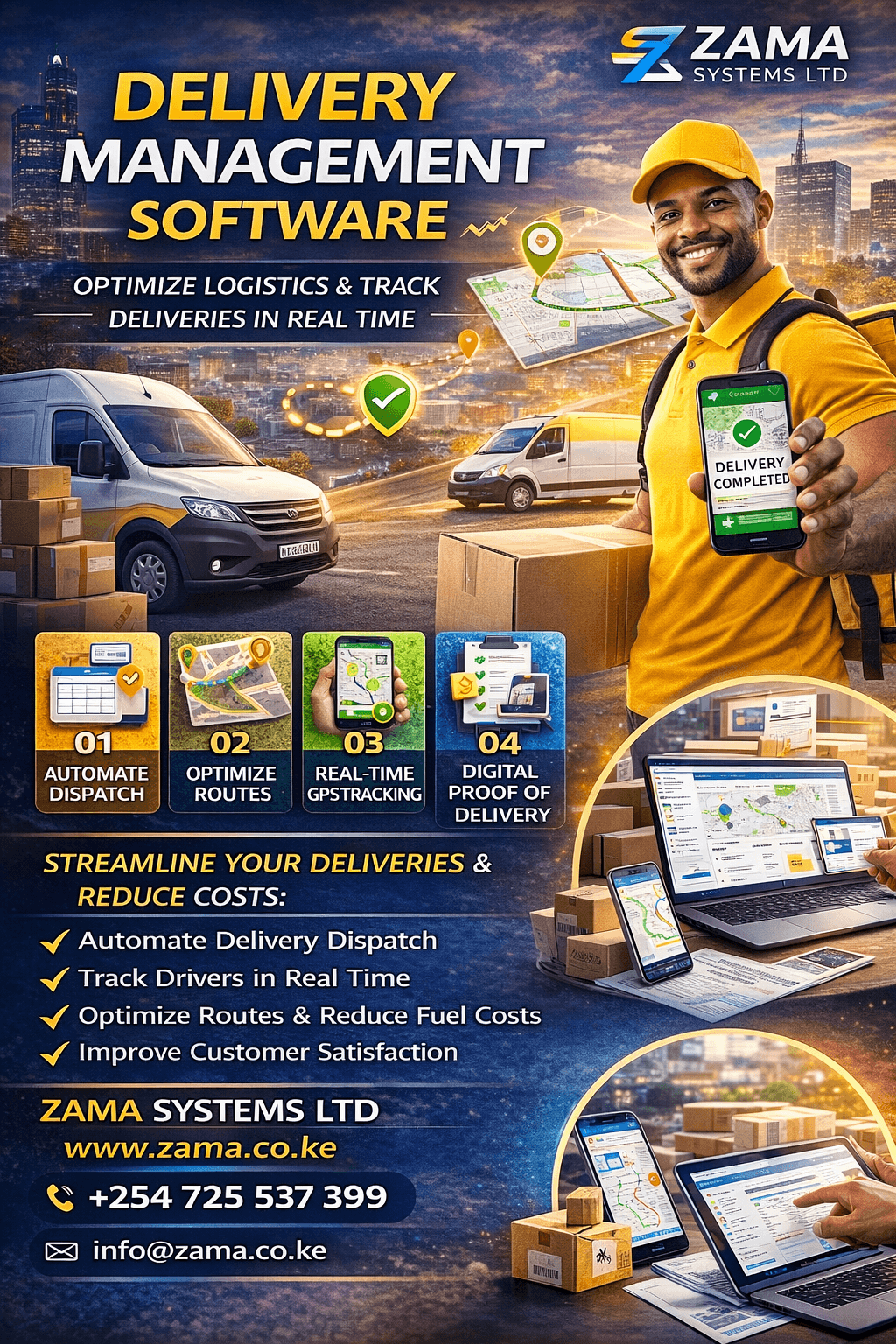
Delivery Management Software: The Complete Guide to Optimizing Logistics and Last-Mile Delivery

Delivery Management Software
In today’s fast-paced digital economy, efficient delivery operations are critical for business success. Companies dealing with logistics, e-commerce fulfillment, courier services, and product distribution need advanced tools to manage deliveries efficiently. This is where Delivery Management Software becomes essential.

A well-designed delivery management system allows businesses to automate dispatching, track deliveries in real time, optimize routes, manage drivers, and improve customer satisfaction.

In this comprehensive guide, we will explore what delivery management software is, how it works, its features, benefits, and why businesses are rapidly adopting this technology.


Table of Contents

What is Delivery Management Software?

Delivery Management Software (DMS) is a digital platform that helps businesses manage and optimize the entire delivery lifecycle, from order creation to final delivery confirmation.

It allows companies to:

  • Create and manage delivery orders

  • Assign drivers or delivery agents

  • Track deliveries in real time

  • Optimize routes and reduce fuel costs

  • Capture proof of delivery

  • Manage customer communication

  • Generate analytics and reports

By replacing manual processes, delivery management software improves efficiency, transparency, and scalability.


Why Businesses Need Delivery Management Software

Companies that rely on delivery operations often face challenges such as:

  • Delayed deliveries

  • Inefficient route planning

  • Poor driver coordination

  • Lack of delivery visibility

  • Customer complaints

  • High operational costs

Without digital tools, managing deliveries becomes chaotic and inefficient.

Delivery management software helps businesses streamline operations and deliver a better customer experience.


Key Features of Delivery Management Software

1. Order Management

A delivery management system enables businesses to easily create and track delivery orders.

Features include:

  • Order creation and scheduling

  • Customer information management

  • Delivery instructions

  • Order prioritization

  • Order status tracking

This ensures that all deliveries are organized and traceable.


2. Automated Dispatching

Dispatch management is one of the most important capabilities.

Delivery management software allows businesses to:

  • Assign deliveries automatically

  • Match drivers with nearby orders

  • Balance workload among drivers

  • Avoid dispatch errors

This improves efficiency and reduces delays.


3. Real-Time GPS Tracking

Real-time tracking allows businesses to monitor deliveries on a map.

Benefits include:

  • Driver location tracking

  • Delivery progress monitoring

  • Accurate delivery time estimates

  • Route tracking history

This improves operational visibility and accountability.


4. Route Optimization

Smart route optimization helps drivers deliver faster while reducing fuel consumption.

The system can:

  • Calculate the most efficient route

  • Avoid traffic congestion

  • Reduce delivery distance

  • Improve driver productivity

Route optimization significantly reduces delivery costs.


5. Driver Mobile App

Most delivery management platforms include a mobile application for drivers.

Drivers can:

  • Receive delivery assignments

  • Access navigation routes

  • Update delivery status

  • Upload proof of delivery

  • Communicate with dispatch teams

Mobile integration ensures seamless communication between drivers and management.


6. Proof of Delivery

Proof of delivery (POD) confirms that a package has been delivered successfully.

Common POD methods include:

  • Customer signature

  • Photo confirmation

  • GPS location stamp

  • Timestamp verification

  • OTP verification

This prevents disputes and improves accountability.


7. Customer Notifications

Customers expect transparency during deliveries.

Delivery management software provides automated notifications such as:

  • Order dispatched

  • Driver on the way

  • Delivery completed

  • Delivery delay alerts

Notifications can be sent via:

  • SMS

  • Email

  • Mobile apps

  • WhatsApp integration

This improves customer satisfaction.


Benefits of Using Delivery Management Software

Increased Efficiency

Automation eliminates manual coordination and reduces operational delays.

Improved Customer Experience

Real-time tracking and notifications provide customers with better visibility.

Reduced Delivery Costs

Optimized routes reduce fuel consumption and travel time.

Better Driver Accountability

GPS tracking and delivery logs ensure drivers remain accountable.

Enhanced Business Scalability

Companies can scale delivery operations without increasing administrative workload.


Industries That Use Delivery Management Software

Delivery management software is widely used across multiple industries, including:

  • E-commerce and online retail

  • Courier and logistics companies

  • Food and grocery delivery services

  • Pharmaceutical delivery services

  • Furniture and appliance distribution

  • Wholesale and supply chain distribution

Any business that handles deliveries can benefit from this technology.


Delivery Management Software vs Traditional Delivery Processes

Traditional DeliveryDelivery Management Software
Manual dispatchingAutomated dispatching
No delivery visibilityReal-time GPS tracking
Paper-based confirmationDigital proof of delivery
Slow customer communicationAutomated notifications
Difficult scalingEasily scalable operations

Digital transformation gives businesses a competitive advantage.


Advanced Capabilities of Modern Delivery Management Software

Modern delivery management systems offer advanced features such as:

  • Fleet management integration

  • Multi-warehouse delivery coordination

  • Cash-on-delivery tracking

  • Multi-branch operations

  • Integration with e-commerce platforms

  • Advanced delivery analytics

These features enable enterprise-level logistics management.


Integration Capabilities

Delivery management software can integrate with various systems, including:

  • E-commerce platforms

  • Inventory management systems

  • Customer relationship management (CRM) software

  • Accounting systems

  • Payment gateways

  • GPS tracking devices

Integration creates a connected logistics ecosystem.


How Delivery Management Software Improves Last-Mile Delivery

Last-mile delivery is often the most expensive part of the logistics process.

Delivery management software helps by:

  • Optimizing delivery routes

  • Reducing failed deliveries

  • Improving driver productivity

  • Enhancing customer communication

This leads to faster and more reliable deliveries.


The Future of Delivery Management Software

Technology is transforming delivery operations through innovations such as:

  • Artificial intelligence for route planning

  • Predictive delivery analytics

  • Drone and autonomous delivery integration

  • Internet of Things (IoT) vehicle tracking

  • Smart logistics automation

Businesses that adopt modern delivery technology early gain a strong competitive advantage.


Choosing the Right Delivery Management Software

When selecting a delivery management platform, businesses should consider:

  • Ease of use

  • Scalability

  • Integration capabilities

  • Real-time tracking features

  • Customer notification tools

  • Data analytics capabilities

A reliable system should grow with the business.


Conclusion

Delivery operations play a vital role in modern business success. Without efficient logistics management, companies struggle to meet customer expectations and control operational costs.

Delivery Management Software provides a powerful solution for managing deliveries, optimizing routes, tracking drivers, and improving customer experience.

By automating delivery processes and providing real-time visibility, businesses can increase efficiency, reduce costs, and scale their logistics operations effectively.

Organizations that invest in delivery management technology today are positioning themselves for long-term success in the increasingly competitive digital marketplace.

SEO Meta Title

Delivery Management Software | Real-Time Delivery Tracking & Logistics Automation

SEO Meta Description

Discover how delivery management software improves logistics efficiency with automated dispatch, real-time GPS tracking, route optimization, and proof of delivery for modern businesses.

continue

Advanced Delivery Management Software

Architecture, Automation & Scalable Logistics Operations

As delivery operations expand, managing hundreds or thousands of daily deliveries becomes increasingly complex. Businesses need structured systems that can handle high order volumes, coordinate multiple drivers, and maintain real-time visibility across operations.

A modern Delivery Management Software (DMS) is designed to automate and optimize every stage of the delivery process while providing deep operational insights.


End-to-End Delivery Workflow Automation

A powerful delivery management platform automates the entire logistics workflow.

1️⃣ Order Creation

Delivery orders can originate from:

  • E-commerce platforms

  • POS systems

  • CRM platforms

  • ERP systems

  • Customer service agents

  • API integrations

Orders are instantly stored in a centralized delivery dashboard.


2️⃣ Smart Dispatching

The software automatically assigns deliveries based on:

  • Driver location

  • Delivery zone

  • Vehicle capacity

  • Delivery priority

  • Driver workload

This ensures balanced distribution and faster dispatching.


3️⃣ Route Optimization

Delivery management software uses intelligent algorithms to determine the most efficient routes.

Benefits include:

  • Reduced fuel consumption

  • Faster delivery times

  • Reduced traffic delays

  • Increased driver productivity

Optimized routing can reduce delivery costs significantly.


4️⃣ Driver Navigation & Mobile App

Drivers receive assignments through a mobile application that allows them to:

  • View delivery details

  • Access optimized routes

  • Update delivery status

  • Capture proof of delivery

  • Communicate with dispatch teams

The mobile app ensures real-time communication between drivers and management.


5️⃣ Proof of Delivery Capture

A professional delivery management system includes digital confirmation tools such as:

  • Customer signature capture

  • Photo confirmation

  • GPS coordinates

  • Delivery timestamp

  • OTP verification

Proof of delivery eliminates disputes and improves accountability.


Technical Architecture of Delivery Management Software

A scalable delivery management system includes several components.

Cloud-Based Infrastructure

Cloud deployment provides:

  • High availability

  • Secure data storage

  • Real-time synchronization

  • Automatic system scaling

  • Remote accessibility

Cloud infrastructure ensures reliability even during peak delivery periods.


Mobile Driver Application

The driver app includes:

  • Delivery assignment notifications

  • GPS navigation integration

  • Offline functionality

  • Delivery confirmation tools

  • Communication channels with dispatch

A reliable mobile app is essential for successful delivery operations.


Centralized Admin Dashboard

Operations teams manage deliveries through a powerful dashboard where they can:

  • Monitor drivers in real time

  • View delivery status

  • Track performance metrics

  • Generate reports

  • Manage delivery zones

This dashboard provides full operational visibility.


Multi-Branch Delivery Management

Businesses with multiple locations benefit from centralized delivery coordination.

Delivery management software supports:

  • Branch-level delivery operations

  • Regional dispatch management

  • Centralized monitoring

  • Consolidated reporting

Multi-branch capability enables businesses to scale delivery networks efficiently.


Cash-on-Delivery (COD) Management

Many businesses still rely on COD payments.

Delivery management software can:

  • Track COD collections

  • Reconcile driver cash balances

  • Record digital payments

  • Generate daily settlement reports

This improves financial transparency.


Key Performance Indicators (KPIs)

Delivery management systems measure important operational metrics such as:

  • Delivery success rate

  • Average delivery time

  • Driver productivity

  • On-time delivery percentage

  • Failed delivery rate

  • Cost per delivery

These insights allow businesses to continuously improve logistics performance.


Delivery Management Software for Different Business Sizes

Small Businesses

Small delivery teams benefit from:

  • Basic order tracking

  • Manual dispatch tools

  • Mobile driver apps

  • Delivery confirmation


Medium Businesses

Growing companies require:

  • Route optimization

  • Real-time driver tracking

  • Automated dispatch

  • Customer notification systems


Enterprise Organizations

Large logistics companies require:

  • Multi-warehouse management

  • Multi-branch dispatch centers

  • Fleet management integration

  • Predictive delivery analytics

  • Advanced reporting tools

A scalable system supports all growth stages.


Integration Capabilities

Modern delivery management software integrates with many business systems, including:

  • E-commerce platforms

  • Warehouse management systems

  • ERP platforms

  • CRM software

  • Accounting systems

  • GPS tracking devices

  • Payment gateways

Integrated systems streamline business operations.


Security & Data Protection

Because delivery management systems handle sensitive customer information, they must include strong security features such as:

  • Encrypted communication

  • Role-based access control

  • Secure cloud storage

  • Activity logging

  • Backup redundancy

Security protects both customer data and business operations.


Common Logistics Challenges Solved by Delivery Management Software

Businesses often struggle with:

  • Poor route planning

  • Delivery delays

  • Lack of visibility

  • Driver miscommunication

  • Customer complaints

  • High operational costs

Delivery management software provides solutions that improve efficiency and reduce risks.


The Future of Delivery Management Technology

Emerging technologies are shaping the future of logistics management.

Key innovations include:

  • AI-powered route optimization

  • Predictive delivery analytics

  • Autonomous delivery vehicles

  • Drone delivery systems

  • Smart logistics automation

  • Internet of Things (IoT) vehicle tracking

Businesses that adopt these technologies early gain a strong competitive advantage.


Strategic Importance for Modern Businesses

If your business plans to:

  • Expand delivery coverage

  • Increase order volume

  • Improve customer satisfaction

  • Reduce operational costs

  • Improve delivery transparency

A professional Delivery Management Software platform becomes essential infrastructure.


Final Extended Conclusion

Delivery operations are one of the most important components of modern commerce. Companies that fail to optimize logistics processes risk falling behind competitors.

A modern Delivery Management Software system transforms delivery operations by providing:

  • Automated dispatching

  • Real-time driver tracking

  • Route optimization

  • Delivery confirmation tools

  • Performance analytics

  • Scalable logistics infrastructure

By implementing delivery management software, businesses can increase efficiency, reduce costs, and deliver exceptional customer experiences.

Technology-driven logistics is the future of delivery operations.

Delivery Management Software

Implementation Strategy, Pricing Models & Long-Term Logistics Scalability

Implementing Delivery Management Software (DMS) is a strategic move for businesses that rely on transportation, distribution, or last-mile delivery. However, successful deployment requires planning, workflow alignment, and proper integration with existing systems.

This section explores how businesses can successfully deploy delivery management software and maximize its long-term benefits.


Step-by-Step Implementation Guide

1️⃣ Operational Assessment

Before deploying delivery management software, businesses should analyze:

  • Daily delivery volume

  • Number of drivers or riders

  • Delivery zones and coverage areas

  • Warehouse locations

  • Vehicle capacity

  • Current dispatch workflow

Understanding operational complexity helps configure the system correctly.


2️⃣ Delivery Workflow Configuration

A delivery management system must reflect real operational workflows.

Typical delivery workflow includes:

  1. Order received

  2. Dispatch planning

  3. Driver assignment

  4. Delivery execution

  5. Proof of delivery

  6. Payment collection

  7. Delivery completion

Configuring these stages ensures accurate tracking.


3️⃣ Driver Onboarding & Training

Drivers must understand how to use the mobile application.

Training should include:

  • Receiving delivery assignments

  • Using navigation tools

  • Updating delivery status

  • Capturing proof of delivery

  • Handling COD payments

Proper training improves adoption and system effectiveness.


4️⃣ System Integration

For maximum efficiency, delivery management software should integrate with existing systems such as:

  • E-commerce platforms

  • Warehouse management systems

  • Inventory software

  • CRM platforms

  • Accounting software

  • Payment gateways

Integrated systems reduce manual data entry and operational errors.


Pricing Models for Delivery Management Software

Businesses can choose from several pricing models.

SaaS Subscription Model

Most modern delivery management platforms operate on a subscription basis.

Benefits include:

  • Lower upfront investment

  • Automatic software updates

  • Cloud hosting included

  • Scalable pricing


One-Time License Model

Some organizations prefer a one-time purchase.

Advantages include:

  • Full ownership

  • No recurring subscription

  • Custom infrastructure control

However, maintenance and updates may require additional costs.


Per-Driver Pricing

Some systems charge based on the number of drivers.

This model works well for:

  • Courier services

  • Delivery startups

  • Logistics companies with growing fleets


Enterprise Custom Packages

Large logistics companies may require:

  • Custom integrations

  • Multi-warehouse support

  • Dedicated infrastructure

  • Advanced analytics

Enterprise pricing is usually customized.


Cost vs Value Analysis

Investment Areas

Businesses investing in delivery management software should consider:

  • Software licensing

  • Customization

  • Integration

  • Mobile app deployment

  • Staff training

  • Cloud hosting


Business Gains

The benefits often outweigh the costs.

Delivery management software helps businesses:

  • Reduce delivery costs

  • Improve delivery speed

  • Reduce fuel consumption

  • Improve driver productivity

  • Reduce failed deliveries

  • Increase customer satisfaction

Efficiency gains significantly improve profitability.


Delivery Management Software for Different Business Sizes

Small Delivery Businesses

Small businesses benefit from:

  • Basic order tracking

  • Simple dispatching

  • Driver mobile apps

  • Delivery confirmation

These features improve operational control.


Medium-Sized Businesses

Growing companies require:

  • Route optimization

  • Automated dispatching

  • Real-time tracking

  • Customer notification tools

  • Delivery analytics

This supports operational scaling.


Enterprise Logistics Operations

Large companies require advanced capabilities such as:

  • Multi-warehouse management

  • Multi-region delivery networks

  • Fleet management integration

  • Advanced analytics dashboards

  • AI-powered route optimization

Enterprise-level delivery software supports global logistics operations.


Scalability & Future Growth

A good delivery management system should support long-term growth.

Scalability features include:

  • Cloud infrastructure scaling

  • Multi-branch management

  • API integrations

  • Automated load balancing

  • Real-time analytics

These capabilities ensure the platform can handle increasing delivery volumes.


Logistics Challenges Solved by Delivery Management Software

Businesses adopting delivery management software solve major operational problems including:

  • Uncoordinated dispatch operations

  • Lack of delivery visibility

  • High operational costs

  • Driver miscommunication

  • Customer complaints

  • Inefficient routing

Automation creates structured delivery workflows.


Delivery Management Software as Part of Digital Transformation

Modern logistics operations rely on integrated digital systems.

Delivery management software often works alongside:

  • Warehouse management systems

  • Field service management platforms

  • Work order management systems

  • Inventory control software

  • ERP platforms

  • CRM systems

When integrated properly, these systems create a powerful digital logistics ecosystem.


Future Trends in Delivery Management Software

The logistics industry is evolving rapidly with new technologies.

Future delivery management systems will include:

  • Artificial intelligence for predictive routing

  • Smart traffic analytics

  • Autonomous vehicle integration

  • Drone delivery coordination

  • IoT-enabled fleet monitoring

  • Real-time delivery demand forecasting

Businesses adopting these technologies early gain competitive advantages.


Strategic Importance for Modern Businesses

If your organization plans to:

  • Expand delivery operations

  • Increase order volume

  • Improve delivery speed

  • Reduce logistics costs

  • Improve customer satisfaction

A professional Delivery Management Software platform becomes essential infrastructure.


Final Strategic Conclusion

Delivery operations are a critical component of modern commerce. Companies that fail to manage logistics efficiently struggle with operational costs, customer complaints, and delivery delays.

A modern Delivery Management Software system provides the tools needed to automate dispatching, track deliveries in real time, optimize routes, and scale logistics operations efficiently.

By adopting delivery management software, businesses can improve efficiency, reduce operational costs, and deliver a superior customer experience.

Leave a Reply