
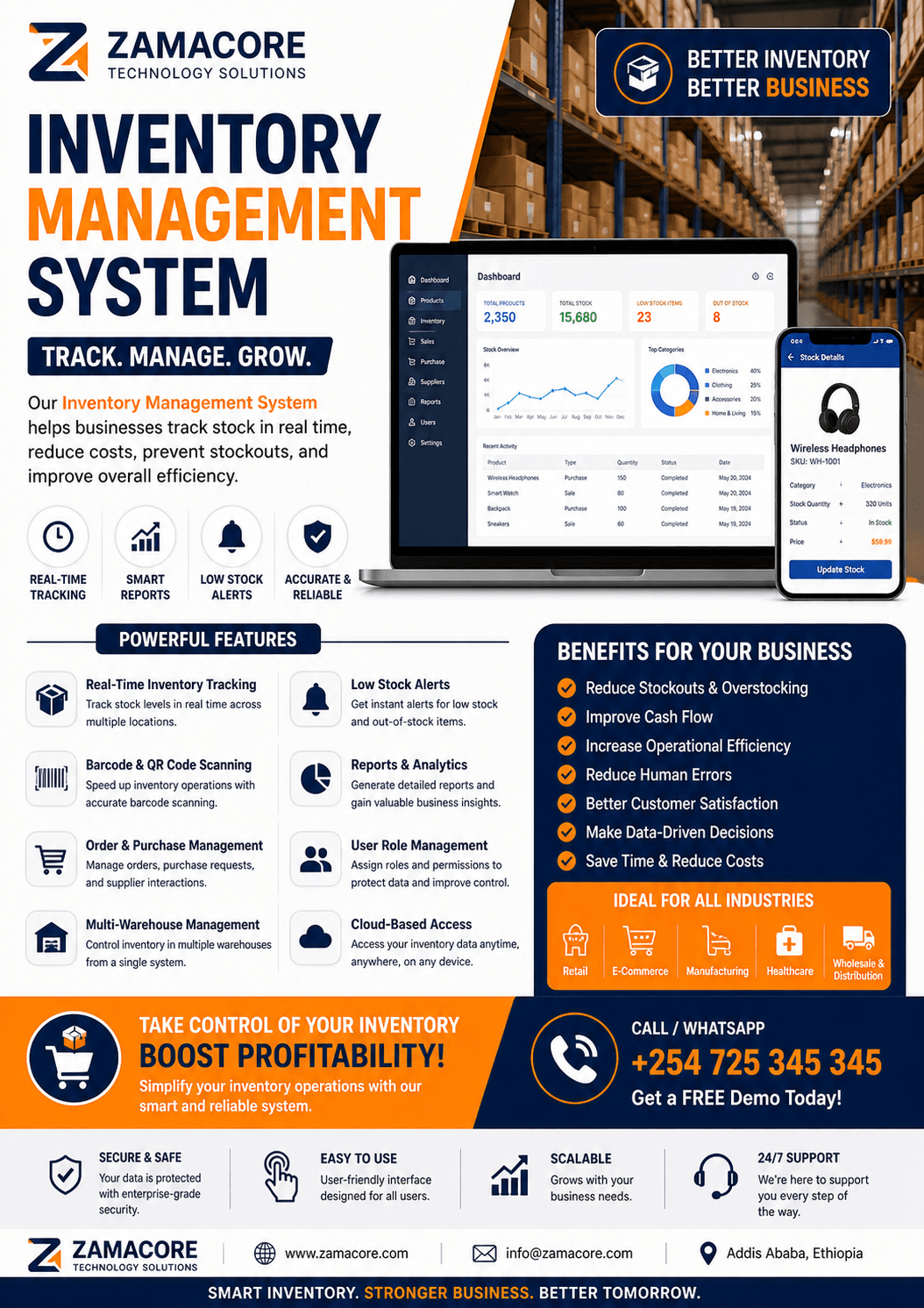
In today’s competitive business environment, managing inventory efficiently is critical for success. Whether you run a retail store, warehouse, e-commerce business, or manufacturing company, keeping track of stock manually can lead to costly errors. This is where an inventory management system becomes essential.
An inventory management system helps businesses monitor stock levels, track inventory movement, reduce waste, and improve overall efficiency. With the right system in place, companies can automate processes, reduce operational costs, and deliver better customer experiences.
In this comprehensive guide, we will explore everything you need to know about inventory management systems, their features, benefits, and how they can transform your business.
What is an Inventory Management System?
An inventory management system is a software solution designed to track, manage, and control inventory levels, orders, sales, and deliveries.
It provides real-time visibility into stock levels and helps businesses ensure that they always have the right products available at the right time.
Key Functions
- Track inventory levels
- Manage stock movements
- Monitor incoming and outgoing goods
- Automate reordering processes
- Generate reports and analytics
In simple terms, an inventory management system helps businesses avoid overstocking and stockouts.
Why Your Business Needs an Inventory Management System
1. Accurate Inventory Tracking
Manual tracking leads to errors. An inventory management system ensures real-time accuracy.
2. Reduced Operational Costs
By optimizing stock levels, businesses can reduce storage and wastage costs.
3. Improved Efficiency
Automation eliminates repetitive tasks, saving time and effort.
4. Better Customer Satisfaction
Products are always available, leading to faster order fulfillment.
5. Data-Driven Decisions
Analytics help businesses forecast demand and plan effectively.
Key Features of an Inventory Management System
A powerful inventory management system includes:
Real-Time Tracking
Monitor stock levels instantly across multiple locations.
Inventory Alerts
Receive notifications when stock is low or overstocked.
Barcode & QR Code Scanning
Simplify tracking and reduce human errors.
Multi-Location Management
Manage inventory across warehouses and stores.
Reporting & Analytics
Gain insights into sales trends and inventory performance.
Order Management
Track orders from purchase to delivery.
Types of Inventory Management Systems
1. Manual Inventory System
Traditional method using spreadsheets or paper records.
2. Periodic Inventory System
Stock is updated at specific intervals.
3. Perpetual Inventory System
Real-time updates after every transaction.
4. Cloud-Based Inventory System
Accessible from anywhere with internet connectivity.
Modern businesses prefer cloud-based inventory management systems.
Benefits of Using an Inventory Management System
Increased Productivity
Employees spend less time on manual tasks.
Reduced Errors
Automation minimizes mistakes in stock handling.
Improved Forecasting
Predict demand using historical data.
Enhanced Security
Protect inventory data with secure systems.
Scalability
Grow your business without inventory issues.
Inventory Management System for Different Industries
Retail
- Track stock in real time
- Manage multiple store locations
E-commerce
- Sync inventory with online stores
- Automate order processing
Manufacturing
- Manage raw materials
- Track production inventory
Healthcare
- Monitor medical supplies
- Ensure compliance and safety
Logistics
- Manage warehouse inventory
- Track shipments and stock movement
How an Inventory Management System Works
Step 1: Stock Entry
Products are added to the system with details.
Step 2: Tracking
System monitors stock movement in real time.
Step 3: Alerts
Notifications for low or excess stock.
Step 4: Reporting
Generate reports for analysis and decision-making.
Challenges Solved by Inventory Management Systems
- Overstocking and understocking
- Manual errors
- Lack of visibility
- Poor demand forecasting
- Inefficient warehouse operations
An inventory management system solves these challenges effectively.
Cloud-Based vs On-Premise Inventory Systems
Cloud-Based
- Accessible anywhere
- Lower cost
- Easy updates
On-Premise
- Full control
- Higher setup cost
- Requires maintenance
Most businesses now prefer cloud-based solutions.
Technologies Used in Inventory Management Systems
Artificial Intelligence (AI)
Predict demand and optimize stock levels.
Internet of Things (IoT)
Track inventory using smart devices.
Barcode Systems
Improve accuracy and speed.
Cloud Computing
Enable scalability and remote access.
How to Choose the Right Inventory Management System
Understand Your Needs
Identify your business requirements.
Check Features
Ensure the system includes essential tools.
Evaluate Scalability
Choose a system that grows with your business.
Consider Integration
Ensure compatibility with existing systems.
Vendor Support
Choose a reliable provider like Zamacore.
Cost of Inventory Management System
Costs vary depending on:
- Features
- Number of users
- Customization level
- Deployment type
While there is an initial investment, the long-term savings outweigh the cost.
Best Practices for Implementation
- Define clear goals
- Train your team
- Start with a pilot project
- Monitor performance
- Continuously improve
Future Trends in Inventory Management Systems
Automation
Fully automated warehouses are becoming common.
AI & Machine Learning
Smarter forecasting and decision-making.
Mobile Inventory Management
Manage stock using mobile devices.
Integration with E-commerce
Real-time syncing with online platforms.
Why Choose Zamacore for Your Inventory Management System
Zamacore provides custom-built inventory solutions tailored to your business.
What We Offer
- Custom inventory management systems
- Scalable and secure solutions
- Modern technology stack
- Affordable pricing
- Ongoing support
Real-World Example
A retail business implemented an inventory management system and achieved:
- 50% reduction in stock errors
- 30% increase in efficiency
- Improved customer satisfaction
FAQs
What is an inventory management system?
A software that tracks and manages stock levels and inventory operations.
Who needs it?
Any business that handles inventory.
Is it customizable?
Yes, custom solutions offer flexibility.
Conclusion
An inventory management system is essential for businesses looking to improve efficiency, reduce costs, and enhance customer satisfaction. With real-time tracking, automation, and data insights, it provides a powerful solution for modern inventory challenges.
Call to Action
🚀 Ready to optimize your inventory?
📞 Call/WhatsApp: +254 725345345
🌐 Visit: zamacore.com
📩 Get a FREE consultation today
Let Zamacore build a powerful inventory management system for your business.
Advanced Features of a Modern Inventory Management System
A modern inventory management system goes far beyond basic stock tracking. Businesses today require intelligent, automated, and scalable solutions.
Demand Forecasting
Using historical data, the system predicts future demand to avoid stock shortages or overstocking.
Automated Reordering
Set minimum stock levels, and the system automatically triggers purchase orders when inventory runs low.
Batch & Expiry Tracking
Essential for industries like healthcare and food, ensuring product quality and compliance.
Multi-Channel Integration
Sync inventory across e-commerce platforms, POS systems, and marketplaces.
Role-Based Access Control
Control who can view, edit, or manage inventory data.
Role of Automation in Inventory Management Systems
Automation is transforming inventory operations across industries.
A modern inventory management system automates:
- Stock updates
- Order processing
- Inventory alerts
- Report generation
- Supplier management
Benefits of Automation
- Increased efficiency
- Reduced human errors
- Faster operations
- Lower operational costs
Inventory Management System Architecture (Overview)
A well-designed inventory management system consists of several key components:
1. User Interface (Frontend)
Web or mobile interface for users to interact with the system.
2. Backend System
Handles business logic, processing, and system operations.
3. Database
Stores all inventory-related data such as products, orders, and transactions.
4. Integration Layer
Connects with third-party tools like payment systems, e-commerce platforms, and APIs.
Database Design for Inventory Management System
A robust inventory management system includes these core data structures:
- Products table
- Inventory table
- Orders table
- Suppliers table
- Users table
- Transactions table
Proper database design ensures speed, accuracy, and scalability.
API Integration in Inventory Management Systems
APIs enable seamless communication between systems.
A modern inventory management system integrates with:
- E-commerce platforms (Shopify, WooCommerce)
- Payment gateways
- Accounting software
- Logistics systems
- CRM tools
This creates a fully connected business ecosystem.
Mobile Inventory Management
Mobile accessibility is critical in today’s business environment.
A mobile-enabled inventory management system allows users to:
- Track stock on the go
- Scan barcodes using smartphones
- Update inventory in real time
- Manage warehouses remotely
Key KPIs to Track in Inventory Management
Tracking performance is essential for success.
Important Metrics
- Inventory turnover rate
- Stock accuracy
- Order fulfillment rate
- Carrying cost of inventory
- Stockout frequency
A good inventory management system provides dashboards for monitoring these KPIs.
Common Mistakes to Avoid
When implementing an inventory management system, avoid:
- Lack of planning
- Choosing the wrong system
- Ignoring employee training
- Poor data management
- Not scaling for future growth
Inventory Management System for Startups
Startups benefit greatly from early adoption.
Advantages
- Better organization
- Reduced costs
- Faster growth
- Improved customer experience
Inventory Management System for Enterprises
Large businesses require advanced features.
A scalable inventory management system offers:
- Multi-warehouse management
- Advanced analytics
- Integration with ERP systems
- High-level security
Security Best Practices
Protecting inventory data is crucial.
Key Measures
- Data encryption
- Secure authentication
- Regular backups
- Access control
Sustainability and Smart Inventory
Modern businesses focus on sustainability.
A smart inventory management system helps:
- Reduce waste
- Optimize stock levels
- Minimize overproduction
- Improve resource utilization
Competitive Advantage of Using an Inventory Management System
Businesses that adopt a inventory management system gain:
- Better efficiency
- Lower costs
- Faster operations
- Improved customer satisfaction
This leads to long-term growth and success.
Building a Custom Inventory Management System
If off-the-shelf tools don’t meet your needs, consider custom development.
Steps to Build
- Define requirements
- Choose technology stack
- Design UI/UX
- Develop system
- Test thoroughly
- Deploy and maintain
Zamacore specializes in building custom solutions tailored to your business.
Monetization (If You Build SaaS)
You can turn your inventory management system into a SaaS product.
Revenue Models
- Monthly subscriptions
- Tiered pricing plans
- Pay-per-user model
Expert Insight
The future of inventory management is digital, automated, and data-driven. Businesses that invest in a modern inventory management system will stay ahead of the competition.
Final High-Converting Call to Action
🚀 Ready to Upgrade Your Inventory System?
Let Zamacore help you build a powerful, scalable, and secure inventory management system tailored to your business.
📞 Call/WhatsApp: +254 725345345
🌐 Website: zamacore.com
📩 Get a FREE consultation today
Integration of Inventory Management System with Other Business Systems
A modern inventory management system should not work in isolation. Integration with other business tools creates a powerful ecosystem.
ERP Integration
Connect your inventory with enterprise resource planning systems for unified operations.
Accounting Software
Automatically sync invoices, expenses, and financial data.
CRM Systems
Track customer orders and purchasing behavior.
E-commerce Platforms
Update stock levels automatically across online stores.
Logistics Systems
Ensure seamless order fulfillment and delivery tracking.
Inventory Optimization Techniques
A high-performing inventory management system enables businesses to optimize stock levels efficiently.
Just-In-Time (JIT)
Maintain minimal inventory and restock only when needed.
ABC Analysis
Categorize inventory based on importance:
- A: High-value items
- B: Medium-value items
- C: Low-value items
Safety Stock Management
Maintain buffer stock to prevent shortages.
Economic Order Quantity (EOQ)
Determine the optimal order quantity to minimize costs.
Warehouse Optimization with Inventory Management System
Warehouses are the backbone of inventory operations.
A smart inventory management system improves warehouse efficiency by:
- Optimizing storage layout
- Reducing picking and packing time
- Improving stock visibility
- Automating warehouse workflows
Multi-Channel Inventory Management
Businesses selling across multiple platforms need centralized control.
A inventory management system helps:
- Sync stock across online and offline channels
- Prevent overselling
- Manage returns efficiently
- Track sales performance across platforms
Inventory Management System for SMEs vs Enterprises
Small & Medium Businesses (SMEs)
- Simple dashboards
- Affordable pricing
- Easy setup
- Basic automation
Enterprises
- Advanced analytics
- Multi-location support
- ERP integration
- High-level customization
A scalable inventory management system supports both levels.
Inventory Auditing and Compliance
Regular audits are essential for maintaining accuracy.
A reliable inventory management system provides:
- Audit trails
- Transaction logs
- Compliance reporting
- Real-time reconciliation
Role of AI in Inventory Management Systems
Artificial Intelligence is transforming inventory control.
A modern inventory management system uses AI for:
- Demand forecasting
- Automated decision-making
- Risk prediction
- Smart inventory optimization
Inventory Management System Dashboard (What It Should Include)
A powerful dashboard is essential for visibility.
Key Dashboard Elements
- Stock levels overview
- Low stock alerts
- Sales performance
- Inventory turnover
- Supplier performance
Custom vs Ready-Made Inventory Management Systems
Ready-Made Systems
- Quick setup
- Lower initial cost
- Limited customization
Custom Systems (Recommended)
- Tailored to your business
- Scalable
- Better integration
- Competitive advantage
Zamacore specializes in building custom inventory management systems.
ROI of Implementing an Inventory Management System
Investing in an inventory management system delivers strong returns:
Financial Benefits
- Reduced storage costs
- Lower inventory losses
- Increased sales
Operational Benefits
- Faster processes
- Improved accuracy
- Better decision-making
Step-by-Step Deployment Plan
Phase 1: Planning
Define goals and requirements.
Phase 2: Design
Create system architecture and UI/UX.
Phase 3: Development
Build and integrate features.
Phase 4: Testing
Ensure performance and reliability.
Phase 5: Deployment
Launch system.
Phase 6: Support
Continuous updates and improvements.
Real Business Impact
Companies that implement a inventory management system often experience:
- 40–60% reduction in stock errors
- 20–30% increase in operational efficiency
- Faster order fulfillment
- Improved customer satisfaction
Future of Inventory Management Systems
The future is driven by innovation.
Emerging Trends
- AI-powered automation
- Blockchain for transparency
- Smart warehouses
- IoT-enabled tracking
- Fully integrated supply chains
Businesses that adopt these technologies early will dominate their markets.
Final Expert Summary
An inventory management system is no longer optional—it is a necessity for any business that wants to scale, compete, and succeed in today’s digital economy.
With automation, real-time tracking, and data-driven insights, businesses can eliminate inefficiencies and unlock new growth opportunities.
Ultimate Call to Action
🚀 Transform Your Inventory Management Today
Stop relying on manual processes and outdated systems.
Let Zamacore build a powerful, scalable, and intelligent inventory management system for your business.
📞 Call/WhatsApp: +254 725345345
🌐 Website: zamacore.com
📩 Get a FREE consultation today