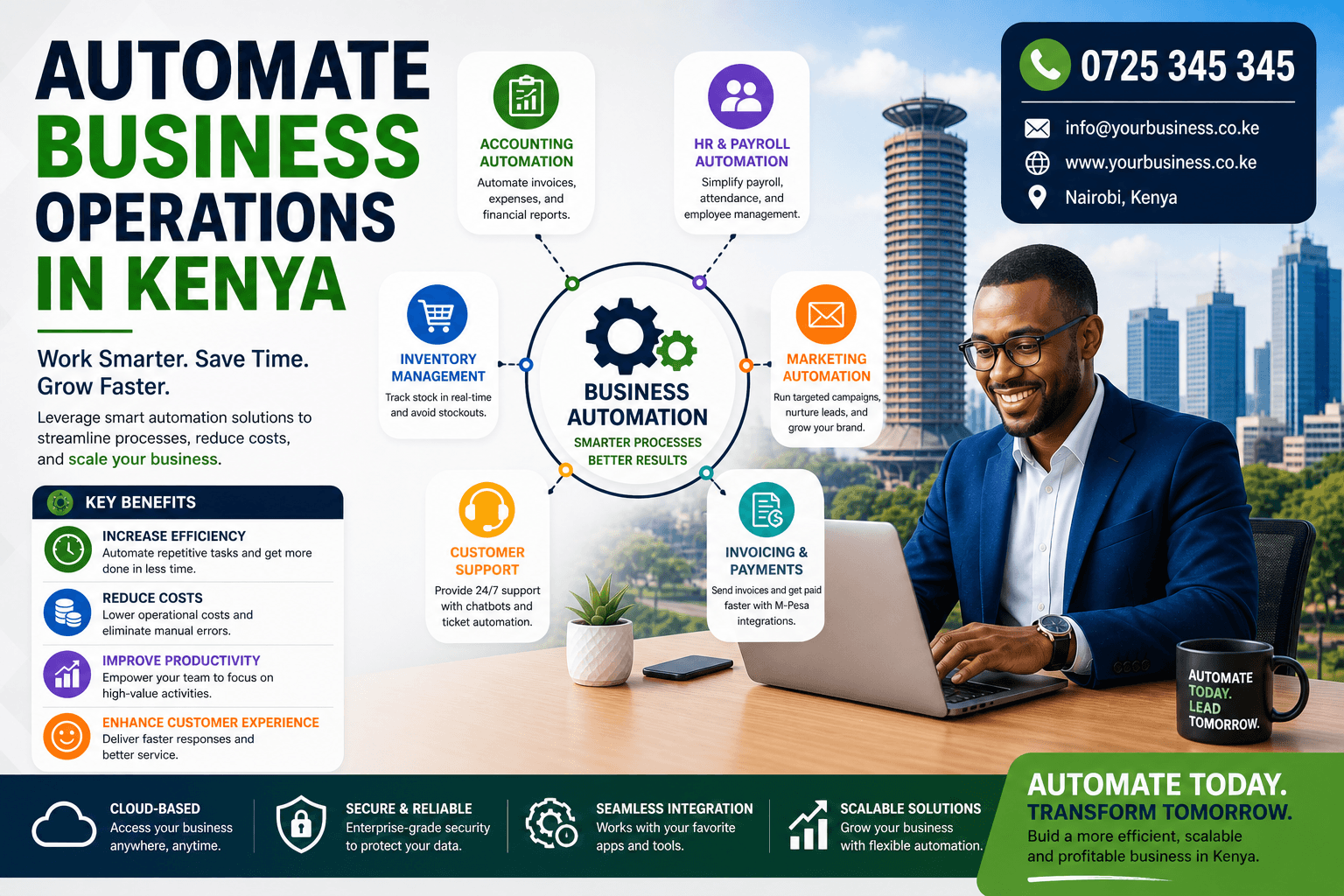
Automate Business Operations Kenya
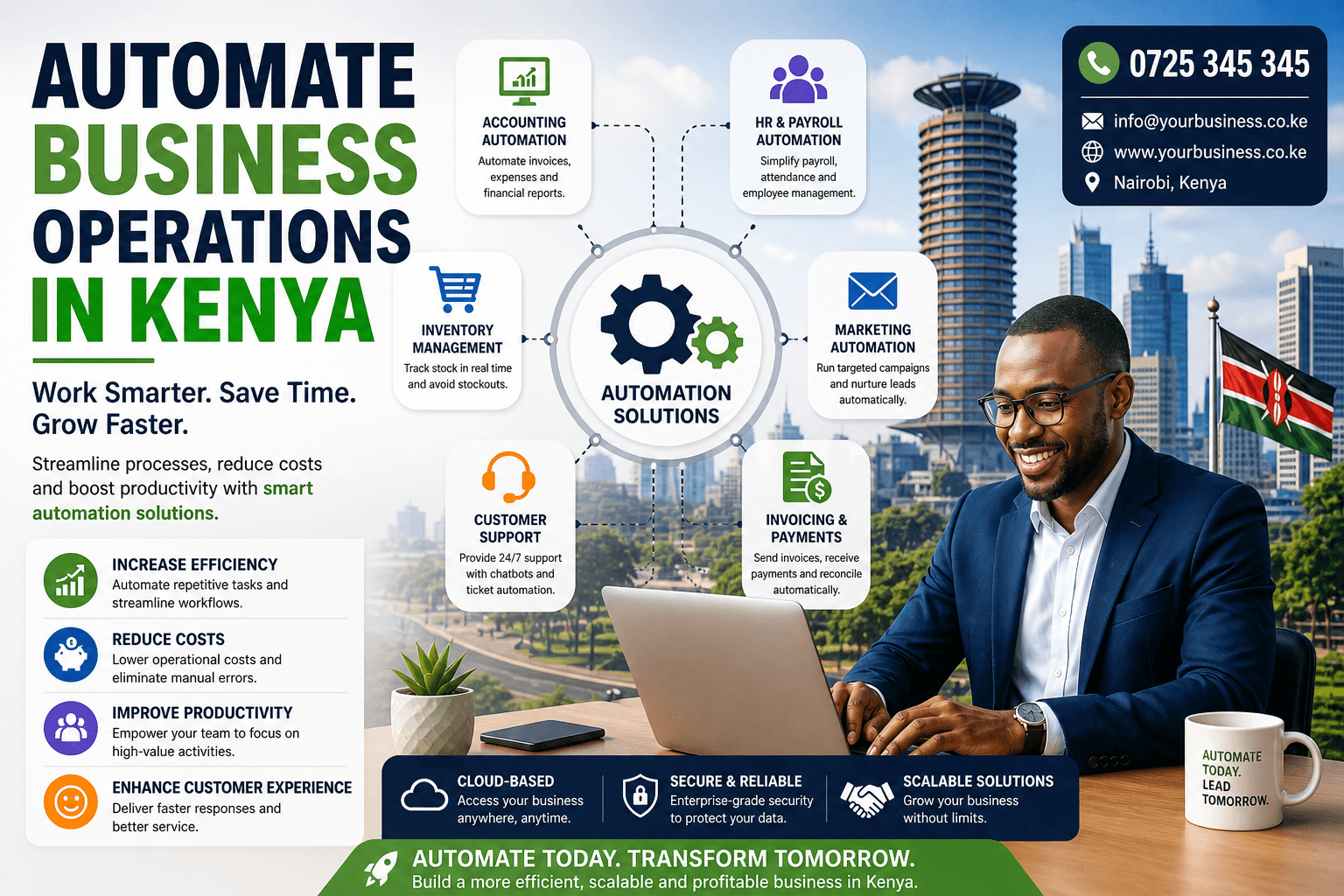
Automate Business Operations Kenya for Growth and Efficiency
In today’s competitive market, businesses must automate business operations Kenya to stay ahead. Companies that automate business operations in Kenya are able to reduce manual work, improve efficiency, and scale faster without increasing operational costs.
To successfully grow, it is important to automate business operations Kenya using modern tools that streamline workflows such as accounting, customer service, and inventory management. When you automate business operations in Kenya, you eliminate repetitive tasks and allow your team to focus on high-value activities.
Many SMEs are now choosing to automate business operations Kenya because it improves productivity and enhances customer experience. Businesses that automate business operations in Kenya can respond faster to customer needs and deliver consistent service.
How to Automate Business Operations Kenya Successfully
To effectively automate business operations Kenya, start by identifying repetitive processes that consume time and resources. Once identified, implement automation tools that integrate with your existing systems.
Businesses that automate business operations Kenya often begin with key areas such as finance, HR, and marketing. The more you automate business operations in Kenya, the more efficient and scalable your business becomes.
Benefits When You Automate Business Operations Kenya
When you automate business operations in Kenya, you unlock several advantages:
- Reduced operational costs
- Improved accuracy and fewer errors
- Faster business processes
- Better customer experience
- Increased scalability
Companies that automate business operations in Kenya consistently outperform competitors who rely on manual systems.
Why Now Is the Time to Automate Business Operations Kenya
Digital transformation is accelerating, and businesses that fail to automate business operations in Kenya risk falling behind. The demand for efficiency and speed makes it essential to automate business operations in Kenya today.
Forward-thinking organizations are already investing in automation to improve performance and drive growth.
Conclusion
In conclusion, businesses that automate business operations Kenya gain a strong competitive advantage. If you want to improve efficiency, reduce costs, and scale your business, the best decision you can make is to automate business operations in Kenya.
Choosing the Right Automation Tools for Your Business
Selecting the right tools can make or break your automation strategy. Kenyan businesses should prioritize solutions that are scalable, affordable, and compatible with local systems.
What to look for:
- Cloud-based access for flexibility and remote work
- Mobile compatibility to align with Kenya’s mobile-first economy
- Integration capabilities with tools like M-Pesa
- User-friendly dashboards for easy adoption
- Local support or communities for troubleshooting
Popular options such as Zoho CRM and QuickBooks are widely used by SMEs in Kenya due to their flexibility and cost-effectiveness.
Industry-Specific Automation in Kenya
Different sectors benefit from automation in unique ways. Here’s how key industries in Kenya are leveraging it:
1. Retail & E-commerce
Automated inventory tracking, order processing, and customer notifications help businesses reduce delays and improve satisfaction.
2. Agriculture
Agri-businesses use automation for irrigation systems, supply chain tracking, and market price alerts—boosting productivity and reducing waste.
3. Finance & Fintech
Kenya’s fintech space is thriving, with automation powering mobile banking, fraud detection, and loan processing systems.
4. Healthcare
Hospitals and clinics automate appointment scheduling, patient records, and billing systems to improve service delivery.
Challenges of Business Automation (and How to Overcome Them)
While automation offers many benefits, businesses may face a few hurdles:
- Initial Setup Costs: Start with essential processes, then scale gradually
- Resistance to Change: Provide proper training and communicate benefits clearly
- System Integration Issues: Choose tools that offer APIs or built-in integrations
- Data Security Concerns: Use trusted platforms and implement strong cybersecurity practices
The Future of Automation in Kenya
With the rise of artificial intelligence, machine learning, and digital transformation, automation in Kenya is only set to grow. Cities like Nairobi continue to lead innovation, attracting startups and global tech companies.
Emerging trends include:
- AI-powered customer service
- Automated financial forecasting
- Smart logistics and delivery systems
- Workflow automation using low-code/no-code platforms
Why Your Business Should Act Now
Delaying automation means falling behind competitors who are already leveraging technology to streamline operations. Whether you’re a small business owner or managing a large enterprise, automation gives you a clear edge.
Conclusion: Transform Your Business with Automation
Automating business operations Kenya is more than a trend—it’s a strategic necessity. By adopting the right tools, training your team, and continuously optimizing your workflows, you can build a more efficient, scalable, and profitable business.
Take the next step today and position your business for long-term success in Kenya’s digital economy.
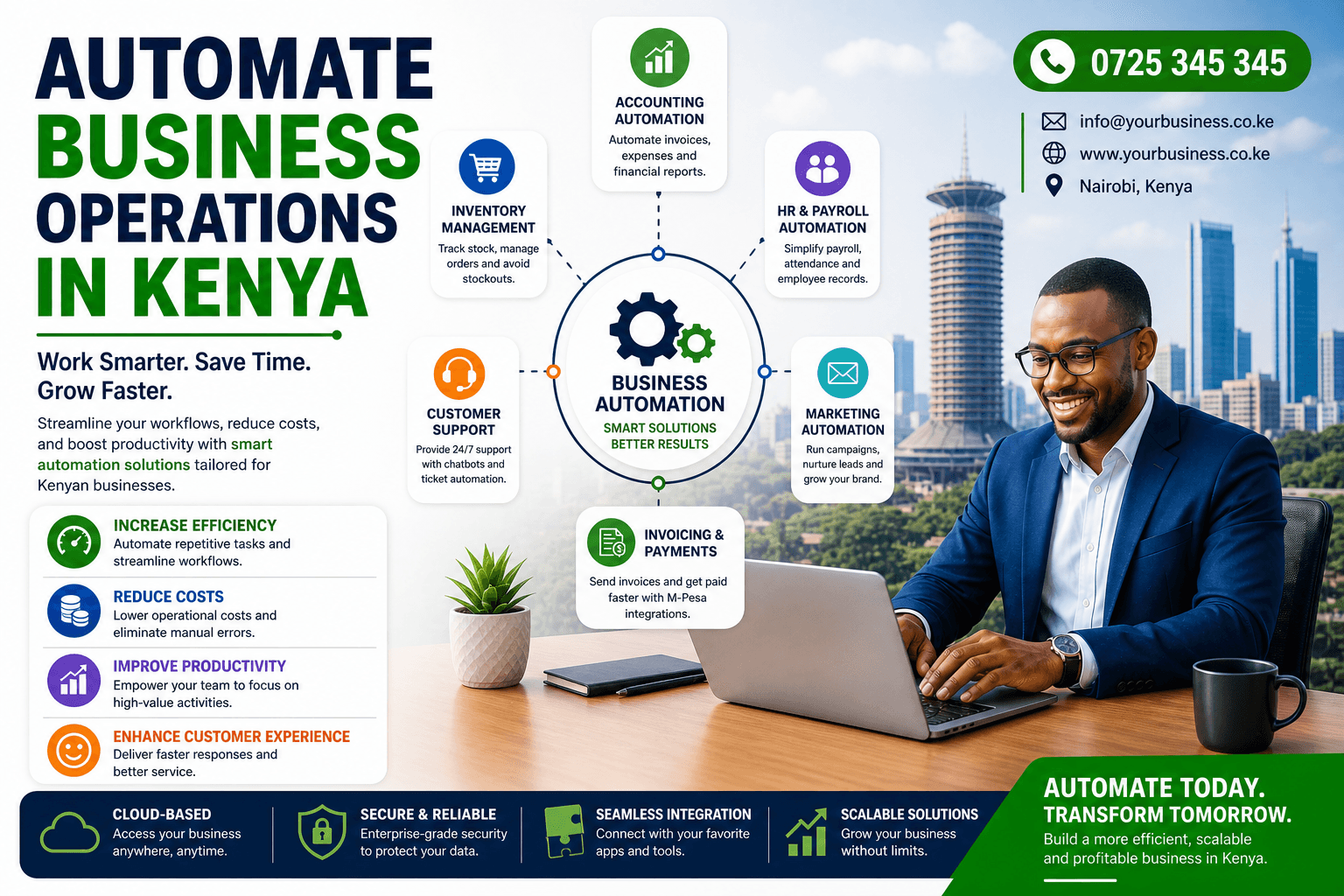
Building a Scalable Automation Strategy
To fully benefit from automation, Kenyan businesses need more than just tools—they need a clear, scalable strategy. Automation should align with your long-term business goals and evolve as your company grows.
Key steps to build a strong strategy:
- Map Your Workflows: Document how tasks move across your business
- Prioritize High-Impact Areas: Focus on processes that save time or generate revenue
- Start Small, Then Expand: Test automation in one department before scaling
- Measure ROI: Track time saved, cost reduction, and productivity improvements
Businesses in hubs like Nairobi are increasingly adopting phased automation strategies to reduce risk while maximizing results.
Integrating Automation with Existing Systems
One of the biggest concerns for businesses is whether new automation tools will work with existing systems. The good news is that modern platforms are built for integration.
Best practices for smooth integration:
- Use tools with open APIs
- Choose platforms that support multiple integrations
- Connect accounting, CRM, and payment systems for seamless data flow
- Ensure compatibility with mobile payment solutions like M-Pesa
For example, integrating Xero with your payment systems can automate invoicing and reconciliation, saving hours of manual work.
Security and Compliance Considerations
As you automate operations, protecting your business data becomes critical. Kenyan businesses must ensure their systems comply with data protection regulations and industry standards.
Security tips:
- Use encrypted platforms and secure cloud services
- Implement role-based access controls
- Regularly back up your data
- Train employees on cybersecurity best practices
Automation should enhance efficiency without compromising trust.
Real Business Impact: What Success Looks Like
When automation is implemented correctly, the results are measurable and transformative:
- Reduced operational costs
- Faster turnaround times
- Improved employee productivity
- Better customer retention
- Data-driven decision-making
For instance, automating customer engagement through platforms like Mailchimp allows businesses to maintain consistent communication without manual effort.
Automation for Startups vs Established Businesses
Startups
Startups in Kenya can use automation to scale quickly without hiring large teams. Tools like Zoho CRM help manage leads and customer relationships efficiently from day one.
Established Businesses
Larger companies can automate complex workflows across departments, improving coordination and reducing bottlenecks.
Partnering with Automation Experts Kenya
While many tools are user-friendly, working with automation experts can accelerate implementation and ensure success. Local consultants understand the Kenyan market, regulations, and business environment.
Look for partners who:
- Offer customization based on your industry
- Provide training and ongoing support
- Have experience with Kenyan systems and integrations