
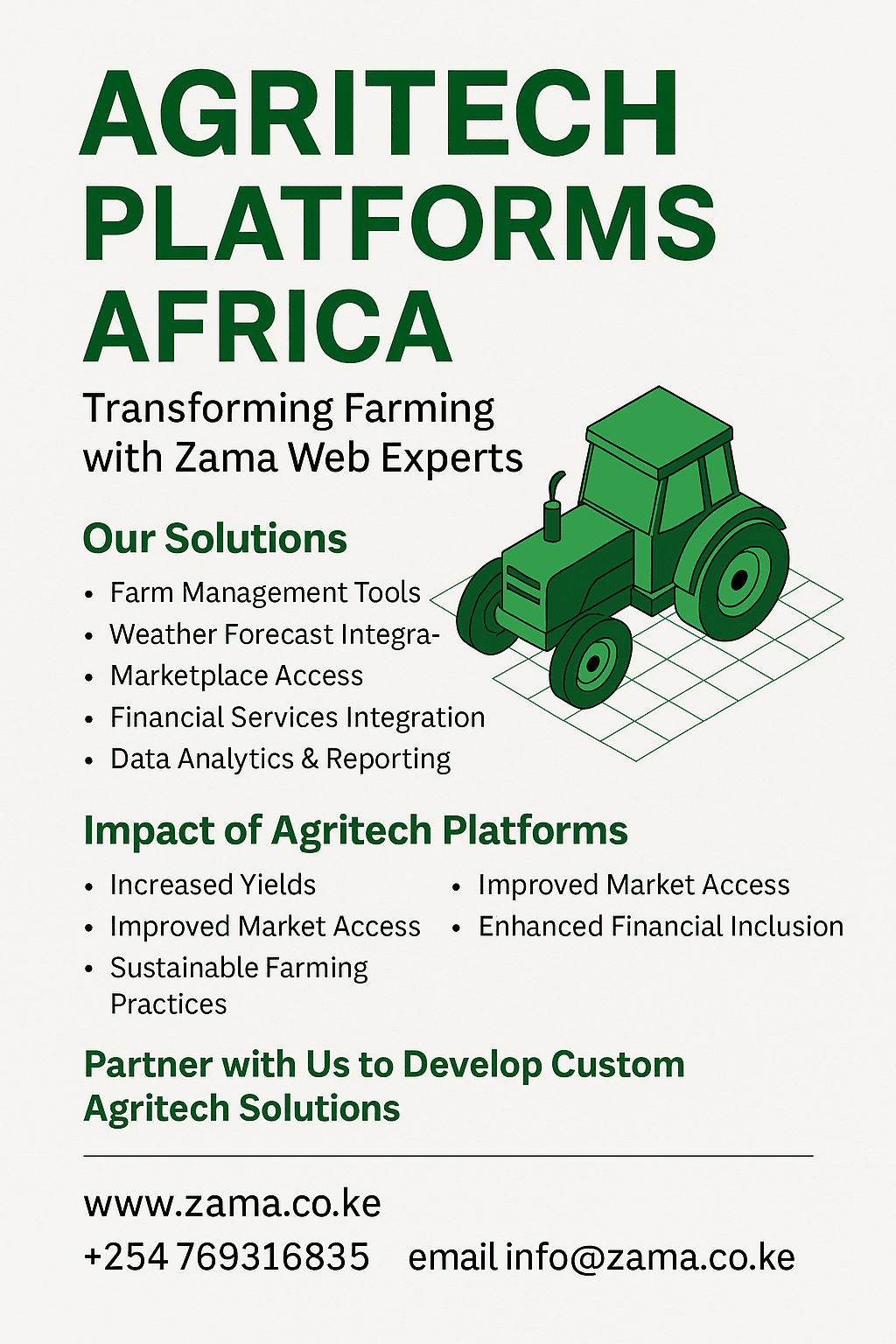
Agriculture remains the cornerstone of Africa’s economy, providing livelihoods for millions and contributing significantly to GDP across the continent. Yet, despite its vital role, African agriculture faces numerous challenges—from unpredictable weather patterns to limited access to markets and financing. Fortunately, technology is transforming the sector, and Agritech platforms Africa are at the forefront of this revolution.
At Zama Web Experts, we specialize in designing and developing state-of-the-art Agritech platforms tailored to the African context. Our solutions harness the power of digital technology to empower farmers, optimize resources, and increase productivity. In this comprehensive blog, we explore the landscape of Agritech in Africa, key platform features, the impact on farming communities, and why Zama Web Experts is your ideal partner for Agritech software development.
1. Introduction to Agritech Platforms in Africa
Agritech platforms leverage digital tools and technology to improve various aspects of agriculture—crop management, resource optimization, market access, financial inclusion, and knowledge sharing. These platforms often combine mobile apps, cloud computing, IoT devices, and AI-driven analytics to create integrated solutions.
Across Africa, Agritech is evolving rapidly. From mobile farm management tools in Kenya and Nigeria to digital marketplaces in South Africa and Rwanda, these platforms are helping farmers transition from traditional methods to modern, data-driven agriculture.
2. The Importance of Agriculture in Africa
Agriculture employs approximately 60% of Africa’s workforce and contributes about 15% to the continent’s GDP. It is crucial for:
Food Security: Feeding a growing population expected to double by 2050.
Economic Growth: Agriculture drives rural economies and supports related industries.
Employment: The sector provides jobs directly and indirectly, especially for women and youth.
Export Revenue: Africa exports various agricultural commodities like coffee, cocoa, tea, and fresh produce.
Given this, strengthening agriculture is essential for Africa’s development and sustainability.
3. Challenges Facing African Agriculture
Despite its importance, African agriculture faces persistent challenges:
Climate Variability: Droughts, floods, and unpredictable rains affect yields.
Limited Access to Inputs: Seeds, fertilizers, and equipment can be scarce or expensive.
Poor Infrastructure: Inadequate roads and storage facilities increase post-harvest losses.
Market Inefficiencies: Farmers often lack direct access to buyers, reducing profits.
Financial Exclusion: Many farmers cannot access credit or insurance products.
Knowledge Gaps: Limited access to modern farming techniques and real-time advice.
4. How Agritech Platforms Address These Challenges
Agritech platforms have emerged as innovative solutions to these issues:
Real-Time Weather Updates: Platforms integrate weather APIs providing localized forecasts to aid farm planning.
Farm Management Tools: Digitally track planting, irrigation, fertilization, and pest control activities.
Marketplaces: Connect farmers directly to buyers, ensuring fair prices and reducing middlemen.
Financial Services: Integrate mobile money and microfinance options, enabling credit access and insurance.
Educational Content: Provide training materials, expert advice, and community forums within the platform.
Data-Driven Decisions: Analytics help farmers optimize resource use and maximize output.
5. Core Features of Effective Agritech Platforms : Agritech Platforms Africa
Successful Agritech platforms in Africa commonly include:
a. Farm Management System
Crop calendar and reminders
Soil and irrigation monitoring
Pest and disease tracking
b. Market Linkages
Digital marketplaces for produce sales
Price discovery and negotiation tools
Logistics and delivery coordination
c. Weather and Climate Tools
Real-time weather alerts
Seasonal climate forecasts
Drought and flood warnings
d. Financial Integration
Mobile money payment gateways (M-Pesa, MTN, Airtel)
Loan and insurance applications
Transaction tracking and receipts
e. Educational and Advisory Services
Video tutorials and how-to guides
Expert Q&A forums
SMS and chatbot advice
f. Data Analytics and Reporting
Crop yield predictions
Resource usage dashboards
Financial health monitoring
6. Mobile Technology: A Game Changer in African Agriculture
With over 495 million mobile subscribers in Africa, mobile technology is the backbone of Agritech growth. Mobile-first platforms enable:
Easy access in rural and remote areas
Use of USSD and SMS for low-end phones
Voice and language support for local dialects
Integration with mobile money platforms for seamless transactions
Mobile penetration ensures Agritech solutions reach millions of smallholder farmers who might not have access to computers or broadband.
7. Key Technologies Driving Agritech Platforms
Beyond mobile, several emerging technologies are shaping Agritech:
IoT Sensors: Measure soil moisture, temperature, and crop health in real-time.
Satellite Imagery & Drones: Monitor crop growth and detect pest outbreaks.
Artificial Intelligence: Provide predictive analytics for planting and harvesting.
Blockchain: Ensure transparency and traceability in supply chains.
Cloud Computing: Offer scalable infrastructure for data storage and processing.
8. Use Cases and Success Stories Across Africa : Agritech Platforms Africa
Kenya: iCow
iCow is a mobile app providing dairy farmers with breeding, feeding, and vaccination tips via SMS and voice calls. It has helped increase milk production and livestock health.
Nigeria: Farmcrowdy
Farmcrowdy connects farmers with investors through a digital platform, providing funding and technical support. It has empowered thousands of farmers with capital and market access.
Rwanda: Twiga Foods
Twiga Foods uses a mobile-based supply chain platform to streamline distribution of fresh produce from farmers to retailers, reducing food waste and improving earnings.
These examples illustrate how Agritech platforms boost productivity, incomes, and food security.
9. Market Trends and Future Outlook for Agritech in Africa
The Agritech market in Africa is projected to grow exponentially over the next decade, driven by:
Increasing smartphone adoption
Government initiatives supporting digital agriculture
Growing investment from venture capital and development agencies
Rising demand for food due to population growth
Climate change requiring innovative adaptation tools
Zama Web Experts stays at the cutting edge of these trends, building platforms that future-proof agriculture.
10. How Zama Web Experts Develops Customized Agritech Solutions
Understanding Local Contexts
We conduct thorough market research and engage stakeholders to ensure our platforms address specific regional needs.
Agile Development Approach
Our team uses agile methodologies to deliver iterative solutions, incorporating user feedback rapidly.
Mobile-First & Offline Capabilities
We optimize for mobile access and build offline features to cater to low-connectivity areas.
Security & Compliance
Our platforms follow best practices to protect farmer data and ensure regulatory compliance.
Scalable Cloud Infrastructure
We leverage cloud platforms for seamless scalability and performance.
11. Benefits of Partnering with Zama Web Experts : Agritech Platforms Africa
Experienced Team: Skilled developers with expertise in Agritech and African markets
End-to-End Services: From ideation and design to deployment and maintenance
User-Centered Design: Platforms designed for ease of use by farmers of all literacy levels
Integration Expertise: Seamless connections to mobile money, weather APIs, and third-party services
Post-Launch Support: Continuous updates and technical support
12. Steps to Build Your Own Agritech Platform with Zama Web Experts
Consultation & Requirement Gathering: We understand your goals and target users.
Market Research & Planning: Analysis of competition, user needs, and technology options.
Design & Prototyping: Wireframes and UI/UX designs for feedback.
Development: Agile coding cycles with regular demos.
Testing & Quality Assurance: Thorough functional and usability testing.
Deployment & Training: Launch on chosen platforms and train end-users.
Maintenance & Scaling: Ongoing improvements and feature additions.
13. Conclusion: The Future of Farming in Africa : Agritech Platforms Africa
Agritech platforms represent a transformational opportunity for African agriculture. By digitizing farming processes, enabling financial inclusion, and linking farmers to markets and knowledge, these technologies can accelerate rural development, reduce poverty, and enhance food security.
Zama Web Experts is proud to be part of this movement, delivering innovative Agritech solutions that empower farmers and drive sustainable growth. Whether you are a startup, NGO, or government agency, partnering with us means you gain a trusted ally dedicated to building platforms that make a real impact.
14. Contact Zama Web Experts Today: Agritech Platforms Africa
Ready to revolutionize agriculture with a custom Agritech platform? Reach out to Zama Web Experts for expert consultation and software development services:
Website: www.zama.co.ke
Phone: +254 769316835
Email: info@zama.co.ke
