
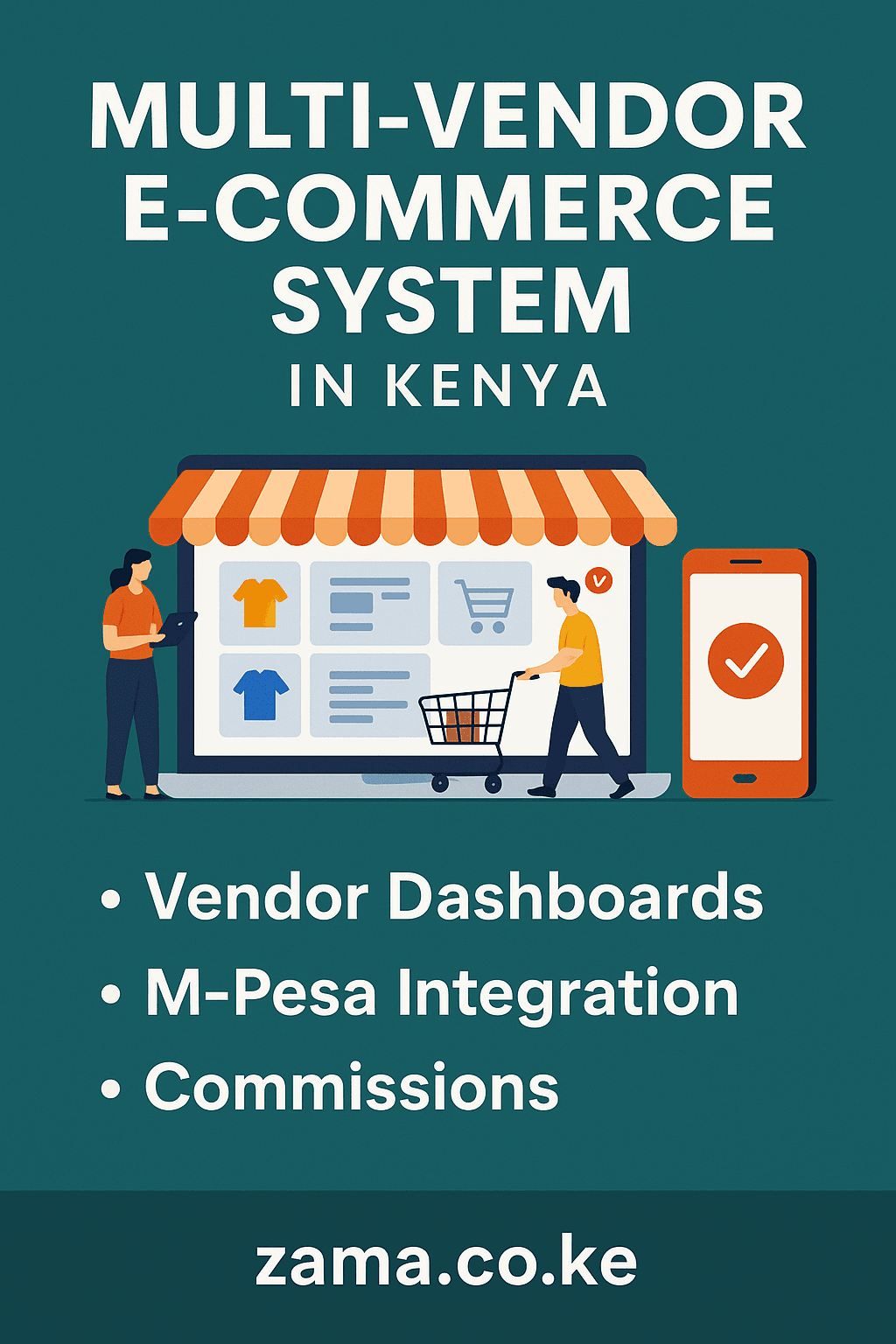
What is a Multi-Vendor E-commerce System?
A multi-vendor e-commerce system is an online shopping platform where multiple sellers (vendors) can register, upload their products, and sell to customers under one marketplace.
Think of platforms like Jumia, Kilimall, or Amazon. Instead of just one business selling products, the system allows hundreds or thousands of vendors to use your platform as their storefront.
The system owner (you) earns commission on every sale, while vendors manage their own inventory and products.
Key Features of a Multi-Vendor E-commerce System
For Admin (System Owner)
Dashboard to manage vendors, products, and sales.
Commission Management – set commissions per vendor, category, or product.
Payment Gateway Integration (M-Pesa, PayPal, Cards, Bank).
Vendor Approval System – control who joins your platform.
Analytics & Reporting – monitor revenue and sales performance.
For Vendors (Sellers)
Vendor Dashboard (manage orders, products, stock).
Upload products (images, prices, descriptions).
Handle their own shipping and returns.
View earnings and payouts.
For Customers
Easy product search by vendor, category, or filters.
Shopping cart & secure checkout.
Order tracking & delivery updates.
Multiple payment options.
Product reviews & ratings.
Benefits of a Multi-Vendor E-commerce System
Scalable Business Model – more vendors = more products = more revenue.
Diverse Product Range – customers get everything in one marketplace.
Reduced Inventory Risk – vendors manage stock, not you.
Commission-Based Revenue – you earn on every transaction.
Marketplace Branding – position your platform like Amazon or Jumia.
Global Reach – support multiple currencies and languages.
Revenue Models for a Multi-Vendor Marketplace
Sales Commission – charge a percentage per sale.
Subscription Plans – vendors pay monthly fees to sell.
Featured Listings – vendors pay to promote products.
Advertising – earn from banner ads on your site.
Multi-Vendor E-commerce with M-Pesa Integration
In Kenya, M-Pesa is critical for online businesses. A multi-vendor system should include:
Lipa na M-Pesa (Paybill & Till) integration.
Automatic payment split between vendors and admin commission.
Real-time order updates when payments reflect.
This makes the marketplace trustworthy and seamless for both vendors and customers.
Examples of Multi-Vendor Systems
Jumia – Vendors sell electronics, fashion, groceries, etc.
Etsy – Artisans and creators sell handmade items.
Upwork/Fiverr – Service-based multi-vendor platforms.
With Zama.co.ke, you can build your own version of these marketplaces — tailored to Kenya and Africa.
Cost of a Multi-Vendor E-commerce System in Kenya
The price depends on complexity, features, and integrations:
Basic Multi-Vendor Store: From KES 120,000 – ideal for startups.
Advanced System: From KES 250,000 – with payment automation, vendor dashboards, and logistics integration.
Enterprise Marketplace: Custom pricing – includes AI-driven recommendations, mobile apps, and global scaling.
Why Choose Zama.co.ke
✅ Kenyan-based developers who understand local payment systems (M-Pesa).
✅ Experience building scalable marketplaces.
✅ Affordable pricing & flexible plans.
✅ SEO optimization to rank your marketplace.
✅ Mobile-first designs for Kenyan smartphone shoppers.
Final Thoughts
A multi-vendor e-commerce system is one of the most profitable online businesses today. With vendors managing their own inventory and customers enjoying a wide variety of products, you build a sustainable marketplace model.
At Zama.co.ke, we create custom multi-vendor systems with M-Pesa integration, vendor dashboards, commission management, and mobile-friendly designs.
👉 Contact us today and start building the next Amazon or Jumia of Kenya.
